Mission Control: The Unsung Heroes of Apollo (2017)

Written for RAF News April 2017

Hot on the heels of Hidden Figures, the oscar-nominated film about the overlooked African-American women working at NASA in the 60s, comes this documentary, shedding more light on the inner workings of Mission Control and the crew behind the Apollo space missions.

Granted it pulls the spotlight back to the roomful of white men, but the film is quick to explain that this was simply the case back then, that progression has been made since. Courtenay McMillan and Ginger Kerrick are Flight Directors at NASA who are aware of the classic image that comes with the profession: “you know, the guy with the vest and the buzzcut”.

Mission Control is about those guys with buzzcuts, narrated by a number of the crew who were working in Mission Control over the course of many of the Apollo missions. It combines talking head interviews with special effects used to visualise the events described. There is also a great supply of archive material with some of those featured, throwing you back in time into the smokey room filled with people wearing headsets and horn-rimmed glasses, puffing on cigars and staring intensely into their monitors.

We are given a tour of the room as it was through footage filmed for television at the time, something in line with Jackie Kennedy’s tour of the White House, as we are shown the computing systems of the ‘trenches’ and the roles of each person. This is before we see the room alive with the tension of maintaining various Apollo missions and keeping astronauts alive in the face of new problems.

From the catastrophic Apollo 1 to the magnitude of Apollo 11, we experience the extreme highs and lows of the engineers responsible, whilst reliving the moment with them. They provide insight as to how things went wrong and the burden they would have to carry, as well as the stress and stench that permeated that room.

Another interesting insight behind the scenes of the space missions that carries just as much drama as the glossy blockbusters made in their name.
Neruda (2017)

Written for RAF News May 2017

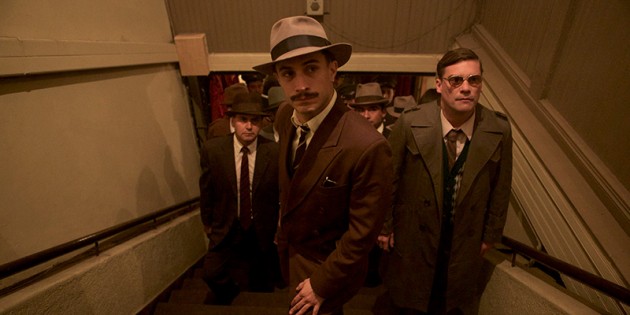
Pablo Neruda was a poet and a politician, a Communist senator who was forced to go on the run when the Chilean president banned the party, despite having helped to elect him to power after the Second World War. With 300 police deployed for his capture, headed by the laughable Prefect Peluchonneau (Gael Garcia Bernal), Neruda (Luis Gnecco) becomes fixated on this pursuit and longs for it to be a great ‘wild hunt’.

Pablo Larraín’s Neruda can be paired with his recent American debut Jackie: both focusing on a singular historical event and the fallout there surrounding. Where they differ is that Jackie appears painstakingly researched and replicated on screen, where Neruda employs artistic licence to blur the line between fact and fiction, doing so with tongue in cheek. Where Jackie is austere and solemn, Neruda is knowing and playful.

Following the poet’s fondness for pulp detective novels, the film takes on the look and feel of a noir cat-and-mouse chase. In this way it seems Neruda is taking charge of his own story. Adopting the lyricism of its subject, the film gifts itself an ability to constantly reframe scenes with a taste for the theatrical. Conversations between characters will suddenly be transported to a different location with a different angle and dramatic lighting cues, with silhouettes and voice-over reinforcing the style.

Neruda‘s artificiality doesn’t detract from it’s beauty, it frames it with intention. In it’s simple little flourishes it is humorous, peculiar and utterly cinematic.

Swiss Army Man (2016)

Written for RAF News September 2016

Stranded on a beach Hank (Paul Dano) has had enough and is ready to end it all when a corpse (Daniel Radcliffe) washes up on shore giving him new hope – as well as a way to chop wood and start fires. It’s kind of like Cast Away but with Harry Potter playing Wilson.

swiss_8_large

All we know about Hank is that he is an outsider, a bit of a weirdo but sweet at heart. All we know about Manny is that he is dead, at least we’re sure he’s dead until he starts talking – prompting Hank to teach him all there is to life, mostly: love, farts and masturbation. In return Manny offers his body as a tool, appearing to have fantastical powers. If you hadn’t guessed from the title Swiss Army Man is ridiculous. It is pure comic absurdity channeled into the template of an indie film.

Hank’s life lessons are usually accompanied by elaborate props and scenes fabricated from twigs and refuse, giving the film an impossibly complicated homemade aesthetic that is so common of independent films – think: Be Kind Rewind, Nick and Norah’s Infinite Playlist or more recently Me, Earl and the Dying Girl and Adult Life Skills. It feels like an elaborate parody at times, with classic moments like hands rolling out of windows and underwater kisses – just with one of the character’s dead and propped up with sticks or his own flatulence. It’s this level of humour that prevents it from getting too serious, or at least when it seems to get serious it is undermined completely by its silliness.

Not so much concerned with whether he is a hallucination or not, Swiss Army Man ventures into the bizarre by trying to tell a serious story through the profanely juvenile. It embraces its absurdity and wears it with pride. The score is put together brilliantly, a cappella chorus that is sparked by Dano and Radcliffe imitating stirring and triumphant film music. Dano’s recent turn as Brian Wilson comes to mind, not only in his vocal harmonies but in his disturbed state of mind.

The repetition of certain jokes does get tired but much like Manny’s corpse they seem to have a second life after a time. Swiss Army Man is a bold film that sticks to its style and delivers something altogether different and a bit weird.

Gomorrah: Season 2

Written for Film and TV Now July 2016 (Available here)

Now that you’ve finally caught your breath after its intense first series, the brutal Italian crime drama Gomorrah is back where it left off, plunging deeper into the darkness of the Comorra drug wars.

3739

By the final episodes Ciro Di Marzio (Marco D’Amore) – the closest we have to a protagonist but one that we must keep at arms length for fear that he might betray us – had tipped of the police to have Don Pietro (Fortunato Cerlino) incarcerated, ordered the death of his wife and shot his son in the face. This climactic finale would seem to mark the end of the Savastano clan and the beginning of a new era, but with Pietro escaping prison and son Genny (Salvatore Esposito) showing signs of life, we don’t think for a second that it will end happily ever after. Continue reading “Gomorrah: Season 2”

Taxi (1978 – 83)

DVD Review – Written for RAF News May 2016

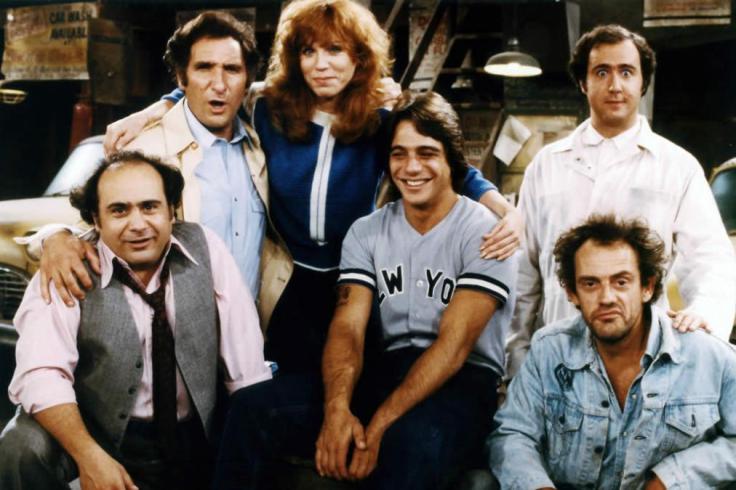
When new hire Elaine (Marilu Henner) enters the grotty base of the Sunshine Cab Company in Taxi‘s first ever episode, she cuts to the heart of the atmosphere, asking why everyone here just a little angry.

t100_tv_taxi1

This small, tiny in the case of dispatcher Louie De Palma (Danny DeVito), but diverse group of part-time cabbies are united by their New Yorker attitudes, their sarcasm and bitterness, their incessant innuendos and quick-fire insults. Filmed in front of a live studio audience their constant quips keep the laughs coming, but the show never shied away from making a serious point, earning it the title of ‘morality play’.

Over it’s 5 series span in just as many years, Taxi would become iconic for it’s opening theme tune, it’s clownish character actors and its tendency to get a bit gushy at the end. Where Alex (Judd Hursch) would be seen as the fatherly figure of the group, the one true cabbie, episodes would often follow as he offered some of his learned wisdom to the others, or capping the show with a life lesson. But this sentiment could be found in the most cartoonish characters – the innocently idiotic foreign mechanic Latka (Andy Kaufman), lovable idiotic boxer Tony (Tony Danza), and joining from the second series the burnt out hippie and outright idiot Reverend Jim (Christopher Lloyd).

All the cast of the Sunshine Cab Company are larger than life, big voices with big gestures that really make the punchlines land. This is especially true for struggling actor Bobby (Kenickie himself, the late Jeff Conaway) and Devito’s Palma – who spends most of the show’s run in the dispatcher’s cage, where his petty tirades are delivered with such fury that it steals your attention, and though he is undeniably the most despicable character, he is hilarious and the centrepiece to the show.

A precursor to Cheers and even The Simpsons, Taxi is a time capsule of a sit-com, and of 70s New York, that can be reopened and revisited now that it is being released on DVD for the first time in the UK.


Create a free website or blog at WordPress.com.

Up ↑