Out of Death (2021)

Written for RAF News July 2021

Titled like a 90s Steven Seagal movie, Out of Death actually stars Bruce Willis (albeit fleetingly) as a retired Philadelphia cop who is out on a spiritual stroll in the woods when he stumbles upon a young woman being held at gunpoint by police.

Shannon (Jamie King) had, moments before, overseen a drug deal turned violent whilst out on a soul cleansing ramble herself, and now finds herself the only witness to their crime. A loose end to be tied up, lest an ageing action star should drop by, channeling what’s left of his inner John Maclane.

On a tight shooting schedule, made tighter by Covid restrictions, Willis actually shot all of his scenes in one day. This is impressive but believable as he barely features in the film at all, appearing more as a spirit animal to guide Shannon along the way.

Split into chapters, with a couple of time jumps and other borrowed directorial signatures, you could think that the film is trying to emulate something by Tarantino, before it gives up and nosedives into the most mundane cat and mouse chase. Emotion is signposted and exposition is heaped on top, as corrupt Sheriff Hank Rivers (Michael Sirow) brings a Kevin Spacey energy to his villainy, trying to track down all of those involved, aiming to bury all leads that could threaten his run for Mayor.

As low budget and generic as its title might suggest, if you’ve come for Bruce you’re best off just looking at the poster, or watching any of his other direct-to-streaming productions of recent years.

A Perfect Enemy (2021)

Written for RAF News July 2021

Two perfect strangers find a dark psychological connection when forced together in this puzzle-box thriller.

After speaking at a conference in Paris, renowned architect Jeremiasz rushes to catch his flight home to Warsaw but is waylaid when he allows another passenger to join his cab-ride. Having to turn back for her luggage, they arrive too late and are stuck waiting until the next available flight. Here he is forced to endure this young woman’s stories, until she reveals a secret that piques his interest.

A Perfect Enemy takes place for the most part in an airport, except for the stories described to Jeremiasz by this insistent presence. The unlikely named Texel Textor is the driving force of their interactions, brash and repellent, but there is no escape from her – he would know: as one of the architects behind this airports design.

There is a small model that credits Jeremiasz in the lounge, plotting the layout of the terminal but impossibly including miniatures of our two conversationalists. An enigmatic diorama that reminds of the hedge maze in The Shining, but the bigger mystery here is why Jeremiasz entertains her at all in the first place.

Texel is established as a nuisance, rattling off childhood anecdotes much to the annoyance of her poor victim, when she confesses to murder however, he leans in. The flip-flop of their dynamic is hard to believe and stay invested in, but there are many unlikely details that become forgivable as the film plays out.

When the momentum of the revelations picks up, there is less time to get hung up on plausibility, and so it becomes more thrilling until the pay off. Or maybe just like Jeremiasz forced to listen until interested, it’s a matter of Stockholm syndrome.

Shed of the Dead (2019)

Written for RAF News May 2019

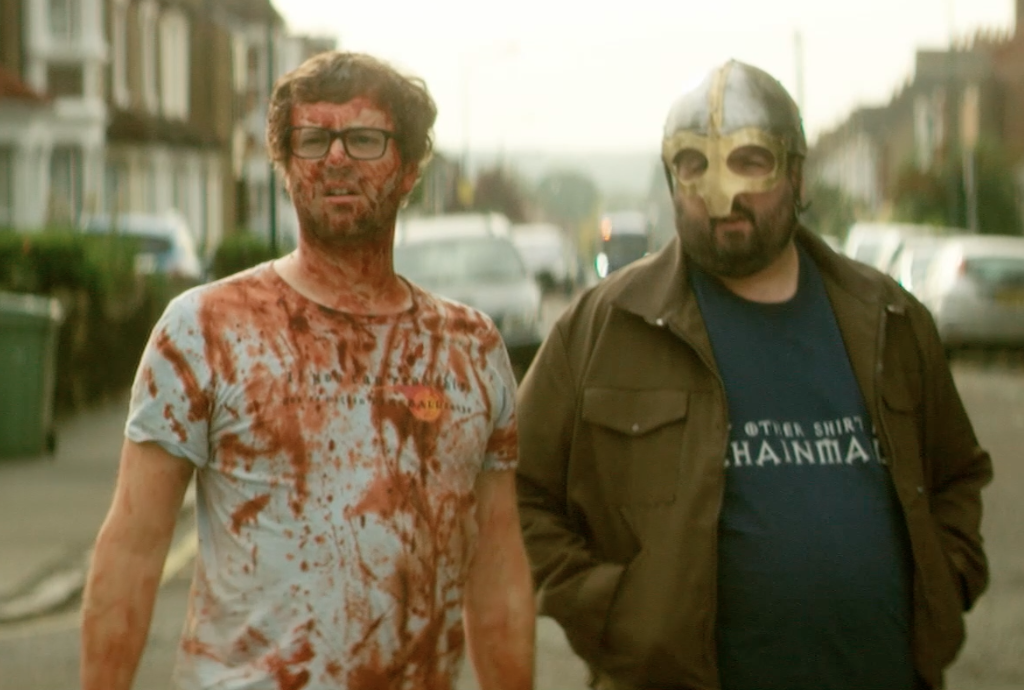
Trevor (Spencer Brown) spends his days in a shed on his allotment, painting miniature figurines for a fantasy role playing game, ignoring the reality of his unemployment by imagining himself a hero.

Image result for shed of the dead

Using this overgrown patch of land as a hideout from his nagging wife, distilling vodka from potatoes pilfered from his neighbours, Trevor isn’t popular. He is smug and condescending without a modicum of self awareness, refusing to get his allotment in order because gardening isn’t for him.

Cowardly and yet aggressively combative, his only friend Graham (Ewen MacIntosh) is an agoraphobe who shares his misplaced arrogance. But together they might be the only hope for humanity on the brink of a zombie apocalypse. It doesn’t get bogged down in explaining how or why, but the assumption is that we’ve all seen enough zombie films to get the gist; and we have.

The film has the most fun when it’s playing with special effects and make-up, but it does itself a disservice by creating a central character so loathsome that you end up routing for the undead. Although it is farcical, when Jeff accidentally kills a neighbouring gardener (Kane Hodder) in the opening of the film, and decides to chop him up to avoid suspicion, nothing supernatural has occurred. He is simply an unsympathetic and painfully unfunny sociopath.

As the title pretty much spells out, this English Zombie comedy is derivative, making references to films that are making references to other films, like a photocopy of a photocopy, losing trace of anything original or funny.

The bulk of the cast, including small parts for horror legends Michael Berryman and Bill Moseley, have seen there fair share of low budget horrors and zombie flicks – a sub-genre that has become so saturated that it is mentioned in the film itself, but that doesn’t mean it won’t keep coming back.

High Life (2019)

Written for RAF News May 2019

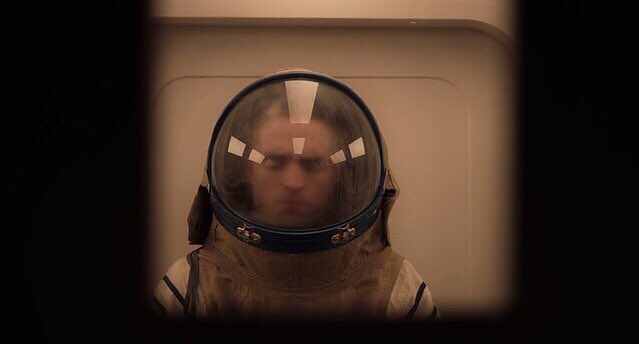
A lone prisoner aboard a spaceship takes care of a baby girl as his ship sets course for a black hole in this beautifully bleak but challenging film.

Image result for high life stills

Director Claire Denis has stressed that this is not science-fiction despite the setting. This is true in as much as it is focussed on the human story over special effects, but it is far from ordinary.

The opening features Monte (a tenderly detached Robert Pattinson) carrying out work on a rundown ship and tending to baby Willow (Scarlett Lindsey), sometimes at the same time. In this large vessel that has the isolation of Silent Running and the dirty futurism of Alien: they are alone. Single-fatherhood distilled to the elation of witnessing first steps to pleading for quiet in order to keep sane.

The initial meandering pace of High Life sets expectations for a slow meditation on the human condition, when in fact it will explore this territory but by means of a darkly tense prison drama that tips occasionally into horror and eroticism. Cutting back in time we learn about the purpose of this ship and what happened to the crew before catching up with Monte and Willow much later.

This was a penal colony for death-row inmates who had volunteered for a suicide mission to harness the power of black-holes for Earth. Along the way however they get tangled into twisted experiments of reproduction. This additional research is all under the command and control of Dr. Dibs (Juliette Binoche) who brags of being the only criminal onboard worthy of the name. Combining scientific garb with a waist-long braid she is positively witchy, keeping the others sedated and giving them drugs in exchange for their participation.

A noteworthy scene sees Dr. Dibs strapping herself into the ‘fuckbox’, an isolated cubicle that appears to simulate and stimulate simultaneously, bringing out erotic visions and sensations. Shown within a vacuum, this bizarre sensuous experience is powerful and enveloping.

The film seldom leaves the confines of the ship, and when it does it’s to mysteriously vague memories washed out with 16mm grain, creating more questions than answers, which can frustrate or delight.

Awash with mystery and symbolism High Life climbs inside your head and challenges you to make sense of it, and I accept the challenge gladly.


Donbass (2019)

Written for RAF News May 2019

A series of short vignettes link together this satirical social commentary set in present day eastern Ukraine, depicting the chaos caused by propaganda and corruption.

Image result for donbass film

The Donbass region is shown pulled apart by civil war, Russian- backed separatists occupy territories with armed soldiers patrolling every street in the name of fighting fascism – though the term ‘facist’ is banded about quite freely and the sides aren’t too clear.

There is a farcical quality that feels nonetheless genuine in Sergei Loznitsa’s film, which makes it all the more frightening. It seems there is common understanding among the people to take any official announcement with a heap of salt. They have a prescribed scepticism that reads as hopeless confusion: no-one believes what they are told but they daren’t speak out.

The film opens in a make-up trailer full of actors being prepped to play innocent bystanders in what turns out to be a staged attack for a news crew. Instructed by belligerent producers with the heft of soldiers, it is revealed that these extras haven’t even been paid, they are practically prisoners of the state. And yet this is all delivered with a sly sense of humour.

There is a visit from a black leather jacketed official to a maternity clinic, reassuring the staff that there are in fact medical supplies, they’re just in the doctors office, in a fridge packed with sausages, beside many other such rations. The doctor must have taken them to sell on the side. This may be true but later he is seen rubbing shoulders with the official himself.

Other segments consist of politicians squabbling over bribes, journalists struggling to get answers from anyone, a tour of a bomb-shelter in the heart of the war-zone to a bizarre wedding ceremony that has the feel of a football game. The tone veers from darkly funny to plainly dark, especially in one brutal extended scene that shows a supposed defector tied to a post in order to receive beatings from the public.

With it’s contrasting chapters and intermittent humour, Donbass is fittingly confusing. There are shocking moments sprinkled among the more amusing absurdity, which might overwhelm or distance the viewer, but the message is unmistakeable.

Blog at WordPress.com.

Up ↑