Shadow in the Cloud (2022)

Written for RAF News Jan 2022

Despite the PSA at the start of the film insisting that ‘gremlins’ are just an excuse made for human error, Officer Maud Garrett (Chloë Grace Moretz) has herself a window seat on a B-17 Bomber where something doesn’t seem right.

Set in 1943, Garrett jumps aboard The Fool’s Errand on the runway, insisting to the incredulous crew that she is not only a member of the RAF, but intended for this vessel with shoebox-sized cargo that is fragile and completely confidential. With many clearly not having seen a ‘dame’ in some time, she is mocked, harassed and given the only available seat in the form of a turret below deck. 

We spend the first half of the film crammed into this tight space with Maud listening to the rowdy lads above through the comms. By honing the focus on Maud and what she sees from this vantage point, the film makes a decision that is creatively minimal. The idea of ‘something on the wing of the plane’ has been seen before in The Twilight Zone, but here it is placed in the context of a small paranoid unit, willing to right off the warning of gremlins as female hysteria. And yet much like The Twilight Zone, the film manages to pack in a load of twists and turns along the way as Maud’s secrets begin to spill out.

Once the film reaches the midpoint, what seemed like a budgetary decision in the beginning is revealed as an artistic choice as impressive effects come into play. It may lose its horror film tension, but it is happy to change shape and shift genre, becoming more of a mindless monster movie with a feminist streak. Embracing its silliness the fun is hard to deny as things go full tilt and the laws of physics go out the window.
The Lost Daughter

Written for RAF News December 2021

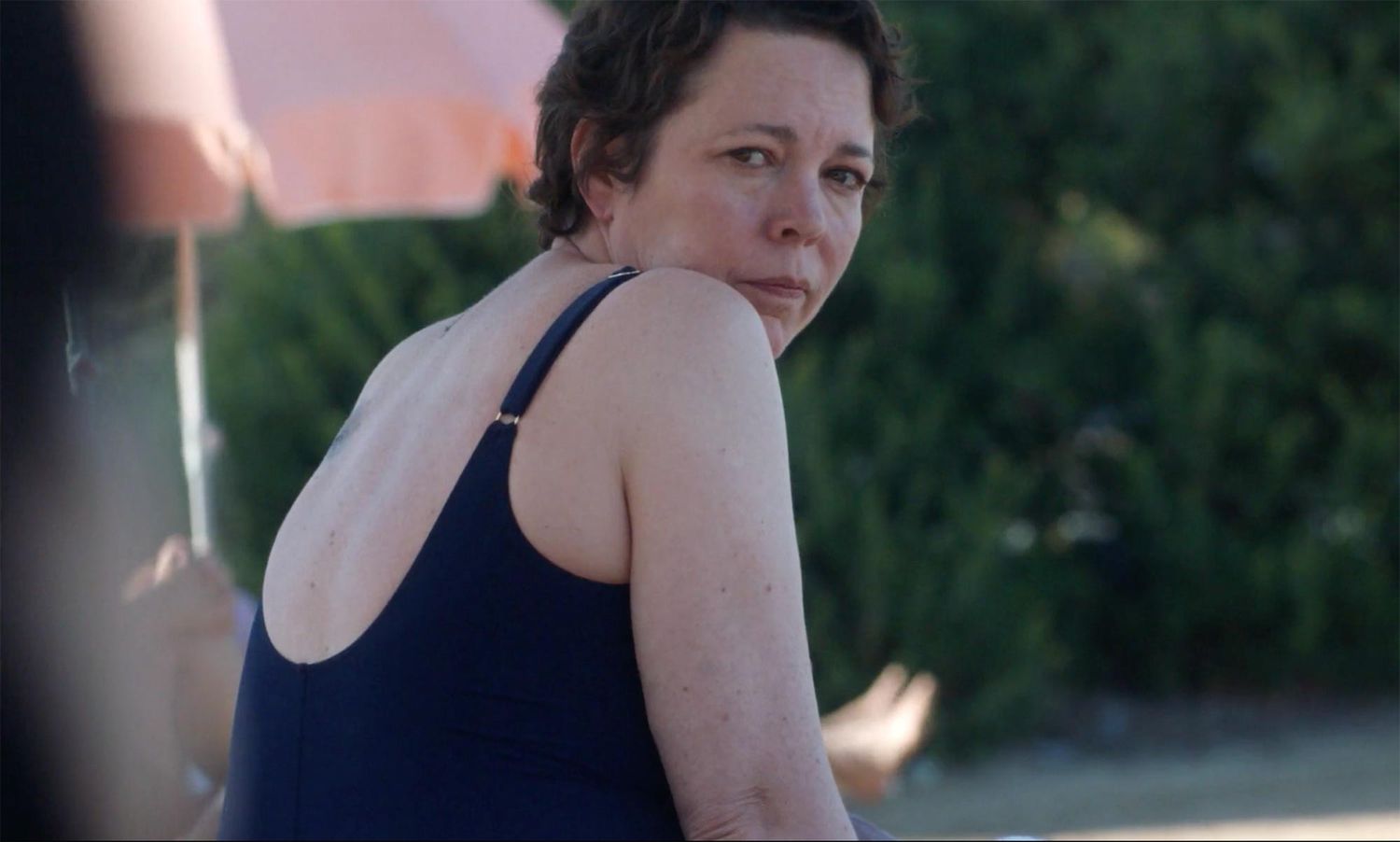
Olivia Colman stars as Leda Caruso, a middle-aged language professor taking her working holiday alone in Greece, finding a peacefulness that will very quickly evaporate. The fruit bowl in her apartment is mouldy, the apartment neighbours a working lighthouse, and some undesirables, from a villa just up the way, have taken over the beach.

Not shy of confrontation, Leda politely refuses when asked by the matriarch of this rowdy group of New Yorkers if she could make space for them, instigating a feud that underlies the rest of the film. Even when Leda helps to find the group’s young daughter when she goes missing, there remains an unshakeable tension.

Actor Maggie Gyllenhaal makes her debut as writer and director on The Lost Daughter, adapting Elena Ferrante’s novel of the same name. Through this complex central character, Gyllenhaal weaves together two timelines to explore reflections on motherhood, identity and regret.

Leda is self-assured, if not combative, so when she stands her ground, the young mother of the group, Nina (Dakota Johnson) takes an interest. This connection runs both ways as Leda observes Nina struggling with her young daughter, exasperated by her constant need of care and attention. These moments serve as a springboard into flashbacks, in which we see Leda 20 years earlier (played by Jessie Buckley), trying and failing to manager her independence and her two daughters. Through Leda’s exchanges with Nina, she is reckoning with her past self, offering reassurances, but edging ever closer to danger.

The film paints a picture of so-called ‘unnatural mothers’ enduring trials of parenthood that are messy and punishing, normalising these ideas and expanding the scope of female relationships on screen. An impressive piece of filmmaking with challenging characters and ideas, and solid performances across the board.

Power of the Dog (2021)

Written for RAF News November 2021

Jane Campion’s return to film after a decade is a Western set in the early 20th Century, digging into classic cowboy archetypes in a uniquely gripping drama. 

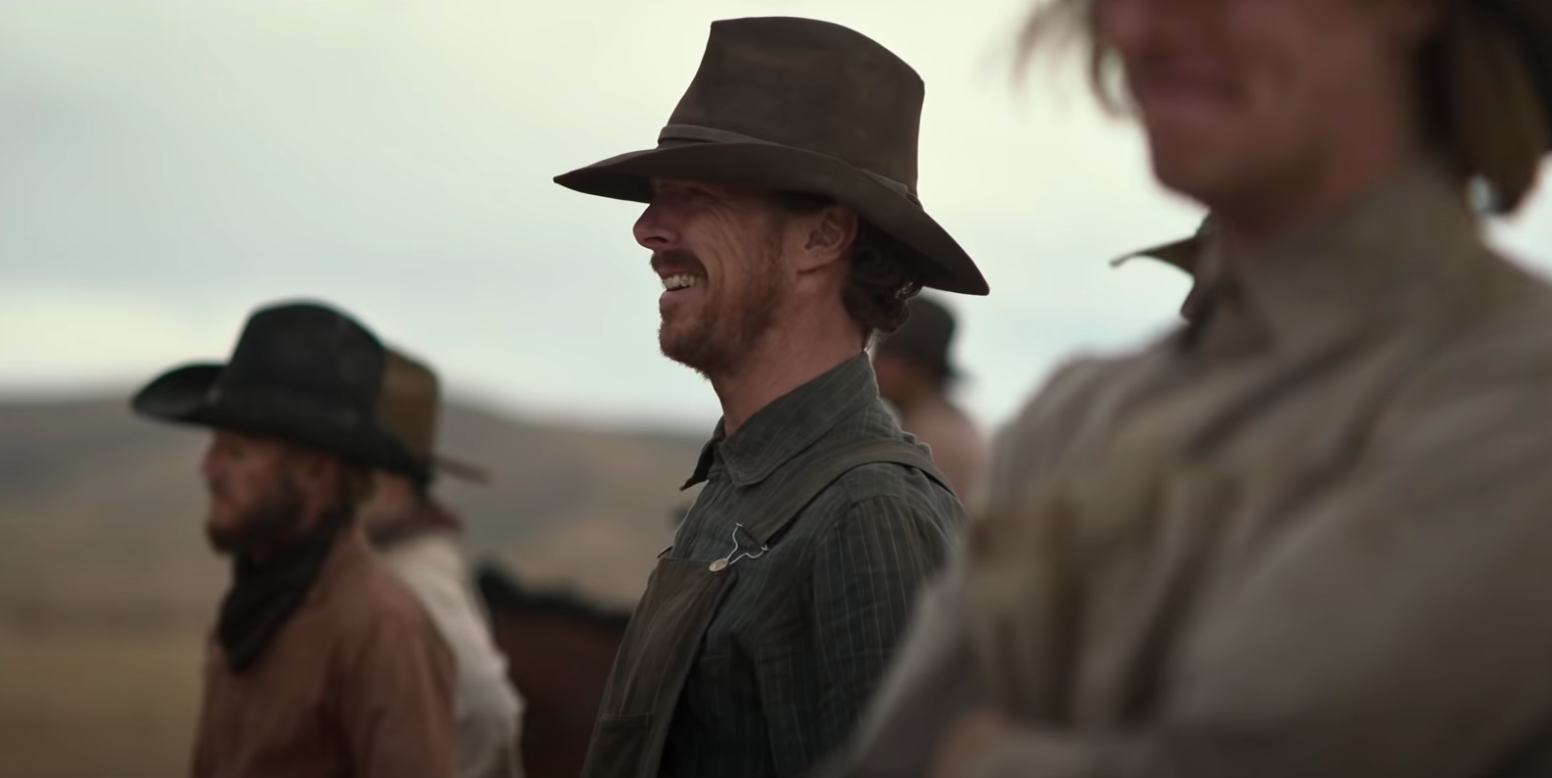
Two brothers, owners of a successful ranch, find their paths diverging as soon as a romantic interest enters the picture. Phil (Benedict Cumberbatch) toils in the mud with his hands and doesn’t care for using the tub in the house, favouring the stream. A brute who commands the respect of his workers and shares in the dirt alongside them. Then there is the younger, more put together George (Jess Plemons), who has the business acumen and social sensibility – who, when he sees the chance, pursues a marriage with a widow. 

Played by Kirsten Dunst, Rose runs a restaurant with her intelligent but sensitive boy, Peter. Kodi Smit-McPhee finds himself in another western since Slow West, though he remains out of place – picked on instantly by Phil and his gang of predatory cowhands for his effeminate demeanour. Cumberbatch appears to be having a lot of fun ratcheting up the villainy, tormenting anyone outside of the ranch purely to delight himself. So, when brother George weds Rose and brings her into their home, Phil becomes an insidious bully – mocking and taunting his new family.

A deeper facet of Phil is uncovered however when he talks about his late teacher ‘Bronco Henry’ – possessing such adoration that it borders on religious, or maybe even sexual. Power of the Dog offers a sly deconstruction of masculinity, becoming a comedy of manners with both humour and tension coming from the confrontational exchanges that take place in mixed company. 

The film is filled with stunning cinematography, of vast landscapes – green and gold hills, as opposed to sandy dunes – with powerful standalone images that shine with symbolic potency. A tense and deceptive film that keeps you involved but may still catch you off guard.

Bull (2021)

Written for RAF News November 2021

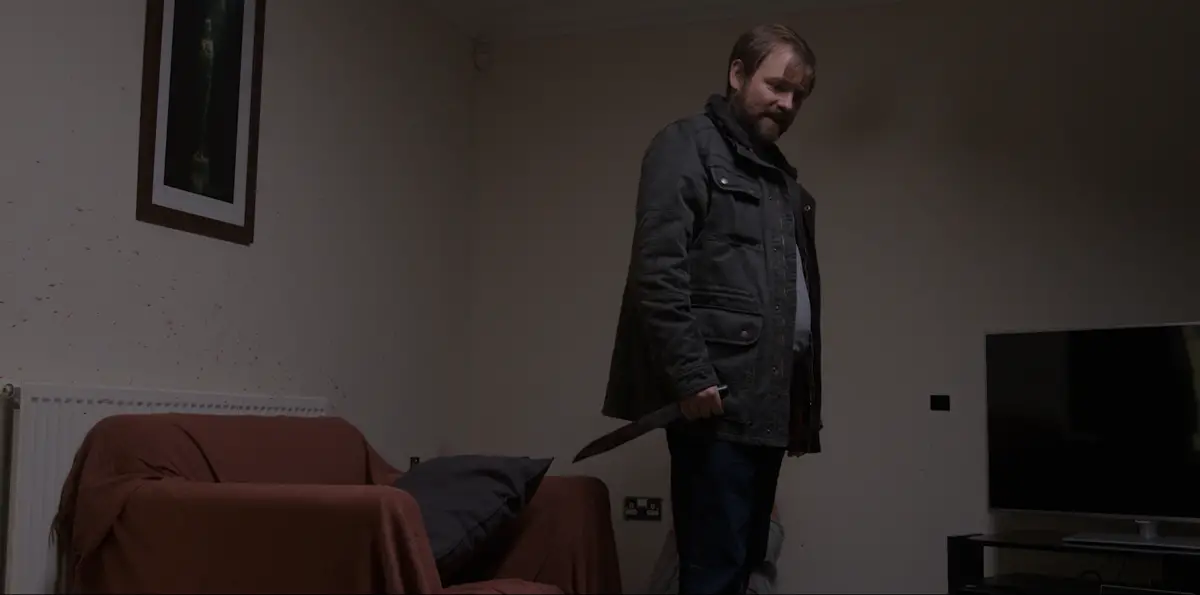
Bull is the name of a London thug, enforcer and son-in-law to Norm, the boss of a local crime syndicate. But when Norm’s drug-addicted daughter wants to separate from Bull, and won’t allow him to take their son, things escalate: a caravan is set ablaze and he is left for dead.

We’re not sure of the details just yet, information is steadily doled out in flashbacks between visits from Bull to each member of the gang. If you’ve seen Neil Maskell on film before, you’ll know that it’s a mistake to cross him. Starring in Ben Wheatley’s films with a fury that sometimes explodes on screen in horrific barbarism, Bull keeps Maskell’s reputation firmly intact.

It’s easy to see why he was a valued asset to his father-in-law; where Norm (an intimidating and insidious David Hayman)

does the talking, Bull gets straight to action – unflinching and apparently unbound by morals. There is a bold matter-of-factness to the violence which sometimes tips into full-on gore. Whilst there is tension, there is no standing on ceremony, no conversation that needs to be had, just revenge to be enacted – which is probably why the film flies by with a lean 87-minute runtime. Written and directed by Paul Andrew Williams (London to Brighton, Cherry Tree Lane) there are some clever stylistic touches that take us into Bull’s rage-fuelled mania – with one particularly haunting moment on a Waltzer that just keeps growing in intensity.

It’s in the final moments that things go a little awry, building to a reveal that doesn’t quite pay off. As a quick and brutal revenge thriller though it works fine simply as an excuse to follow this deranged antihero on a warpath.

Viva La Vida (2021)

Written for RAF News October 2021

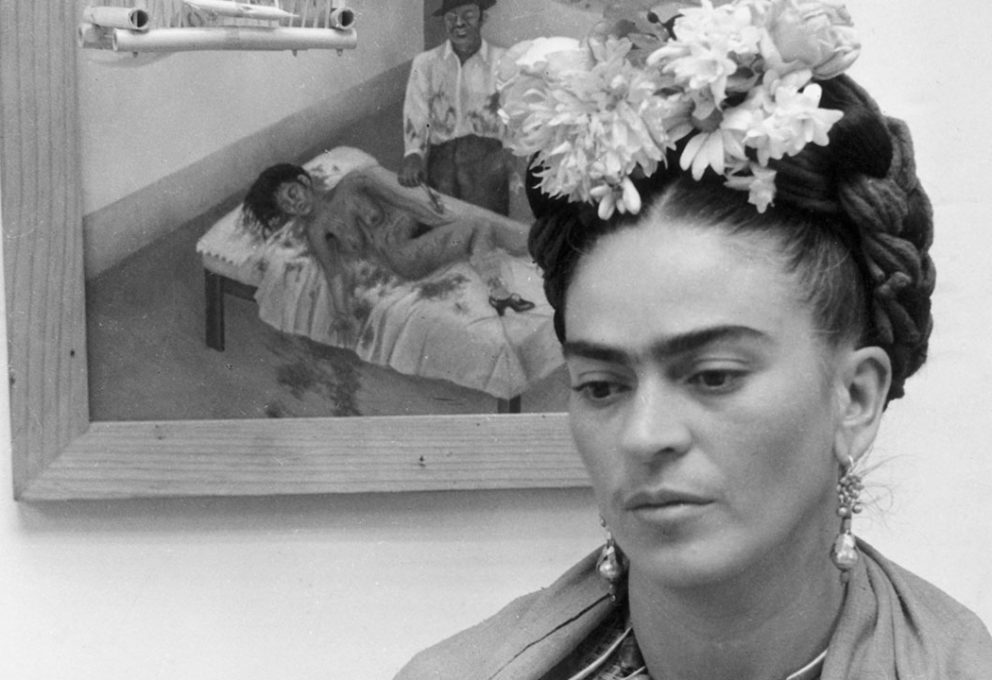
Predicated apparently on the discovery of a large number of unopened trunks that contained Kahlo’s possessions, now on display in an exhibit at her home, the filmmaker explores some of these belongings and their significance in understanding the person who became the legend. 

Frida’s life is split into chapters, introduced with a fun and frenzied montage of graphics and stock archive footage. Herein her life is explored through interviews, primarily those running the exhibitions, though we also hear passages of Kahlo’s own words whilst watching actors interpret the artist, roaming about the mountains or looking longingly out of windows. This varied and unconventional approach is stitched together with narration from Asia Argento who appears between segments, talking intensely to camera in vague rhetoric as though introducing an episode of The Twilight Zone.

This confusion of ideas is messy: information is given at inopportune times, missing the chance to inform the viewer of the importance of themes when they would be useful. There are some elements of Mexican culture that caught with joyous observational footage, but it lacks consistency with the subject and tone. However frustrating, it is always a treat to revel in the powerful and challenging work of Kahlo, and appreciate the pain and hardship that she endured throughout her life.

Unfortunately Frida. Viva la Vida feels like a recorded walking tour through an exhibition, an invasive one at that, though this actually exists in more rigorous detail account looking at Kahlo’s life through her work as recorded by Exhibition on Screen just last year. An admirably artistic take on a documentary that gets a bit lost in its ideas.

Blog at WordPress.com.

Up ↑