Disorder/Maryland (2016)

Written for RAF News March 2016

Back from service in Afghanistan as part of the French Special Service, Vincent (Matthias Schoenaerts) shows signs of post-traumatic stress and so finds some private security work before he can return – if he can return. His judgement seems to be clouded though by his apparent disorder as he struggles to tell apart real threats from paranoid delusions.

screen-shot-2016-02-09-at-20-26-18-e1455049833503
“A lot like Nicholas Winding Refn’s Drive but takes itself very seriously.”

Vincent is a brooding figure who shows little more than his vigilant drive to protect. The first half of the film is an interesting and stylised exploration of his state of mind in which we experience a job from his perspective. Hired initially as security for a wealthy Lebanese businessman who is hosting a party, we observe potential threats whilst the overpowering bass of dance music drowns out all voices and throws your focus.

The use of penetrating sound and the uncomfortably closed in shots of Vincent’s face as he stalks guests through the crowd works well to overwhelm your senses and create palpable tension. This discomforting paranoia will plague the entire film and create some extremely suspenseful scenes.

Schoenaerts is great without even having to speak. He acts with his body, showing a raw animalistic quality that has him physically restrained until he can find an outlet. He is threatening, even to the family he is hired to ‘babysit’ when the businessman leaves town. It is only when Vincent is left alone, protecting the client’s wife (Diane Kruger) and son that the threats seem to become more real, but how certain can he be?

At first it feels as though Disorder will be a thoughtful but very different take on PTSD. But this message is abandoned half way into the film as it quickly becomes more of a genre film, an action thriller. It remains stylised and tries to hold on to the drama but it becomes almost a horror film by the end. As a result the message of Disorder is lost, albeit to very tense and involving action.

disordersodadistributor

This sudden plummet into a different genre changes the way in which you view Vincent and ultimately it creates a very unclear message. In ghost films there is often a character who warns everyone else, who senses a presence and is usually laughed at until the doubters are mutilated by said presence. The film aligns with this position because the idea of there not actually being a threat is less interesting for this kind of film. In Disorder, Vincent senses ‘the presence’ but it is clearly fallout from his PTSD, until it isn’t. Until the point where his paranoia comes true. I am not sure what is to be inferred by this? Is his disorder practical? Does he even have a disorder or is he just some clairvoyant Jason Bourne? It seemed like a cheap way to cash in on the tension created up until the last act. A cop out from creating non-action drama.

Even still the film was different enough to be compelling. The style was interesting even if there weren’t many realised characters or much of a story. It felt a lot like Nicolas Winding Refn’s Drive – a taciturn father surrogate brutally kills bad guys with supposed moral justification, shown with European flare through the striking visuals and an important score -but Disorder seems to take itself more seriously, pretending to be something more, something deeper… for an hour at least.
The Ones Below

Written for Film and TV Now Nov 2015 (Available here)

From the haunting lullaby that accompanies the opening image of a sonogram, there is an immediate sense of foreboding horror in The Ones Below, of something about to go wrong.

tumblr_ntm2uhvwht1qav8uzo1_1280

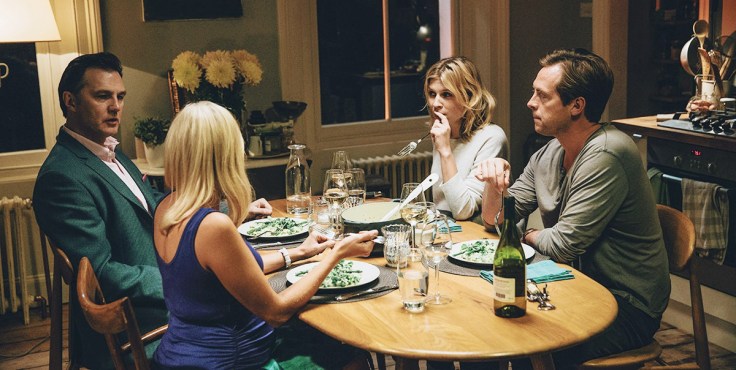
The expecting couple are young professionals Kate (Clémence Poésy) and Justin (Stephen Campbell Moore), who up until now lived comfortably in the upper half of their London flat. Downstairs a new couple have moved in, a bubbly Finnish woman (Laura Birn) and her older, much less congenial husband Jon (David Morrissey). As luck would have it they have a child on the way too.

The soon-to-be mothers are drawn together initially but their differences soon come to light. Kate has doubts about motherhood that are not even comprehended by her desperately maternal neighbour. Theresa (her name even reminds of the renowned ‘Mother’) and Jon have always wanted to have children but it hasn’t been so easy for them. This is in stark contrast to Kate who wasn’t sure that she even wanted to have children, perhaps seeded in the frigid and distant relationship she has with her own mother. The ease with which she has fallen pregnant becomes a matter of discord as a sudden and dramatic turn of events sends the couples’ relationship spiralling into paranoid contempt.

When Kate eventually gives birth, her reluctance is challenged by the relentless demands of her young baby. She soon finds herself sleep-deprived and strung out, suspicious that the couple downstairs are interfering, but how much of this is in her head? While the more villainous qualities of certain characters is shown as schlocky and over-the-top, even for this style of film, it is the more subtle performance of Posey that grounds the horror and creates something interesting.

The Ones Below cleverly uses the divisive attitudes towards pregnancy as a means of finding tension and dividing lines. This is brought out in the way each character dresses, and the ways in which they decorate their apartments even. Where the more laid back and career focussed  young couple wear mostly monochrome, smart-casual attire, the ones below are splattered with bright garish colours, a quality which is unsettling, almost laughably so in the case of Jon, whose tall and imposing demeanour is undercut by his pink socks.

The on-the-nose title of David Farr’s directorial debut sounds like A Twilight Zone episode, which is rather fitting for this film which owes a debt to the twisty revenge thrillers of decades past, and not to mention Roman Polanski. Not simply Rosemary’s Baby, which is an undoubted influence, but the others in the Polish director’s Apartment trilogy, and his more recent adaptation Carnage, which examines the volatile dynamic of two middle-class couples as they fight over their children.

Although there are glimpses of these other films, The Ones Below lacks the potency to rival them and instead offers a cheap thriller that descends into pure absurdity. The final act is actually quite fun in the end but it comes at the expense of all seriousness up until this point.

Against The Sun (2016)

DVD Review – Written for RAF News Feb 2016

Against the Sun tells the incredible true story of three US Navy airmen who were left stranded in the South Pacific near Japanese territory during WW2.

againsst

Chief Harold Dixon (Garret Dillahunt, 12 Years a Slave), bombardier Tony Pastula (Tom Felton, The Harry Potter series) and radioman Gene Aldrich (Jake Abel) find themselves low on fuel and way off course, with no other option but to crash land their torpedo bomber into the ocean. It is only once they climb inside a life raft that they meet each other properly.

The remainder of the film takes place aboard this small but formidable life boat as the three men try to stay alive long enough to make it to shore. As it turns out the nearest islands are over 1000 miles away, which means weeks of travel if they can survive the journey. All of this they must do without food or water, without maps, flares or flashlights. If that wasn’t enough the two younger lads can’t swim and the waters are shark infested. The odds are stacked against them and yet the film maintains a tone of triumph, of sheer American optimism.

Remarkably similar to Angelina Jolie’s Unbroken, the two films are different in scope and magnitude. Where Jolie’s dramatic story is on a much larger scale with glossy special effects, Against the Sun is stripped back to the bones. It is simple and unsensational by comparison – and more effective for it. But that’s not to say it’s too memorable either.

It feels as though there are countless missed opportunities to create tension but it holds its punches intentionally, even if the film suffers for it. This is a true story and measures are taken to capture the events accurately. On this small scale production the performances take focus and it is the dynamic between the minuscule cast that makes the film, but unfortunately the tone stays the same throughout – so while their story is unbelievable the film doesn’t do enough to leave a lasting impression.

Grandma (2015)

Written for RAF News Dec 2015

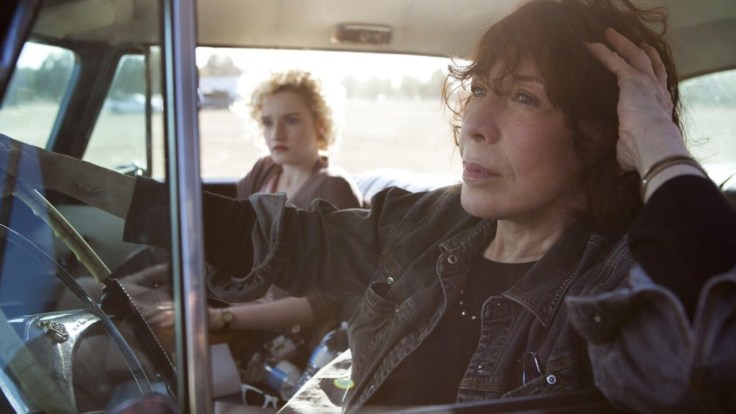
When young Sage (Julia Garner) falls pregnant she turns to her feminist poet grandmother (Lily Tomlin) for help. All she needs now is $612 for an abortion which has been scheduled for later that same day, unfortunately grandma Elle is in the process of transmografying her life into art and has turned her credit cards into wind chimes.

1280x720-pqd

And so the once famous, or mildly well-known, Elle takes her granddaughter on a tour of old flames and affiliates aiming to scrape together the money. They drive around in an old black Dodge, classic in style but ageing and falling apart – the parallel with Elle will become significant on the home stretch.

Elle is sharply intelligent, an academic with rebellious bite. The first we see of her she is breaking up with her young girlfriend (Judy Greer) and as it turns out she can be pretty mean, a trait she almost takes pride in. Despite this, her attitude and cutting remarks are infected with her wry sense of humour.

Grandma is a road movie and an indie comedy, but not in the quirky Juno sense. It is funny throughout but feels somehow more sincere – although you can expect an acoustic score with shots of hands out of car windows rolling on the wind.

It’s not all light-hearted whimsy though, there is an emotional depth to Grandma which comes in a different shape than you might have expected – anti-abortionists are laughed off screen but true drama comes in the form of Elle’s ex Karl, played by a moustacheless Sam Elliot. Touching on their past and the cavernous changes in-between (she is a lesbian and he has a family that borders on an army) the incredible performances of Tomlin and Elliot hint at the complexity of their lives outside of the film.

A clever scene has the long and greying Elliot, hunched over fixing one of his many grandchildren’s play cars – a satire of masculinity, of men and their toys.

Grandma is a feminist film in that it represents strong women of all statures and not without their flaws, this is what makes Elle such a compelling character, she is fuelled by compassion but is openly imperfect.

The Lobster (2015)

Yorgos Lanthimos’ latest film offers more of the same darkly surreal dead pan comedy, except this time there’s an all star ensemble cast who speak English for the most part.

This has a number of effects on the film. Firstly, a new audience has opened up to this testing black humour – curiosity irked and sensibilities challenged. This made for a very tense atmosphere in the cinema where I saw the film, confused at what was supposed to be funny, at what was allowed to be funny. There were a few walk outs halfway into the film, claiming that it was the most disgusting film they had ever seen, and that this was surely not the romantic-comedy they were promised on Graham Norton

the-lobster-movie-trailer-images-stills-colin-farrell-john-c-reilly-ben-whishaw

The other major effect the English casting had on the film, for me at least, was on the tone of the dialogue. It seemed inconsistent. Some were putting more into their lines than others – more sense of comedy, irony or emotion.

Colin Farrell is impressively uncharismatic as David, damaged to the point of losing his humanness. But his performance seems to be a pastiche of those in Lanthimos’ previous films Dogtooth and Alps. The Greek cast remain defiantly more dead-pan and robotic. This difference is seized upon when David’s passivity is tested by Lanthimos staple Angeliki Papoulia as Heartless Woman – and clearly he possesses more emotion than he is letting on. He, like the audience, is being pushed at what he can stomach.

The use of familiar actors in a familiar language draws more attention to the flat delivery of stilted dialogue, and has a different effect to reading the plainly worded sentences in the subtitles. It feels similar to the black comedies of Scandinavia: obviously staged and void of emotion. Like a children’s play, badly translated from another language, written with an alien understanding of how humans interact. It has a childlike naiveté but is self-aware and hilarious with it (as in the game: Touch Feel Think Win) .

The closest English-speaking counterpart to this style of delivery that I can think of is Wes Anderson, whose characters often speak with a dry melancholic tone; depressed and detached. They are withdrawn emotionally which is usually explained in the narrative as part of a dysfunctional family or childhood. Stylised and self-aware, many of Anderson’s characters adopt this tone, captured perfectly by the blank Buster Keatonlike expression of Bill Murray. The Lobster offers us no such context, instead blanketing the world with people who speak plainly and frankly to the point of extreme discomfort – “This is Robert. He lives in the room next to mine and has a lisp” or “I swallow every time I give fellatio and don’t mind anal sex”.

Although everyone speaks bluntly, there is still dishonesty and within this world deception is grounds for punishment. Masturbating in the hotel means your fingers will be jammed in a toaster at breakfast in front of the other guests. Lying about how little you care about anything will mean your brother-turned-dog will be kicked to death. The lack of explanation forces you to confront the style and relate it to reality, making you realise the farcical nature of human interaction.

This was the subject of Attenberg, a film which Lanthimos both starred in and produced, warping communication between people into something very surreal, especially when dealing with sex. Although this is still confined to strange individuals in our shared reality. In doing this we can choose to draw comparison to our own personal lives or just write it off as fringe behaviour, or an act of surrealism. The Lobster changes the rules of the world and forces us to rethink the rules we have in our own world. The protocol of normalised behaviour, the gameplay of relationships. How people tend to pair together due to a shared interest, experience or flaw. The hilariously frank dialogue is so funny because it defies our social rules – it tells us that we are not always honest. Behind someone’s back we might define a person by their limp or maybe we would suggest flirtingly how promiscuous we are, but we adhere to a code of decency that appears arbitrary and hypocritical in light of The Lobster.

The final moments of the film tease and toy with you. The room tightens up collectively and there are a few audible gasps. It’s almost identical to Dogtooth. Those new to Lanthimos already don’t trust him, and those who are familiar know not to.

Blog at WordPress.com.

Up ↑