Grandma (2015)

Written for RAF News Dec 2015

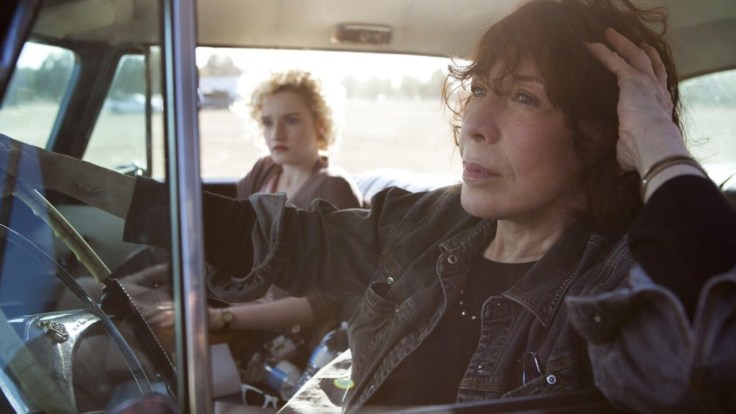
When young Sage (Julia Garner) falls pregnant she turns to her feminist poet grandmother (Lily Tomlin) for help. All she needs now is $612 for an abortion which has been scheduled for later that same day, unfortunately grandma Elle is in the process of transmografying her life into art and has turned her credit cards into wind chimes.

1280x720-pqd

And so the once famous, or mildly well-known, Elle takes her granddaughter on a tour of old flames and affiliates aiming to scrape together the money. They drive around in an old black Dodge, classic in style but ageing and falling apart – the parallel with Elle will become significant on the home stretch.

Elle is sharply intelligent, an academic with rebellious bite. The first we see of her she is breaking up with her young girlfriend (Judy Greer) and as it turns out she can be pretty mean, a trait she almost takes pride in. Despite this, her attitude and cutting remarks are infected with her wry sense of humour.

Grandma is a road movie and an indie comedy, but not in the quirky Juno sense. It is funny throughout but feels somehow more sincere – although you can expect an acoustic score with shots of hands out of car windows rolling on the wind.

It’s not all light-hearted whimsy though, there is an emotional depth to Grandma which comes in a different shape than you might have expected – anti-abortionists are laughed off screen but true drama comes in the form of Elle’s ex Karl, played by a moustacheless Sam Elliot. Touching on their past and the cavernous changes in-between (she is a lesbian and he has a family that borders on an army) the incredible performances of Tomlin and Elliot hint at the complexity of their lives outside of the film.

A clever scene has the long and greying Elliot, hunched over fixing one of his many grandchildren’s play cars – a satire of masculinity, of men and their toys.

Grandma is a feminist film in that it represents strong women of all statures and not without their flaws, this is what makes Elle such a compelling character, she is fuelled by compassion but is openly imperfect.

The Lobster (2015)

Yorgos Lanthimos’ latest film offers more of the same darkly surreal dead pan comedy, except this time there’s an all star ensemble cast who speak English for the most part.

This has a number of effects on the film. Firstly, a new audience has opened up to this testing black humour – curiosity irked and sensibilities challenged. This made for a very tense atmosphere in the cinema where I saw the film, confused at what was supposed to be funny, at what was allowed to be funny. There were a few walk outs halfway into the film, claiming that it was the most disgusting film they had ever seen, and that this was surely not the romantic-comedy they were promised on Graham Norton

the-lobster-movie-trailer-images-stills-colin-farrell-john-c-reilly-ben-whishaw

The other major effect the English casting had on the film, for me at least, was on the tone of the dialogue. It seemed inconsistent. Some were putting more into their lines than others – more sense of comedy, irony or emotion.

Colin Farrell is impressively uncharismatic as David, damaged to the point of losing his humanness. But his performance seems to be a pastiche of those in Lanthimos’ previous films Dogtooth and Alps. The Greek cast remain defiantly more dead-pan and robotic. This difference is seized upon when David’s passivity is tested by Lanthimos staple Angeliki Papoulia as Heartless Woman – and clearly he possesses more emotion than he is letting on. He, like the audience, is being pushed at what he can stomach.

The use of familiar actors in a familiar language draws more attention to the flat delivery of stilted dialogue, and has a different effect to reading the plainly worded sentences in the subtitles. It feels similar to the black comedies of Scandinavia: obviously staged and void of emotion. Like a children’s play, badly translated from another language, written with an alien understanding of how humans interact. It has a childlike naiveté but is self-aware and hilarious with it (as in the game: Touch Feel Think Win) .

The closest English-speaking counterpart to this style of delivery that I can think of is Wes Anderson, whose characters often speak with a dry melancholic tone; depressed and detached. They are withdrawn emotionally which is usually explained in the narrative as part of a dysfunctional family or childhood. Stylised and self-aware, many of Anderson’s characters adopt this tone, captured perfectly by the blank Buster Keatonlike expression of Bill Murray. The Lobster offers us no such context, instead blanketing the world with people who speak plainly and frankly to the point of extreme discomfort – “This is Robert. He lives in the room next to mine and has a lisp” or “I swallow every time I give fellatio and don’t mind anal sex”.

Although everyone speaks bluntly, there is still dishonesty and within this world deception is grounds for punishment. Masturbating in the hotel means your fingers will be jammed in a toaster at breakfast in front of the other guests. Lying about how little you care about anything will mean your brother-turned-dog will be kicked to death. The lack of explanation forces you to confront the style and relate it to reality, making you realise the farcical nature of human interaction.

This was the subject of Attenberg, a film which Lanthimos both starred in and produced, warping communication between people into something very surreal, especially when dealing with sex. Although this is still confined to strange individuals in our shared reality. In doing this we can choose to draw comparison to our own personal lives or just write it off as fringe behaviour, or an act of surrealism. The Lobster changes the rules of the world and forces us to rethink the rules we have in our own world. The protocol of normalised behaviour, the gameplay of relationships. How people tend to pair together due to a shared interest, experience or flaw. The hilariously frank dialogue is so funny because it defies our social rules – it tells us that we are not always honest. Behind someone’s back we might define a person by their limp or maybe we would suggest flirtingly how promiscuous we are, but we adhere to a code of decency that appears arbitrary and hypocritical in light of The Lobster.

The final moments of the film tease and toy with you. The room tightens up collectively and there are a few audible gasps. It’s almost identical to Dogtooth. Those new to Lanthimos already don’t trust him, and those who are familiar know not to.
No Ghosts Just Gravity: Science and Spirituality Reconciled in Interstellar

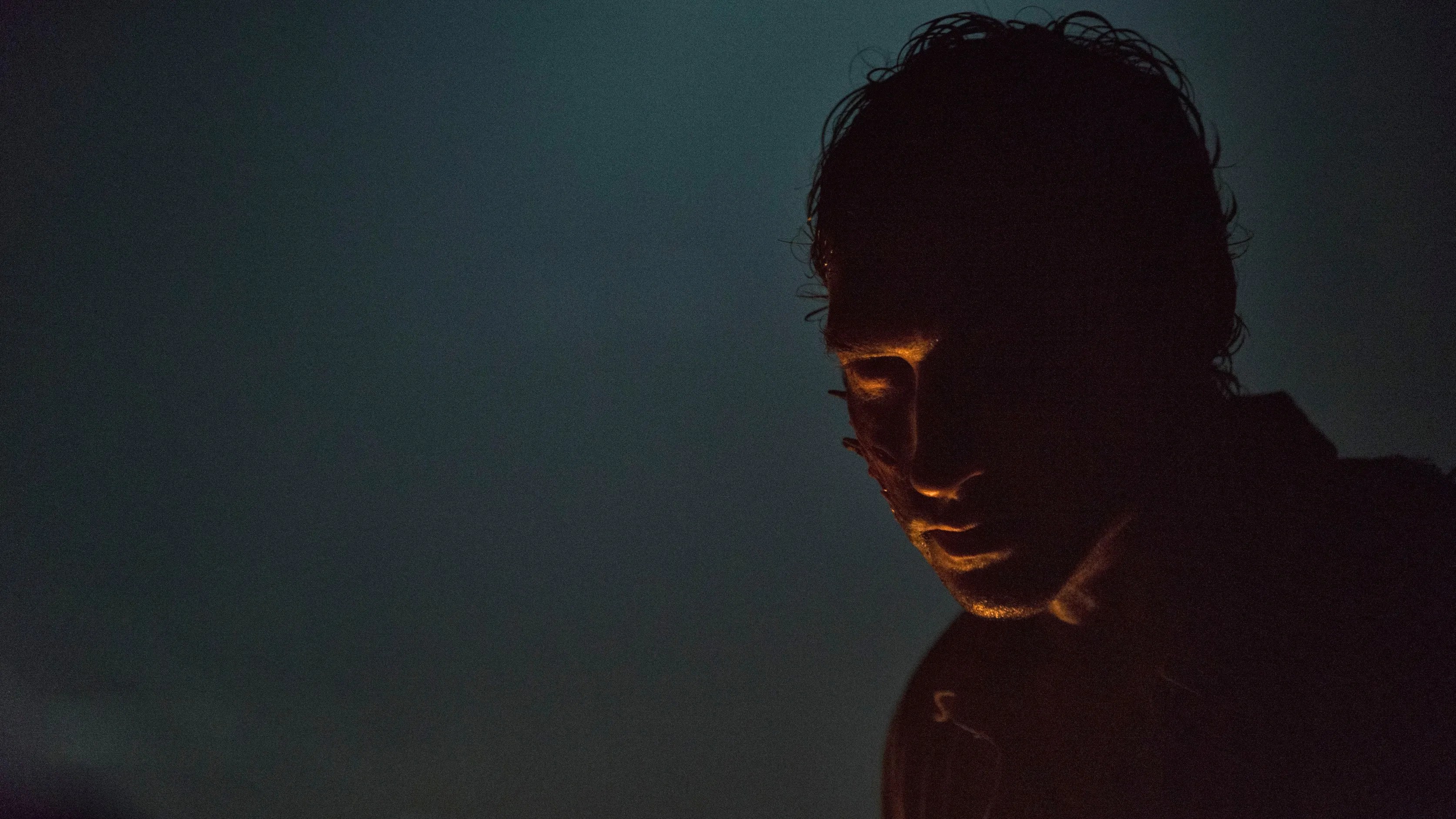
‎The problem when making central characters scientists, or at least defining them by their rationality, is that in order to abide by the format of Hollywood cinema, they’ll have to step down as hero or cave to the pressure of the spiritual or supernatural. Director Chris Nolan goes one better in Interstellar, attempting to explain away the mysticism of the narrative through science.

Coordinates.png

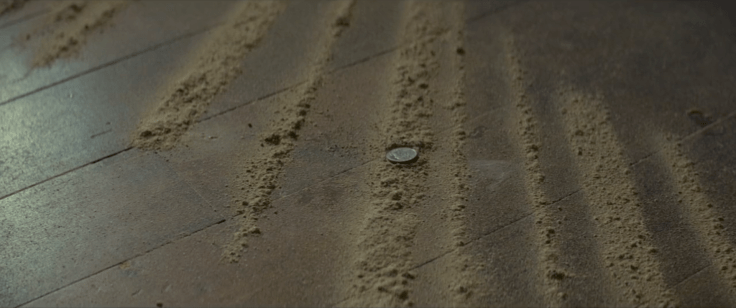
The conflict is introduced early on when ex-NASA pilot and apparent rationalist Cooper (McConaughey) dismisses his daughters claim that there is a ghost in her room – knocking books off the shelf, and parting dust into piles on the ground. This poltergeist isn’t like most others, acting arbitrarily and making shit move to be spooky; this one has a message.

Granted this message changes from the word ‘STAY’ to the missing quantum data of the gravitation problem, communicated in binary on the second hand of a watch. Pretty much the opposite of stay. And a tad more complex. But our hero of the third act is the little girl grown up, daughter Murphy Cooper: scientist and ghost-whisperer. She embodies both the religious and the rational, reconciling the faith-driven attitude of Hollywood with the scientific method by eventually providing proof of her own spiritual experiences.

Continue reading “No Ghosts Just Gravity: Science and Spirituality Reconciled in Interstellar”

The Hallow (2015)

Written for Film and TV Now Nov 2015 (Available here)

As a family drive down to their new home in the Irish countryside, a radio broadcast tells us that Ireland is one of the last countries to have publicly owned forests – they will soon find out that the locals are protective of their land, but not as much as the creatures hidden within.

Father of the family Adam (Joseph Mawle) is a conservationist, having moved from London to inspect the trees. On his first expedition with his baby boy on his back he stumbles upon a deer, mutilated in an abandoned shelter and dripping with a suspicious black substance. As warned by a local policeman played by Michael Smiley, local legend tells of mythical beings in the woods, banshees and baby-stealers, “This isn’t London. Things go bump in the night”.

As much as The Hallow is about people from that London moving where they don’t belong and interfering with nature, it becomes a platform for all different kinds of genre tropes. It feels like an amalgam of horror films of different styles. It splices them together but spreads itself thin in doing so. The seclusion of the town and it’s inhabitants feels a little like An American Werewolf in London, their twisted spiritual beliefs like an inversion of the pagan cult in The Wicker Man. The Irish folklore, as detailed in the Evil Dead-like Book of the Dead, gives way to fantastical creatures that have a touch of Pan’s Labyrinth.

For all of its high reference points it doesn’t land as hard of a punch as it should. The preference of practical effects for the monsters is admirable, but as the story progresses and they come to the fore, their scariness fast diminishes. It is the atmosphere that remains unsettling in The Hallow, the creatures, whilst impressive, are not on the Guillermo Del Toro scale of production value and so are best when glimpsed in darkness. This is after all the directorial debut of Corin Hardy, and an impressive one at that.

Whilst some of these ideas can be seen elsewhere it is this certain combination that fits so well, but in trying to fulfil the style of each type of horror (from house invasion, to creature feature, to body horror and psychological thriller) it doesn’t feel as effective as it might have done if it narrowed it’s focus. The disintegration of trust between Adam and his wife Clare (Bojana Novakovic) leads to a harrowing idea late in the film as they fight over the baby, but with all these plates spinning it’s hard to appreciate how scary this really is.

Undercover Brother (2002)

DVD Review – Written for RAF News Nov 2015

Undercover Brother (Eddie Griffin) is a secret agent with soul, a superfly Austin Powers… Macy Gray with pork-chop sideburns.

Hired by an underground collective known as The Brotherhood, his mission is to find out why black military general and promising presidential candidate Warren Boutwell (Billy Dee Williams) has decided to drop out of the running and set up a chain of fried chicken restaurants.


Sharing a writer with Austin Powers you can see the similarity in the way that it plucks it’s sexually confident hero from a different time and uses him to parody a film genre, though change swinging 60s espionage for straight up 70s Blaxploitation – using music cues and editing to push home the point, much like the more recent Black Dynamite.

The film is full of one-liners, visual gags and slapstick – not leaving much room for anything else. It feels pieced together around a few sketches, but what it lacks elsewhere it makes up for in the sheer number of jokes so it doesn’t matter that they’re not all that funny.

The supporting cast all serve their purpose – Chris Katan as the villainous underling of The Man, Denise Richards as double agent White She Devil and fellow stand-up comedian Dave Chapelle as the stoner conspiracy theorist who finds racial arguments in a one word greeting. Everyone chips in with jokes but Griffin is the soul of the film and the funniest thing about it.

Undercover Brother is self-aware to the point of almost looking at the audience after each punchline (guilty of using a needle scratch multiple times). For the most part though it shows that the film is aware of it’s tackiness and embraces it as part of it’s tongue in cheek style. Overall it’s not great, a little dated but has style for sure.


Create a free website or blog at WordPress.com.

Up ↑