Swiss Army Man (2016)

Written for RAF News September 2016

Stranded on a beach Hank (Paul Dano) has had enough and is ready to end it all when a corpse (Daniel Radcliffe) washes up on shore giving him new hope – as well as a way to chop wood and start fires. It’s kind of like Cast Away but with Harry Potter playing Wilson.

swiss_8_large

All we know about Hank is that he is an outsider, a bit of a weirdo but sweet at heart. All we know about Manny is that he is dead, at least we’re sure he’s dead until he starts talking – prompting Hank to teach him all there is to life, mostly: love, farts and masturbation. In return Manny offers his body as a tool, appearing to have fantastical powers. If you hadn’t guessed from the title Swiss Army Man is ridiculous. It is pure comic absurdity channeled into the template of an indie film.

Hank’s life lessons are usually accompanied by elaborate props and scenes fabricated from twigs and refuse, giving the film an impossibly complicated homemade aesthetic that is so common of independent films – think: Be Kind Rewind, Nick and Norah’s Infinite Playlist or more recently Me, Earl and the Dying Girl and Adult Life Skills. It feels like an elaborate parody at times, with classic moments like hands rolling out of windows and underwater kisses – just with one of the character’s dead and propped up with sticks or his own flatulence. It’s this level of humour that prevents it from getting too serious, or at least when it seems to get serious it is undermined completely by its silliness.

Not so much concerned with whether he is a hallucination or not, Swiss Army Man ventures into the bizarre by trying to tell a serious story through the profanely juvenile. It embraces its absurdity and wears it with pride. The score is put together brilliantly, a cappella chorus that is sparked by Dano and Radcliffe imitating stirring and triumphant film music. Dano’s recent turn as Brian Wilson comes to mind, not only in his vocal harmonies but in his disturbed state of mind.

The repetition of certain jokes does get tired but much like Manny’s corpse they seem to have a second life after a time. Swiss Army Man is a bold film that sticks to its style and delivers something altogether different and a bit weird.

Pockets

creacic3b3n_de_adc3a1m

So nimble fingered is the child now that he can stow things away in his pockets. Up until this point, the pockets on his trousers were akin to the belly button on Adam – purely aesthetic, to make him blend in with the rest of us, to pretend he’s just like the rest of us. And now he is: collecting things he doesn’t need.

Two Women (2016)

Written for RAF News September 2016

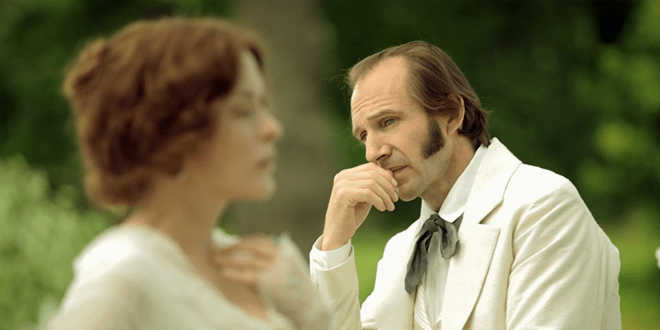
Set in mid-19th century Russia, Two Women is focussed on the social fallout when a young tutor moves into a countryside estate only to steal the affection of both the wife and adopted daughter in residence.

timthumb

The harsh and hardened lady of the manor, Natalia Petrovna (Anna Astrkhantseva), has grown complacent, her eye drifting from her wealthy husband to her hopelessly-besotted friend Mikhail (Ralph Fiennes) and now to new arrival (Nikita Volkov) even though he himself seems distracted by young free spirited Vera (Anna Levanova).

Adapted from Ivan Turgenev’s A Month in the CountryTwo Women is presented rather as two days. The first painted white and gold, every scene sun-kissed and glowing as the children play together and the adults fawn over each other. Then, in another move of unsubtle symbolism, the second day is met with torrential downpour, taking with it those promising emotions and complicating the relationships within the house.

Over the course of the film different pairings of characters walk around the luscious surroundings of this country home confessing their feelings for each other. Despite the large open spaces that they so often meander through, most are caged by repressed desires and how they ought to behave.

Two Women is a slow-burn that deals in subtlety, but in the hands of these performers small moments become something much larger. Fiennes is masterful at this, stealing focus when simply reacting. Although given that he had learnt the lines in Russian to be overdubbed this is all we are left with. Astrkhantseva gives a solid performance as Natalya, the perfect counterpoint to Vera, the other woman titled in the film though treated as a child. She is naive and vulnerable, spending most of the time running from something or other – which is pointed out as being rather improper.

Apart from a couple of quips made by the visiting doctor, each scene is treated as a rather sober affair, drifting apparently from the comedy in the original text. As if constrained by the same formality of its characters, Two Women moves slowly but deliberately. It relies on the performances to keep your attention, and this it manages to do but it sure does take itself seriously.

two

Fast approaching two years of age (24 months in parentspeak) we received a form that allows the men in white coats to track the boy’s development. Of course we treated the questionnaire competitively and were almost gloating when he would over-achieve a particular goal.

Can he name 4 parts of his body?

Four?! Hows about: shoulder, elbow, eyebrow and thigh. Do one bell curve.

Then of course we were met by some that he hadn’t quite achieved, or we hadn’t even thought to put in practice. And these were, as it turns out, quite huge – maybe even fundamental developments.

Does he refer to himself as I/Me?

Shit. We’ve raised a psychopath. Or a guru – referring to himself in third person like our own little Mike Tyson.

Mulling this over these last few weeks it seems to be a lot more complex than I first thought. How do you teach someone perspective without your own interfering. You refer to yourself as ‘I/me’, and somehow he is supposed to pick up on the fact that he should refer to you as ‘you’ and himself as ‘I/me’. It’s baffling really. I don’t know I manage, let alone teach it on.

I realise more and more the linguistic tricks I take for advantage. The synonyms, homonyms and word games of everyday. Somehow the little one has picked up on the fact that people share names, a la Nanny and Grandad. And I’m certain that he understands both two and too (meaning ‘as well’). He has a fluidity in language and isn’t hung up on a word meaning one thing and one thing only. His sole principle is to communicate something, not dressing it up and following grammatical rules, and yet he seems to have formed an understanding of the rhythm of language that he hears from others.

At this point in time he is forming 4-5 word sentences, if the words are crucial. If he only needs two words to communicate what he wants, he will often fluff up the sentence with some gibberish – knowing that when we talk there is more going on and so offering some noise as filler. I guess that is what we do on some level.

If he were to say ‘Fly gone window’ I know exactly what he is saying. But in mimicking the manner in which we speak, he protracts the sentence unnecessarily to ‘Fly baderrrra ferrba daaferr gone window’. As if we wouldn’t pick up on the nonsense sandwiched in-between. Or maybe he’s mocking our needless waste of breath, satirising us – the little fucker.

At least I can speak in first person.

Do you think you and I are saints? An Interview with Cristiana Dell’Anna: Gomorrah Season 2

Written for Film and TV Now Aug 2016 (Available here)

With Gomorrah’s second season finally upon us, and with the Savastano clan in disrepair, the criminal empire of Naples is changing hands and making way for new faces. We will come to know fringe characters in more depth and be introduced to the relatives and relations of those we are acquainted with already.

hbon-aapzo-000-pgm-01-01-2500-hd-169-sr-1920x1080-50-9269152

Expanding the universe of this Neapolitan underworld, the second series has many more female characters central to the story but don’t expect it too be any softer. “Women are portrayed just like men: brutally ruthless!” explains Cristiana Dell’Anna, one of the newer cast members who I was able to ask a few questions recently, about this series and the morally complicated character she plays in the show.

There were few female characters introduced in the first series and though most were voiceless trophies of their criminal partners, one of the most interesting breaks from stereotype was Lady Imma, the wife of Don Pietro Savastano. As captured in a decadent family oil painting, she stood beside her husband and supported him in his reign, but once imprisoned it was Genny – their spoilt and somewhat naive son – that was going to take over the clan. This was when Lady Imma started playing the game, a pretender to the throne herself she began to give orders as though from Pietro, preventing a takeover by Ciro and toughening up her son so that he was ready to fill the role of his father.

At the end of season 1 Lady Imma was killed, her death ordered by Ciro ‘The Immortal’ – whom she had always been suspicious of. Call it women’s intuition. This left a void of powerful female characters in Gomorrah, one that would soon be filled, and many times over.

When Don Salvator Conte returns to his hometown, the remaining members of the Savastano clan, the survivors, come together to form a mutually beneficial democracy: The Alliance. One such member is Scianel, sister of Zecchinetta who was the first to be killed by the alley kids, in what would be a rise of reactionary chaos. No stranger to this game, Scianel is hardened, an intimidating presence who seems to be permanently repressing rage. We will come to know Scianel through visits to her son in prison, with a reluctant daughter-in-law that she practically holds captive in a neighbouring room, as well as her frequent visits to a clothing store.

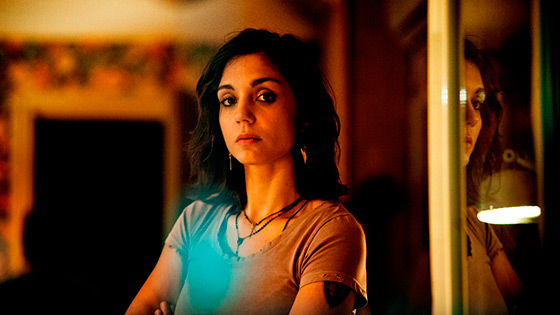
It is here that we first meet Patrizia. A clerk and personal shopper for Scianel who knows to be respectful and stay in favour. As it turns out she has her own ties to the underground – “Patrizia happens to be born in the wrong family. She is the niece of Don Pietro’s right hand, Malammore, who recruits her to work for the Savastano clan, giving her no choice” Cristiana explains. Patrizia is perhaps the closest we have to an audience surrogate, she has a life independent of the crime syndicate and she is reluctant when her uncle finds her a job as the eyes and ears for Don Pietro. As with most, money holds some allure but Patrizia’s motivation seems a little more unclear, perhaps through her connections she knows that there is no point fighting, that her fate has been decided.
cristiana-dellanna_6

Gomorrah has a whiplash inducing pace, jumping forward through time characters will change suddenly, their loyalties will shift along with their manner and demeanour. In the case of Patrizia, we are able to see a more gradual change as the dark side of the city will get it’s hooks in her and reveal what she is capable of. Cristiana continues, “She is brave and very intelligent, and will soon find out she has the skills to become a dangerous criminal, capable of scheming and ready to betray her own blood.”

One of the shows defining features is its relentless brutality. No-one is safe from the horrors of mindless violence and no time is spared to mourn. There is a moral dividing line that separates those involved from those on the outside, but this line is blurred in the case of Patrizia. I asked Cristiana if it is difficult to get into the mind of someone morally questionable – “Do you think you and I are saints? would you say you are unquestionably good? Or am I? All the time, unconditionally? Of course not!” Explaining that her process is intimately personal, and delicate, it is this grounding of the darkness in all of us that seems to come out in the complex inner-workings of Patrizia. The religious comparison is fitting, considering the ubiquity of Christianity in Naples and the hypocrisy that it is constantly highlighting.

The gritty unforgiving world of Gomorrah is based in reality, adapted from the expose of the same name and written for the screen by its author Robert Saviano. It was this renowned book that Cristiana returned to for her research but also the memories and stories that she would hear about crime in Naples when she was younger. But it still goes on today and Saviano has spent years since the books release under protection. It is this pervasive element of the crime syndicate in Naples that is captured so well in Gomorrah, the threat is so inescapable and unpredictable that the tension never lets up.

Cristiana acknowledges that the story is the most important part of the show and that the characters are servants to the narration. “The real protagonist in both seasons is ‘the system’. The cruelty of the system, how spread around the world it is. How unaware of this power we all are.” Asked about the future of Patrizia, Cristiana references this cruel and volatile system “I will be there. But you know, I could be shot in the first episode… who knows!”

The first and second season of Gomorrah are available on Blu-Ray and DVD now and plans for the third and fourth seasons have already been set in motion.

Blog at WordPress.com.

Up ↑