Honey Boy (2019)

Written for RAF News November 2019

Loving affection overshadows the abusive relationship between a child actor and his father.

Image result for honey boy stills

Written by Shia LaBeouf as a ‘therapy project’, Honey Boy is set around the point in his life when he was the star of a Disney show, captured here as 12 year old Otis (Noah Jupe). Achieving success that would soon bloom into a film career the film focusses instead on the damage of these formative years, jumping back and forward through time to reveal the beginnings of what would later be diagnosed as PTSD.

Opening with a dizzingly assembled montage tracking the successes and exploits of Otis in his 20s (Lucas Hedges), the line is blurred between the person on and off screen. It appears that LaBeouf aims to explain his tabloid notoriety of being drunk and disorderly (arrested for such behaviour as late as July 2017 when shooting recent release Peanut Butter Falcon). The point of both trauma and inspiration appears to be Otis’ father James Lort, a hardened rodeo clown with a a chip from AA and a permanently blocked nose from cocaine abuse, played with phenomenal depth by LeBeouf himself. James is a performer who never made it, belittling his son’s achievements whilst being completely dependant on them, pocketing the per diem and leaving Otis to steal food from the catering on set.

Acting as his son’s vicious cheerleader, there is a fascinating dual quality at play. Young Otis represents the vulnerable and rage-filled child who desperately wants his father’s love, trying and failing to hold his hand in public. Constantly confronted by his failures, LeBeouf, that same little boy grown up, captures the shameful but dedicated part of the father, closing the gap of understanding by putting himself in the role. Our awareness of the actor and the material adds such complexity that the catharsis is palpable.

The chemistry between Jupe and LaBeouf is incredible, at once reviled and idolised, theirs is a complicated relationship that requires much empathy. Filled with comedy and darkness, more often than not holding one within the other. It reminds of last years Ladybird, and perhaps it’s director Alma Har’el that lends a tenderness that creeps in and takes over.
Lying and Stealing (2019)

Written for RAF News November 2019

Beautiful people Ivan and Elyse combine their charm and guile in a con job that aims to get them both out of trouble.

Image result for lying and stealing

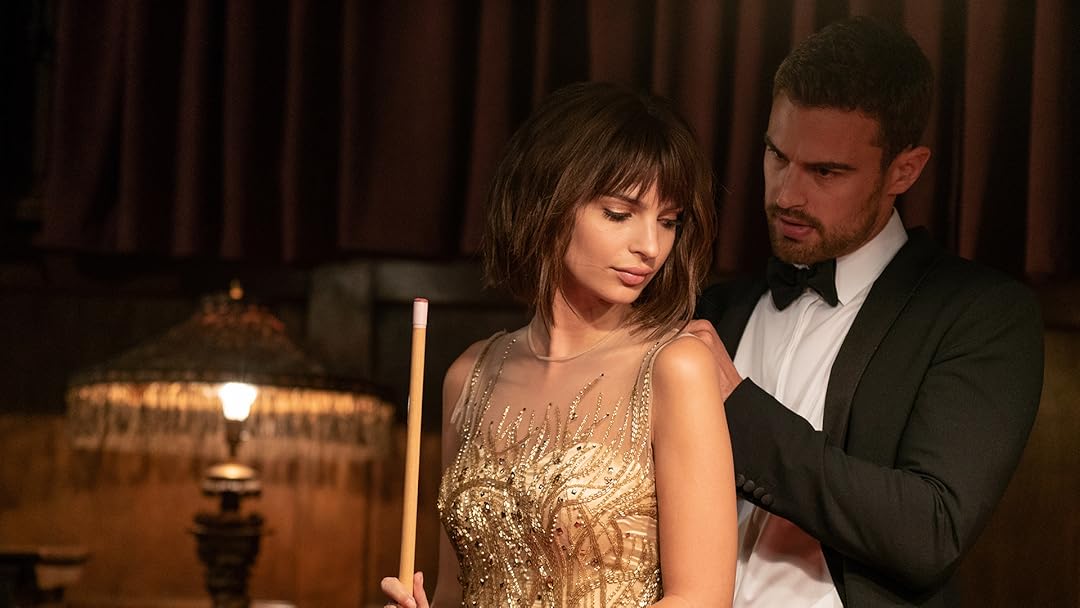
Symmetrically handsome art thief Ivan (Theo James, Divergent Series) owes mob boss Dimitri (Fred Melamed) for the debt of his deceased father. Apparently only two jobs away from his freedom, things seem too good to be true until a local murder and the appearance of the FBI parked outside his apartment.

Added to this, Ivan’s bi-polar brother (Ebon Moss-Bachrach) with the same genetic sticky fingers moves in from rehab, and there’s the addition of wily bombshell Elyse (Emily Ratajkowski), an actress disgraced from Hollywood for rejecting the approach of a lecherous producer, trading favours and taking an interest in our mumbly monotonous hero.

Lying and Stealing does not wait around, it’s a quick 100 minutes that establishes its stakes early on, telegraphs the good guys and the bad, and lets you enjoy the heisty action in short snappy scenes. It doesn’t set up the method of the job, or lean on tension whilst its playing out, you’re simply dropped into the moment to enjoy the satisfaction of someone stealthily applying their craft and using gadgets without detection.

Some way into the film the directorial style comes out of nowhere and it feels like its suddenly appealing to an older audience in both its language and violence. Largely though, it plays as a crime caper with the twists straightened and the style ironed out. It doesn’t get bogged down in the usual double-crosses and plays pretty straight for the most part.

The story is simple and the template shows itself in the details (the big bad known as ‘The Greek’), but there is something to be said for not trying to be too clever and having your grasp exceed your reach.

It could have been more complex or humorous, but it wasn’t, and that’s fine.

The King (2019)

Written for RAF News October 2019

Shakespeare’s Henriad plays become a modernised historical epic but pared down to a few characters and fewer battles. The King appears more as a toothless morality play about the compromise that comes with power and the inevitability of war.

Image result for the king

Timothée Chalamet is Prince Hal, the wayward son of King Henry, a drunken Lothario albeit with perfect curls. His reluctance to fight his father’s war loses him favour and the crown. But when his father (Ben Mendelsohn) is unable to keep peace within the country it seems rebellious young Hal might just be what England needs, as a series of events lead him to become King Henry V.

A self-proclaimed pacifist, the new King resists trivial provocations from France but with council in his ear speaking of politics and ‘the mood of the people’, he finds himself drawn in. Co-written and directed by David Michôd, you might expect harsh and unflinching violence, what with his debut Animal Factory. The King bides its time however, and for the most part consists of Henry trying to avoid battle, deliberating with his advisor (Sean Harris) and the Archbishop (Andrew Havill). When violence eventually creeps into the film, and war is waged against France, it appears at various stages to mark the compromise of Henry’s stance, it’s graphic depiction marking each lost foothold with gruesome impact.

This aspect of the film appears original, but serves only to highlight the larger parts of the film which are all too familiar and dramatically played out. The Battle of Agintcour interestingly begins messy and unclear, suffocating under the weight of clattering armour down in the mud, until King Henry’s right hand man Sir John Falstaff stands and takes off his helmet so we can follow along.

Joel Edgerton, who shares a writing credit, is Falstaff: bulky and burly with a Yorkshire affectation – one that stands up against Chalamet’s impressive but sometimes waining English and Robert Pattinson’s double-barrelled French accent, as the almost moustache twirling Dauphin.

It is entertaining at times, original in moments, but for the most part The King is just flat with some interesting performances thrown on top.

By the Grace of God (2019)

Written for RAF News October 2019

Based on true accounts and a scandal that is currently going to trial, Francois Ozon’s dramatisation looks at a group of child-abuse victims who band together as adults to speak out against their abuser and the system that allowed him to act with impunity: The Catholic Church.

Image result for by the grace of god

The film begins with Alexandre (Melvil Poupaud), a devout Christian family man who is moved to action when he sees that the priest who abused him as a young boy is back in Lyon working with children. Bringing back traumatic memories, he becomes determined to prevent Father Preynat (Bernard Verley) from doing further damage and to make the church a safe and morally responsible place for children such as his own.

The first third of the film sticks closely to the shared correspondence between Alex and different figureheads from the church, formally written and delivered as voice-overs to shots of him with his family and Preynat with his congregation. This measured approach only gets so far before being met with closed doors, and so a disconsolate Alex files an official complaint which becomes the flap of the butterfly’s wing that leads to a previous case being reopened.

François had a similar experience to Alexandre but his confrontational approach is far different. Continuing a police investigation and gaining the interest of the press, he forms a support group that becomes an open forum for victims, eventually receiving an overwhelming number of similar child-abuse testimonies of kids 30 years ago. From here the group put a case together against the Priest and now renowned Cardinal Barbarin (François Marthouret), who kept the cases from being reported to civil authorities.

There is a definite reminder of recent Oscar winner Spotlight, but By The Grace focusses on the victims as opposed to the journalists reporting the story. And rather than maintain a sorrowful and sympathetic tone, it allows the characters to be normalised: they have flaws and a sense of humour like anyone else. It doesn’t impact their deserved empathy, it makes them feel more real.

The length of time spent with each character could lessen the immediate impact, but Ozon has made a bold film that gives insight to the varied long-term affects of abuse.

Peanut Butter Falcon (2019)

Written for RAF News October 2019

Zak is a 22 year old with Down Syndrome and no guardian, making him a begruding patient at a retirement home. That is until roomate (Bruce Dern) helps him escape through the barred windows late one night, leaving him greased up with no clothes or possessions, just a dream of making it to a wrestling school run by his hero The Salt Water Redneck (Thomas Hayden Church).

Image result for peanut butter falcon

Finding shelter in a small docked boat, Zak wakes to find himself on the move, being chased by some frenzied fisherman. Tyler (Shia LaBeouf), the driver of the boat, has evidently ruffled some feathers and is looking to make an escape himself. This is the meet-cute for our soppy looking buddy movie: two unlikely outlaws on the lamb in the indie film Adventures of Huckleberry Finn.

Tyler is gruff and grumbling, aggressive out of the gate and unsympathetic towards the near-nude joy-rider he finds under tarp on deck. That is until he discovers that he is also a runaway on a mission, with care worker Eleanor (Dakota Johnson) hot on his tail. And so it seems that this trouble starting crab fisherman has found himself an accomplice and an alibi as they head together to find this wrestling school in the middle of nowhere.

The moral lesson and shape of the story might be clear from the outset but the charm of the actors and their chemistry is utterly disarming, even when it crashes into  narrative convenience or cliche. There is a rhythm to the dialogue that feels less filmy thanks to non-actor Zack Gottsagen, lending itself perfectly to the reality of the relationship, bringing out the humour as well as the pathos.

Tyler is aloof initially but as he becomes buds with Zak he makes a point of being intentionally unpatronising and non-coddling, which makes the moments of kindness and flashes of vulnerability resonate.

Funny and earning its sentimentality, Peanut Butter Falcon is a charming film that is hard not to like.

Blog at WordPress.com.

Up ↑