The Calling (2014)

Written for RAF News October 2014

The humble town of Port Dundas, Ontario sees its first murder in four years, which Detective Hazel Micallef (Susan Sarandon) supposes is the work of a serial killer. This is no mystery for the audience as we are soon introduced to the murderer (Christopher Heyerdahl): an intense yet softly spoken preacher of sorts. Now it is up to Hazel and her new partner (Topher Grace) to track him down before the spree continues.
the_calling

With a strong headed female detective on the trail of a murderer in this snow-covered humdrum town, the film begins as Fargo, drained of its humour and left frighteningly austere. As the police start to work a religious angle that ties in local murders it becomes something more akin to Seven – just without the tension.

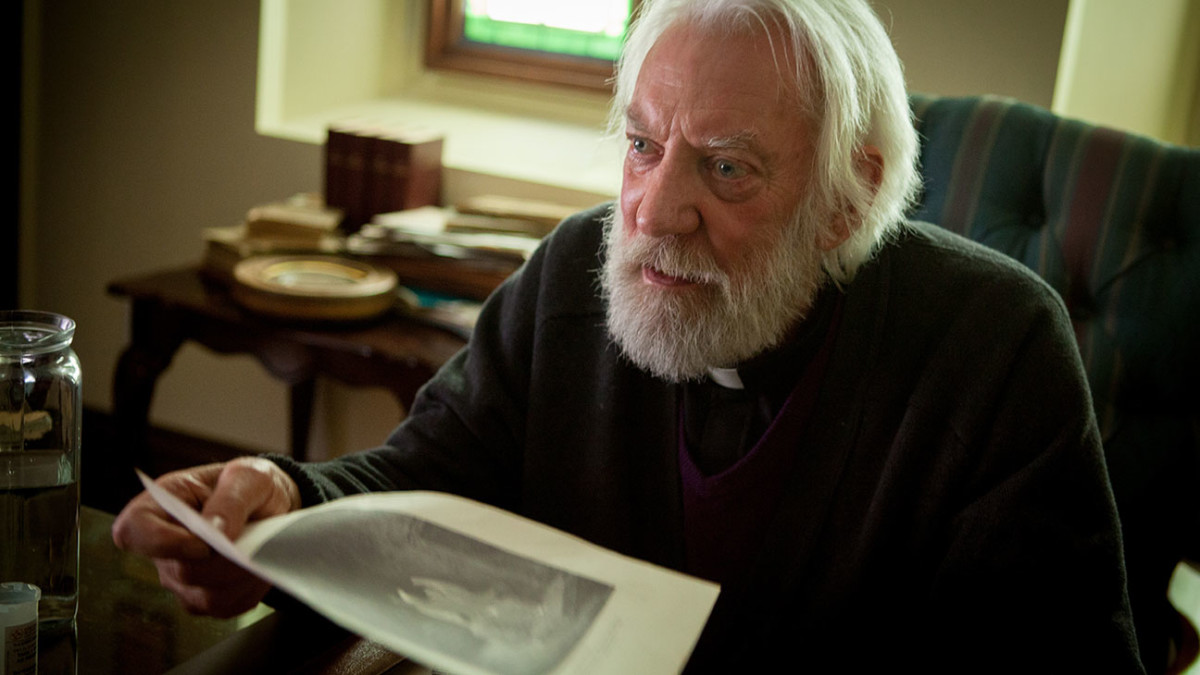
Hazel is painted a cold, pill-popping alcoholic toughened to the point of being allergic to flowers. Sarandon doesn’t seem the right fit, neither do the other big names of the cast, rather it is Gil Bellows whose performance stands out as Hazel’s combative partner. All other characters seem to fall flat or go to waste, including Donald Sutherland’s answer-providing priest who appears to explain the motive of the killer – the why – and considering we know the who from early on the slow pace seems unnecessary.

In the opening of the film when Sarandon stumbles upon the first victim, a family friend who is found with her throat cut to the point of near decapitation, it seems that that what is going to follow is a dark cat and mouse thriller – but we soon learn that this is an anomalous bit of action in a larger melodramatic film.

Shaken from their stupor it is hard to imagine how boring the town must have been before this advent, as even the pursuit of a murderer is somehow made dull and uninteresting.

20,000 Days on Earth (2014)

Written for RAF News September 2014

A conceptual music documentary that follows Nick Cave on the supposed 20,000th day of his life as he reflects on the past and ponders the meaning that he finds in performance.

20000daysonearth

Through a number of constructed set-pieces, the film frees itself from the duty of capturing authenticity and presents instead something more fitting of the Melbourne-born, now Brighton-based performer. And though Cave has many strings to his bow by way of his music, poetry and writing, he says that he can’t act. Perhaps it is this quality that gives the film a sense of realism without the need of shaky hand-held cameras.

Interviewed by a psychoanalyst on a set, under lights too bright, Cave remembers his father and reveals his biggest fears, namely: losing his memory. This set-up – a staged performance – is fitting of Cave, managing however to capture an honesty, which also explains the purpose of this documentary. The film seems to be an attempt for Cave to capture the past, to reflect on his purpose in performance, or in life perhaps, all captured in this dreamlike construct that appears at once self-aggrandising and self-aware – a humorous angle on the inevitable pretension that usually follows an artist talking about their art.

The fictitious day in which Cave journeys into the past and has happenstance meetings with old friends (Ray Winstone, Kylie Minogue among them) whilst driving his black Jaguar XJ, is fitting of the performativity that Cave talks about so passionately. At one point he reads from an old diary that contains rants about the weather of bleary old Brighton. He says of these writings that they are based on truth but ultimately a lie; a dramatisation. Following this, it seems that the film too is fantasy. One which is personal enough to reveal his thoughts on the transformative power of performance, but without ridding of its potency or tarnishing the image that he has come to embody.

A little more arty and knowingly contrived, the film playfully subverts the typical fly-on-the-wall music documentary, managing to create something more self-aware and yet somehow more sincere.

Let’s Be Cops (2014)

Written for RAF News September 2014

A buddy cop bromance with two guys pretending to be cops but careful to clarify that they are manly and heterosexual at that.

LET'S BE COPS

Ryan (Jake Johnson) and Justin (Damon Wayans Jr.) are bickering thirty-year old friends, afraid of going nowhere until they find themselves in police costumes at what turns out to be a masquerade party. Turned out onto the streets they stumble upon the power that apparently comes with a uniform and enough self-belief. Ordering people to do as their told and with hordes of loose women throwing themselves at them, the allure of being policemen is hard to give up. Evidently: with great power comes no responsibility.

Ryan seems to find his purpose in life and so commits to the role buying a cop car and all the appropriate accessories from eBay. Adopting the role fully and dragging along his friend in order for him to man up and be more assertive, the two end up in easily avoidable trouble with some frighteningly typical Russian villains.

A lot of the story and the characters are cartoonish, a point which is restated with constant physical comedy. The cocksureness of Ryan is the catalyst for all the action in the film whilst Justin is relied on for comic relief: playing flamboyant for laughs with funny voices and effeminate tendencies until he is told to man up; or rather be less of a bitch. The homophobia underlying this central message makes the misogyny seem like an affectation of the film, and not simply the characters – which is worrying.

The film doesn’t ask to be taken seriously. That much is clear from the trailer or the title even. So if you can divorce yourself from seriousness and maybe a sense of morality, there are some laughs to be had. And a lot of two guys slapping each other.

Nymphomaniac Vol. 1 & 2 (2014)

Some thoughts on the structure of Nymphomaniac – sidestepping comments on some truly bizarre performances including Shia LaBeouf, whose accent genuinely provoked laughs from the audience I sat amongst.

With his tongue still firmly in cheek, Lars von Trier continues to try and shock audiences as he explores female sexuality in the early stages of a young nymphomaniac’s life – humorous for the first volume at least until it starts to run dry. Drifting from the more serious, though it certainly retains a level of dramatic darkness, von Trier plays with the audience as he his known to do and tries for shock so blatantly at points that it begins to feel like a parody of his own style.

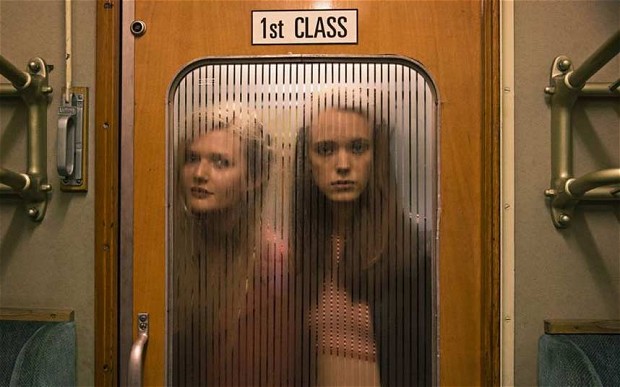
nymph

The crowd I sit with in this odd Friday matinee, while the sun shines bright outside, is made up of mostly guys on their own. A few couples and the odd scattering of fems but predominantly men on their own. I am one of them. Still this is strange – I feel strange. Whether through discomfort from the subject matter, or from the lack of give in the material of our collective crotches, there is a lot of shuffling between laughs. Alan Moore, author of graphic novel The Lost Girls which would perhaps fall under the self-same categorisation, has commented on the idea of ‘intellectual pornography’: that it is a difficult feat that has to fight for the blood to rush to either of the brains; that you will ultimately be stimulated on one level only. Men anyway. Us lone men fidgeting in the dark. So maybe von Trier has an alibi for the film not satisfying audiences intellectually…

What I found intriguing about Nymphomaniac was its place in the context of von Trier’s films as subverting the form of storytelling and preventing escapism.

Continue reading “Nymphomaniac Vol. 1 & 2 (2014)”

Blue Ruin (2014)

Written for RAF News April 2014

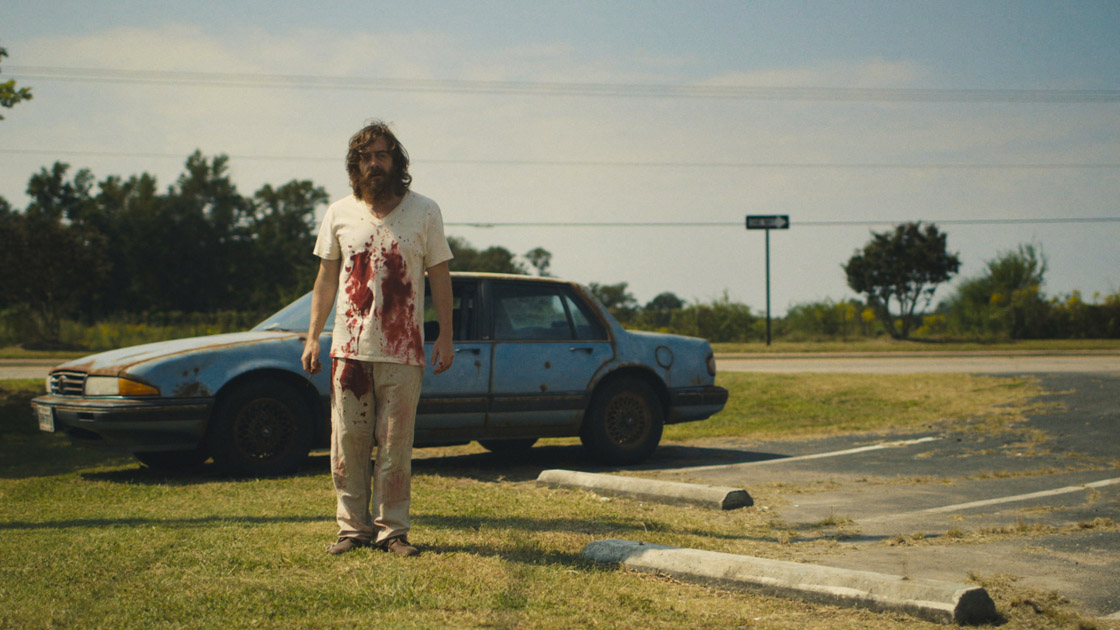
Dwight (Macon Blair) is a simple man of few words, who sets out to even the score when he discovers that the man charged with the murder of his parents is soon to be released from prison. Returning to his rural Virginia hometown in his run-down car, Dwight hunts down the freed murderer to exact his revenge. There is little time to process the events however as he immediately becomes the subject of another retaliatory hunt, and thus the inevitable cycle of revenge prevents escape for anyone involved.Blue Ruin

Unlike Drive (2011), which had a sleek and purposefully silent Ryan Gosling as its anti-hero, Dwight just doesn’t really have anything to say. Where Gosling was a professional stunt-driver, Dwight is in fact homeless and lives in his car – the titular blue ruin which is seen rusted and riddled with bullet holes. He has nothing else and as such has nothing to lose. As a result, Dwight’s vacuous nature is given a volatile edge that keeps you in prolonged suspense.

Sudden moments of violence take you by surprise in their spontaneity as well as their graphic detail. They create a sense of unpredictability that keeps you in the moment and immersed in the tension, whilst dwelling on the results of violence that are usually glossed over in cinema. This is a film that revels in the complications and failures that stem from revenge.

Dedicated purely to his pursuit, Dwight can make you feel locked out and lacking any real connection with him. However, perhaps for this very reason, it feels genuine – believable almost. Almost. Comedic relief comes eventually in the form of Ben (Devin Ratray) an old school friend who decides to help Dwight without asking too many questions – not that he would get much from him anyhow.

Blue Ruin’s masterful element is in its moments of comedy that punctuate the bleakness. A sigh of relief before you return to the dark reality of the film. Though it is tough to connect with Dwight, the naturalism of the story and its cleverly reserved delivery keep you captivated.

Create a free website or blog at WordPress.com.

Up ↑