Maggie’s Plan (2016)

Written for RAF News July 2016

In wont of a child but unable to find a partner, Maggie (Greta Gerwig) settles for a surrogate in a gormless but poetic pickle farmer. This is just as she meets John (Ethan Hawke) and although he has a family already, it is obvious that there is a connection and that they are bound to be together, but who can say for how long.

maggies-plan

Maggie and John meet at the college where they both work, she is in the arts he is in social science but with aspirations of writing fiction. She is desperate to be a mother but he already has children with the formidable and tightly wound author Georgette (Julianne Moore). In basing this triangle of characters in academia they have sharp wit and quick retorts, they are able to draw poetic allegories of their own situations, as well as being utterly pretentious and narcissistic at the best of times

Passing mentions of Pussy Riot and Slavoj Zizek place this story in time and tells us about the type of people we’re dealing with: self-aware progressives – acknowledging the futility a family dinner when they all have business to attend to on their phones.

The film is wrapped up in the intellect and self-awareness of it’s characters, it dances around the typical beats of an indie romantic-comedy and offers an intellectual spin. It never drops its frenetic pace, jumping forward in time to Maggie and John with a 3 year old child of their own. Not as happy as she had imagined herself to be, this is where the second part of Maggie’s plan is put into action: to get John and Georgette back together, to put him back where she found him.

The film maintains a light tone with an upbeat ska and reggae soundtrack, but it is the ramped up, borderline android performance of Julianne Moore’s Danish author that tips the film into farce. This is a gamble which pays off. A perfect counterpoint to the drama underlying the story.

Maggie’s Plan twists the rom-com into an intellectual screwball comedy, unlike it’s characters never taking itself too seriously. It is offbeat, clever and funny throughout.
Jarhead 3: The Siege (2016)

Written for RAF News May 2016

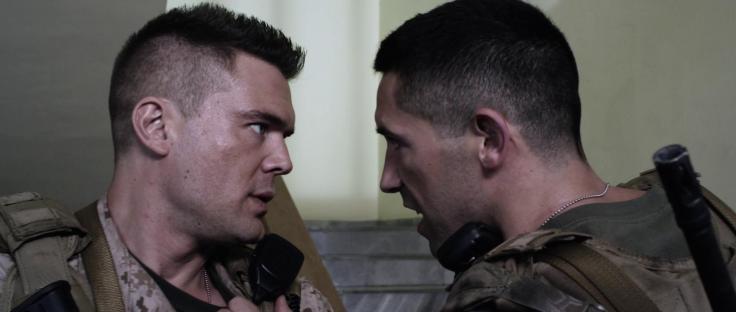
Corporal Evan Albright (Charlie Weber) is a Marine with high marks and the newest to join the forces at the US Embassy in an unnamed Middle Eastern territory, but his goody-two-shoes keenness will make him enemies before he can warn them that the Ambassador is under threat.

vxpymee

Shown through the compound and assured of its high level security, the films subtitle connects the dots for you if you hadn’t sussed it already – they’re not as secure as they think. Outside the gates are some local protestors and one particularly shady looking guy (Hadrian Howard) with ties to Islamic State can be seen with a camera focussed on the guard tower – this doesn’t look like a broadcast for Al Jazeera, at least Albright doesn’t think so.

The new recruit’s standalone attitude is his weakness, looking out for himself and ‘killing’ his entire squad in a training exercise so that when he finally has cause for concern no-one cares to listen. They see him as a hot-shot, John Wayne, but he’s more like John Cena, the professional wrestler turned actor – cartoonishly American in looks and attitude: pronounced chin, inflated features and patriotic to the point of ‘pissing red, white and blue’.

With an extremely simple story, loosely based on the Benghazi attack of 2012, it is coloured in by out of place dialogue that jumps from soppy inspirational lines to throwaway quips. In amongst the Yanks are a few Brits affecting accents – the standout performance being that of Scott Adkins as Gunnery Sergeant Raines, the badass of the bunch who proves himself handy with a sniper rifle.

Once the Embassy is inevitably breached, cue endless shots of scarf-clad terrorists folding like rag-dolls under gunfire. With a bodycount so high that it gets boring, Jarhead 3 couldn’t be more different from the first in the franchise, which made a point of showing very little action. A very standard film that does exactly what it sets out to do, kick terrorist ass and chuck in in the odd buzzword to make it relevant #Oorah.

Taxi (1978 – 83)

DVD Review – Written for RAF News May 2016

When new hire Elaine (Marilu Henner) enters the grotty base of the Sunshine Cab Company in Taxi‘s first ever episode, she cuts to the heart of the atmosphere, asking why everyone here just a little angry.

t100_tv_taxi1

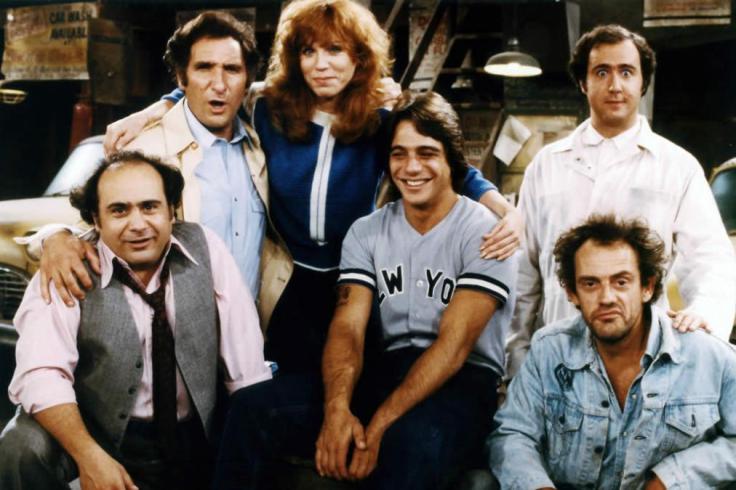
This small, tiny in the case of dispatcher Louie De Palma (Danny DeVito), but diverse group of part-time cabbies are united by their New Yorker attitudes, their sarcasm and bitterness, their incessant innuendos and quick-fire insults. Filmed in front of a live studio audience their constant quips keep the laughs coming, but the show never shied away from making a serious point, earning it the title of ‘morality play’.

Over it’s 5 series span in just as many years, Taxi would become iconic for it’s opening theme tune, it’s clownish character actors and its tendency to get a bit gushy at the end. Where Alex (Judd Hursch) would be seen as the fatherly figure of the group, the one true cabbie, episodes would often follow as he offered some of his learned wisdom to the others, or capping the show with a life lesson. But this sentiment could be found in the most cartoonish characters – the innocently idiotic foreign mechanic Latka (Andy Kaufman), lovable idiotic boxer Tony (Tony Danza), and joining from the second series the burnt out hippie and outright idiot Reverend Jim (Christopher Lloyd).

All the cast of the Sunshine Cab Company are larger than life, big voices with big gestures that really make the punchlines land. This is especially true for struggling actor Bobby (Kenickie himself, the late Jeff Conaway) and Devito’s Palma – who spends most of the show’s run in the dispatcher’s cage, where his petty tirades are delivered with such fury that it steals your attention, and though he is undeniably the most despicable character, he is hilarious and the centrepiece to the show.

A precursor to Cheers and even The Simpsons, Taxi is a time capsule of a sit-com, and of 70s New York, that can be reopened and revisited now that it is being released on DVD for the first time in the UK.


Adult Life Skills (2016)

Written for RAF News April 2016

Stitched together from parts of writer director Rachel Tunnard’s life, save for the serious parts, Adult Life Skills is a piece of handcrafted whimsy that has heart and a whole lot of gags – that most of them don’t land doesn’t detract from its Northern charm.

adult_life_skills-1000x600

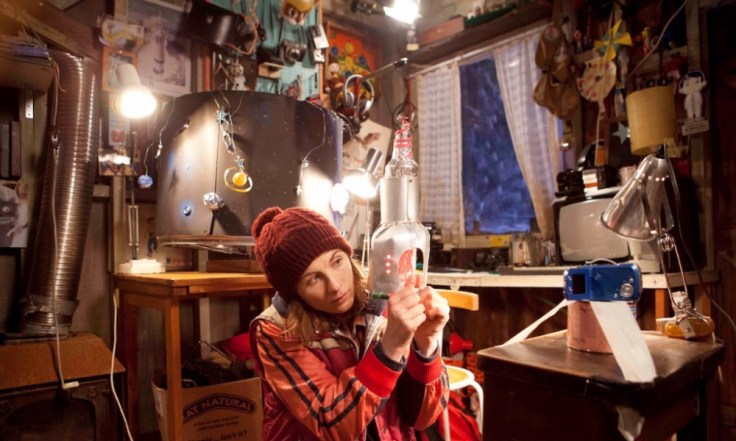
This low budget English film follows Anna (Jodie Whittaker) on the brink of turning thirty but still living at home with her mum (Lorraine Ashbourne), well almost – living in a shed at the bottom of the garden. This is her hideaway, adorned with pun-based signage (Right Shed Fred, Shed Zeppelin) and pictures of Patrick Swayze, where she makes internet videos of her thumbs for no-one but herself.

From her bobble-hat, bmx and back-pack it is clear that Anna is stuck in adolescence. She longs for the company of her deceased twin brother, and refuses to take life seriously without him. Anna remains a lonesome teenager and it is only when an old school friend (Rachael Deering) comes to visit, and as she spends more time with an outcast neighbourhood kid with an equalled sense of alienation (newcomer Ozzy Myers), that the full extent of her grief comes into focus.

Beneath her quirks Anna is shown to be stubborn, defensive and full of rage, which is well captured by Whittaker. The film comes off as a bit too cute and reaches too far for it’s dramatic moments- it is only in the fleeting moments with over-looked love interest, the soft-voiced but definitely not gay Brendan (Brett Goldstein), that the awkward comedy works. The funniest back and forth though, occurs between the crudely penned faces on Anna’s thumbs.

Adult Life Skills has charm but it feels empty and unrealistic, like Me and Earl and the Dying Girl but hollow and without the pathos. It employs the same staples of the indie-twee and ends up as nothing special, but it’s hard to dislike – a low budget effort from some female voices that deserves to be supported.

One thumb up, and the other eternally depressed.

Despite the Falling Snow (2016)

Written for RAF News April 2016

Taking place during the height of the Cold War, Despite the Falling Snow follows the relationship between rising Soviet politician Alexander Ivanov (Sam Reid) and the new love of his life Katya (Rebecca Ferguson), an entrancingly seductive Russian spy who gets a little closer than she intends to, falling for her target and jeopardising her mission.

This story is intercut with Alexander decades later in New York, now played with authoritative command in Charles Dance, as his niece Lauren (also played by Rebecca Ferguson) plans a trip to Moscow to exhibit some of her political artwork including a portrait of the woman who shares her likeness. Here she will end up uncovering some of her uncle’s past, finding herself tangled up in the same web of lies and deception, before finding the truth of what happened to Katya back in 1959.

Adapting her best-selling novel for the screen and directing herself, Shamim Sarif brings sensitivity and tenderness to the relationship of Alexander and Katya. Particularly in the character of Alexander, played by Sam Reid as broad-shouldered and square jawed but gentle and naive. At first it seems like this doesn’t match the character at all, at least not how Charles Dance plays him later in life, but it becomes clear that this softness of touch is defining of Alexander’s sensibility and ultimately his undoing.

Perhaps down to the adaptation the dialogue is often clunky and unnatural, and though it can a sometimes feel like a television drama the story of these two lovers tied to opposing forces is compelling, with twists and turns in both timelines. The performances are befitting of their characters, especially a vodka-soaked cameo from Anthony Head which shouldn’t be missed.

Create a free website or blog at WordPress.com.

Up ↑