Vox Lux (2019)

Written for RAF News May 2019

Vox Lux boasts of being a ’21st Century portrait’, the subjective of which is a young girl who rises out of horrifying circumstances to become a pop superstar.

Image result for vox lux

Divided into two distinct halves the film opens to 14 year old Celeste (Raffey Cassidy) returning from school break where she experiences an act of extreme violence. In the wake of tragedy, she performs an original song at a candlelight vigil that captures the pain experienced by her peers and connects with the public. The second half jumps ahead by 18 years to see Celeste (Natalie Portman) as she prepares for a concert in a packed arena.

Vox Lux is a success story on the surface but the distinct contrast in Celeste’s personality from adolescence to adulthood appear to condemn the very nature of success, more specifically its parasitic off-shoot: Fame.

Celeste receives our complete empathy in the beginning and when her talent is recognised there appears to be some karmic reciprocity at play. Wide-eyed and excitable she enters this world of studio recordings and music videos, but forward in time, becoming a global sensation and a single mother, she appears complacent and entitled, her narcissism fostered by her family, management and fans.

The two constants in both parts of the film are Celeste’s manager, played with a nice comedic touch from Jude Law, and her sidelined sister Eleanor, an increasingly empty Stacey Martin, who becomes mother surrogate to Celeste’s daughter and the silent partner who writes all of her hits.

The shocking imagery that is used to open Vox Lux, recurs once more in another act of extreme violence, and yet it doesn’t seem to go anywhere. The message might be that fame and infamy aren’t far apart, that the media is a monster-making machine, or it may be a comment on gun control.

Vox Lux is never boring but you want it to go further. It doesn’t give you many answers, which is great, but it doesn’t leave you with many questions either. The sparsely used narration by Willem Defoe seems to be an after thought intended to add weight. It struggles in the end to transcend the hollowness of the tacky aesthetic that it lavishes in throughout the final chapter.

Dragged Across Concrete (2019)

Written for RAF News April 2019

Brett Ridgeman and Anthony Lurasetti are street cops with a reputation in this pulpy, crime thriller. When a video leaks of them beating a suspect in order to complete a bust, they are duly suspended without pay that they desperately need.

Image result for dragged across concrete

Brett (Mel Gibson) is out of prospects, almost 60 with his ex-partner of twenty years ago now in a cushy office job above him, he decides to go rogue and do some police work off the books to “acquire proper compensation”. Much younger and mouthier, Anthony (Vince Vaughn) comes along for support with nothing more to lose. That is until a stake out for a drug-dealer turns into something much bigger than they anticipated.

Dragged Across Concrete is split between a few perspectives, from the point of view of these bickering cops, to ex-con turned getaway driver Henry Johns (Tory Kittles) and the ominous black-masked character that hired him. Able to see the criminals’ capacity for extreme violence against any and everyone, with such a calm disposition, it becomes a constant reminder of the threat that faces these disgraced cops, a sword of Damocles dangling above them.

Known for the uncompromising brutality of his previous films Bone Tomahawk and Brawl in Cell Block 99, S Craig Zahler sets expectations with this equally foreboding title and makes good on his promise. It is a much longer film with deliberatley slow pacing, but there is an artful cultivation of tension at play. The unflinching use of sudden horrific violence plays so unpredictably that you can’t trust any scene. No-one is safe.

There is a certain rhythm to jump-scares and moments of shock in which you are made to flinch despite knowing that it was going to happen. This film ignores the rhythm completely so that you can’t predict what’s going to happen.

Dragged Across Concrete is a noir-infected, exploitation-inspired buddy cop movie with its tongue in its cheek. It is extreme in it’s darkness but with a lot of comedy to help it go down.

Styx (2019)

Written for RAF News April 2019

Styx follows German first responder Rike as she embarks on a solo sailing trip from Gibraltar to a remote island in the tropical mid-Atlantic, looking for an escape into a paradise of wild untouched nature. During the voyage however she makes a discovery that plunges her deep into a moral dilemma.

Image result for styx film

The first half of the film is masterful, with an almost dialogue-free series of scenes that demonstrate Rike’s proficiency on her small yacht, the Asa Grey. A fleeting prologue already having shown her competence treating someone under pressure, and then faced with navigating through a storm, she is shown to be extraordinarily capable.

Sure to collect comparisons to All is Lost with Robert Redford, but where that was concerned solely about self and survival, Styx is able to tackle questions of morality that have a resonant sting. It is when Rike nears Cape Verde that she spots a large trawler ship that doesn’t appear to be moving or communicating through it’s radio. It becomes clear that there are many people on this boat, refugees, in desperate need of help.

The film is very clever in the way that it aligns you with this one extremely competent and compassionate character, crystallising the heroic human instinct. This is played in contrast to the largely faceless authorities, the coastguard to whom Rike persistently leaves distress calls and demands attention.

Suzanne Wolff plays a pivotal role as Rike and gives her a raw authenticity, from her fighting instinct to her helplessness, evidently she is not superhuman. On screen for the duration of the film, she anchors questions of morality, having to decide whether to follow seemingly immoral instruction or risk her own safety.

Styx is a lean, stripped back thriller that relies on camerawork and performance over special effects, and yet it manages to craft an involving social commentary whilst looking and feeling completely realistic.

Mid90s (2019)

Written for RAF News March 2019

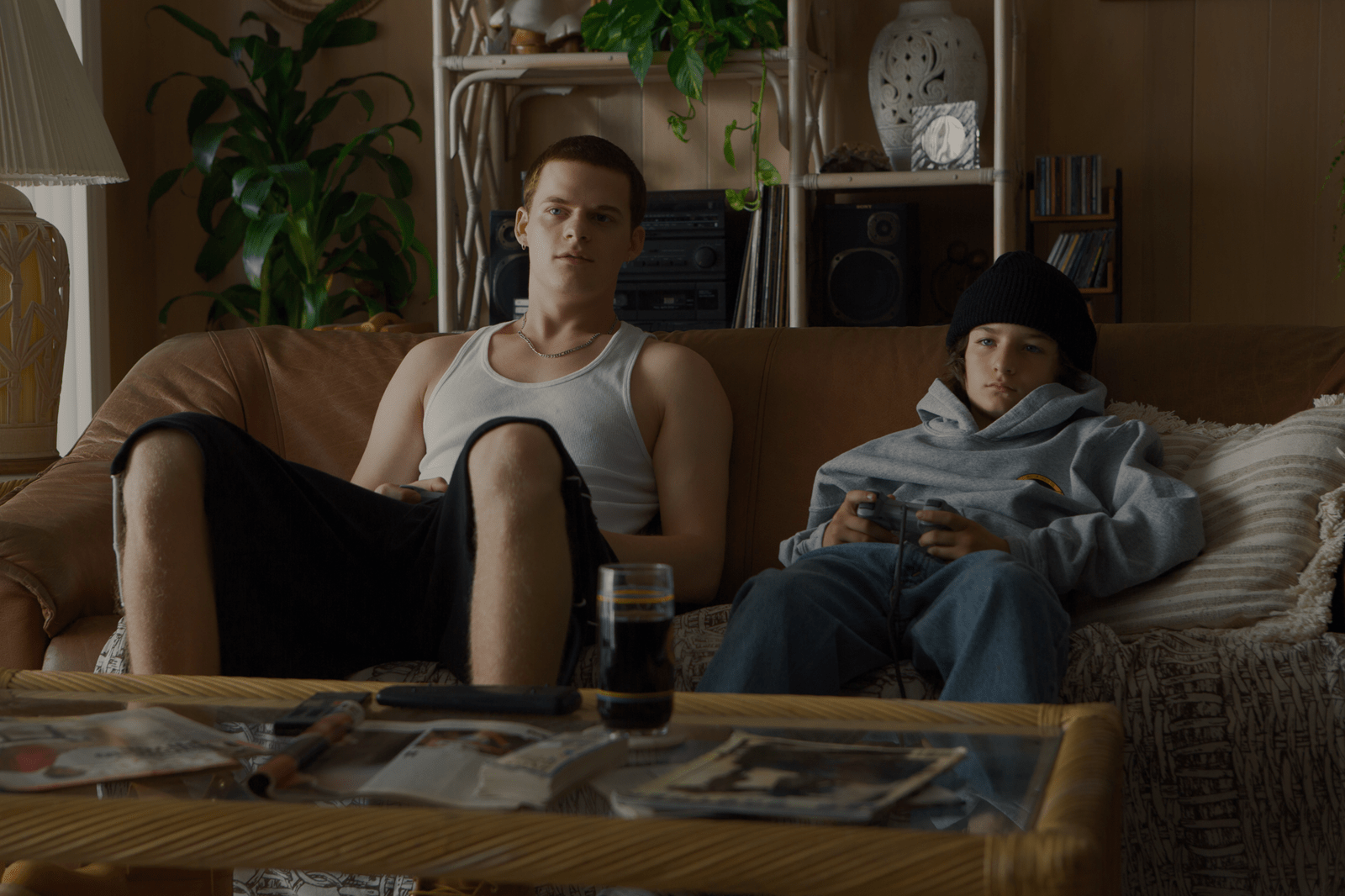
Stevie (Sunny Suljic) is a 13 year old boy in need of a role model, with no friends, an absent father and a viciously unpleasant older brother. Attracted to the antics of some older kids running the local skate shop, he sees his opportunity and swaps out the Ren & Stimpy poster on his wall for Girl stickers and two-page spreads from Big Brother magazine.

Trading Super Nintendo cartridges for an 80s fishboard, that has by now fallen well out of style, he throws himself around on it until he has enough courage to spend more time at the shop. When runt of the group Ruben passes his water fetching duties off onto Stevie, he can hardly hide his idiot grin: he has found his place.

Ruben (Gio Galicia), the boy closest his age, becomes a reluctant mentor teaching the etiquette that he has come to learn himself like not saying thankyou or sorry because people will think you’re gay. But Stevie earns respect from the others through his ability to take a slam, perhaps the byproduct of beatings from his brother Ian (a convincing change of form for Lucas Hedges). Soon he is given a nickname and taken under the wing of the cool kids Ray (Na-Kel Smith) and Fuckshit (Olan Prenatt), two decent skateboarders though one is set on turning it into a career and the other as a means of escaping life.

This coming of age story feels familiar, especially with Skate Kitchen so fresh in recent memory. But where that had 90s affectations, this is period; matching square formatted 16mm grain to punchy soundtracking of Wu- Tang Clan, Pharcyde and a little Nirvana. Where Skate Kitchen felt like it was suddenly trying too hard to push a ‘storyline’, Mid90s could be accused of not trying hard enough as there isn’t much story at all. Instead it remains casually observational, and just like it’s characters, has nothing much to say. But that’s okay.

Jonah Hill, making his writing and directing debut, manages to get unbelievably real performances from a perfect cast and fits in some nice stylistic flourishes in a film that is bold in its simplicity.

The Upside (2019)

Written for RAF News Jan 2019

This remake of French hit Intouchables, stars Bryan Cranston as Phillip, a wealthy paraplegic looking for a live-in life auxiliary apparently in the shape of Kevin Hart’s Dell, a straight-talking ex-con with problems of his own.

Image result for the upside stills

The unlikely pairing stems from Dell thinking he is applying for a janitor position, and Phillip growing tired of the coddling over-sensitivity of the other candidates. He offers the job on the spot despite Dell’s apparent disinterest and lack of professionalism, or likely he makes the offer for these exact reasons.

Whilst disability, race and class are all inextricably linked to the central relationship, which is based on a true story, it feels unbelievably superficial. They exchange taste: classical music for soul, theatre for smoking weed and visual art for sex workers, and all of this amounts to a throwaway laugh. It ends up stuck in a strange place of not being able to be as funny as it could be, and not having anything meaningful to say. The clinky-clanky score intended to keep things light and frothy becomes a patronising distraction and serves to make the film feel utterly televisual.

Cranston is perfectly fine, and Nicole Kidman has a bizarrely underused background role as Phillip’s assistant. Hart is given some emotional depth at the cost of his usual heightened comedy, which makes you appreciate the charm of Omar Sy from the French original made back in 2011, and the on-screen rapport that he had with François Cluzet’s Phillip.

One impressive change from the original is that it allows Phillip a blind date, in which things grow uncomfortably real as she becomes overwhelmed by his disability. Although this grounds the more serious themes of the film, it’s late appearance leaves no time for resolution and makes the ending fall flat.

This remake accentuates the weaker parts of the film, in it’s artificial set-up and saccharine sentimentality, and lacks the charm of its original cast, ending up inoffensively mediocre.

Create a free website or blog at WordPress.com.

Up ↑