A Perfectly Normal Family (2020)

Written for RAF News September 2020

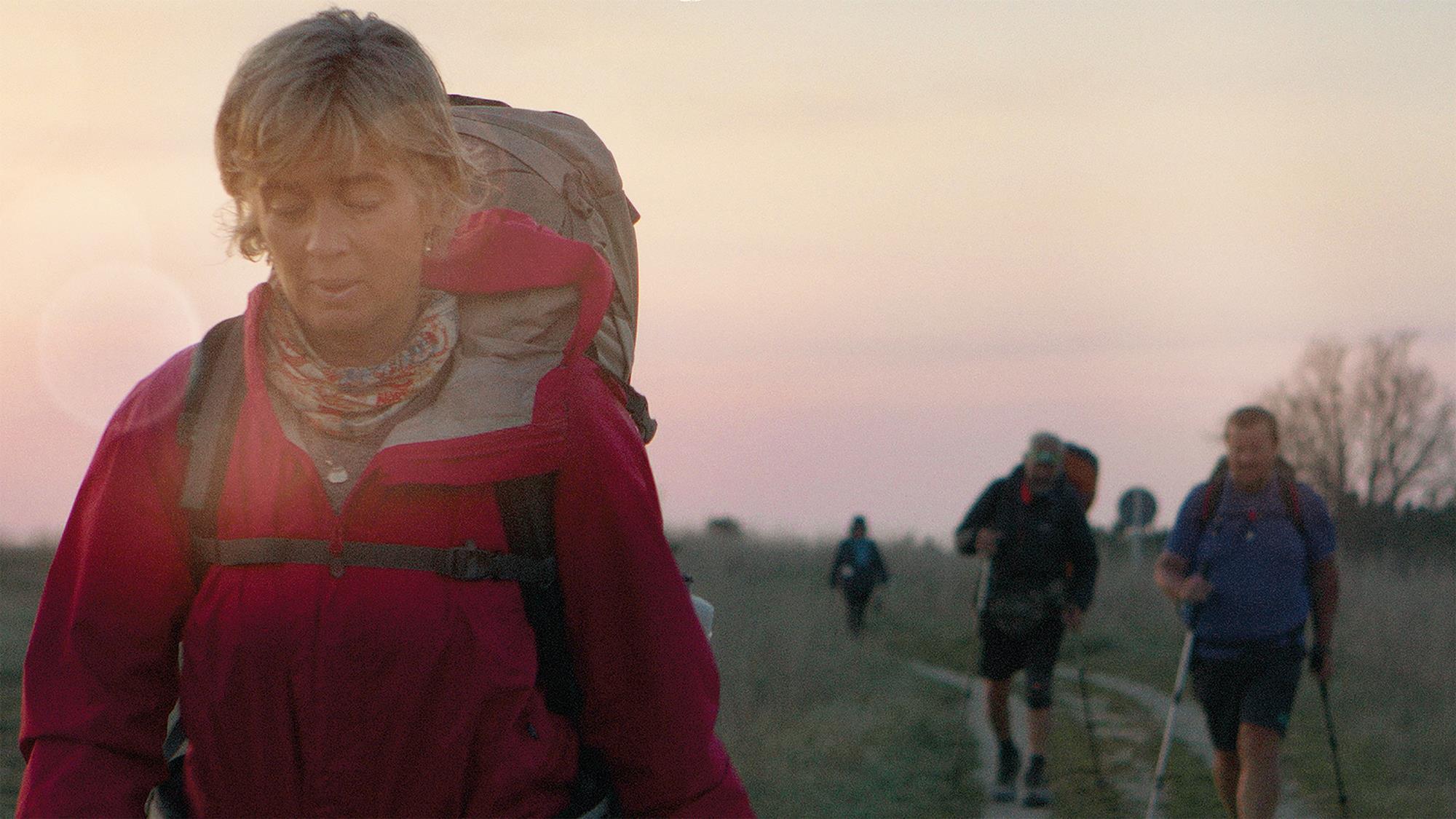
Set in 90s Denmark, we watch the titular idyllic family through a shaky hand-held videocamera – mum, dad and two young girls – as they complete the picture and bring home a puppy. Of course this happiness can’t last and there is the sudden announcement of divorce, set in motion by the father wanting to change gender.

A PERFECTLY NORMAL FAMILY – New Europe Film Sales

From this point the films jumps forward in time to various intervals of Thomas (Mikkel Boe Følsgaard) during his transition but from the point of view of the children, and in particular his tomboyish daughter Emma (Kaya Toft Loholt).

At first we view a group therapy session in which everyone appears to be in denial except Thomas, for the first time perhaps, as he asks to be called Agnete. This scene is the most telling in the way that it frames it’s characters. Obscuring Agnete from view and focussing on Emma who has a scarf wrapped around her head in protest, we hear the rise in emotion as people storm in and out of the room, all whilst watching this faceless solitary figure, clearly struggling to process any of this.

Each segment in time is chaptered by the same VHS-grain home video of the perfect family from the beginning, when the advent of recording meant capturing moments of joy and celebration. We see Emma and Thomas playing football in the garden, and then jump back to her unwrapping her first football at Christmas, giving us some sense of the bond that is at stake.

Aside from these vignettes the style is naturalistic, and though it never loses sight of the conflict driving the film, it is the direct but gentle approach to the drama that makes it effective and feel less contrived. Based on the filmmakers’ experience of her own father transitioning when she was young, it is the contained drama that grounds the film and makes it feel personal.

The Painted Bird (2019)

Written for RAF News September 2020

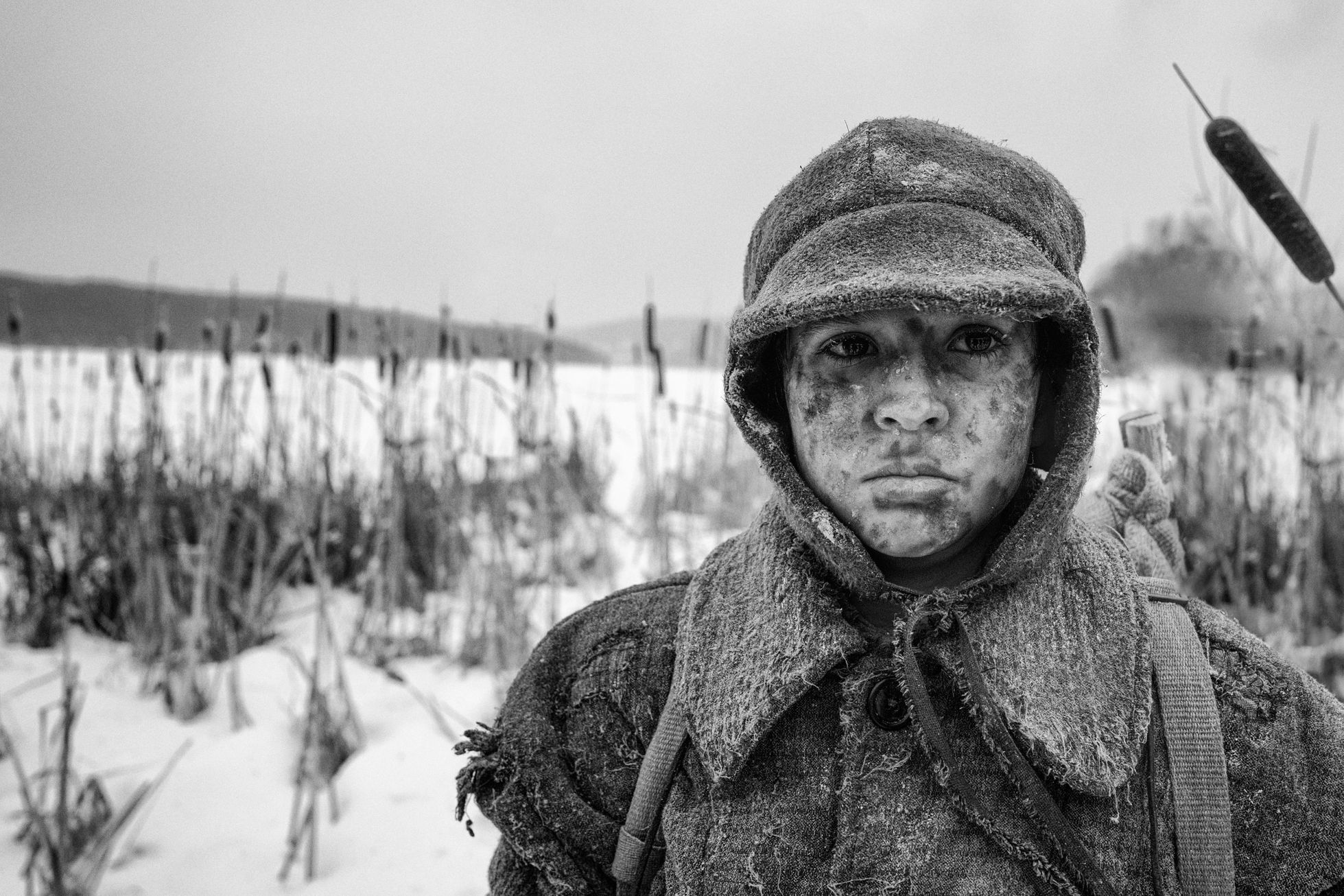
Life is suffering – never has this adage been truer than in Václav Marhoul’s The Painted Bird. A young boy is left without a guardian in war-torn Eastern Europe and so finds himself falling through the care and clutches of various people – most harbouring such a cruel sadism that it makes the occupying Nazi’s look simply more orderly in their approach to torture.

The Painted Bird' Review - Beautiful and Uncompromising | DiscussingFilm

Passed from an old crone, who believes him to be a vampire, to a jealous miller (Udo Kier), from an elderly priest (Harvey Keitel) sold to a lecherous loner (Julian Sands), from a Nazi soldier (Stellan Skarsgård) to a twisted kind of milk-maiden. The film weaves a tapestry of malevolence that is so ubiquitous that it’s crossover with the second world war appears incidental.

Shot in crisp black and white, there is a stunning beauty to the horror on screen, which makes it that much stranger to endure. It reminded me of the phantasmagoric Russian film Hard to Be A God, but rather than a sprawling Boschian hellscape, this one is more pointed and concise, and without the respite of humour.

It’s a gruelling watch, and as you stay longer in the company of the tortured and tormented young boy, played phenomenally by Petr Kotlar, you become cynical of any offered kindness. You watch as he interacts with different animals, each carrying symbolic significance, none moreso than the titular bird, which is painted by an elderly man who demonstrates the plight of this young boy and indeed the Jewish people: we watch the now segregated bird return to it’s flock unrecognised, pecked to death in a flurried murmuration before it falls from the sky.

The Painted Bird is unrelenting, and you might wonder why the film was even made, adapted from Jerzy Kosiński’s controversial 1965 novel of the same name. I have found few answers, but the images and ideas live long in the memory, though there are many you’d much rather forget.

The Ground Beneath My Feet (2020)

Written for RAF News June 2020

An Austrian thriller that sees the downward spiral of a corporate consultant as she becomes paranoid to the point of delusion, keeping secrets that will eat away at her sanity and might just jeopardise the career and relationship into which she has invested everything.

The Ground Beneath My Feet tracks a world falling apart - Los ...

Lola Wegenstein is one of a small team of hatchet-men: though most are women in fact, including her boss with whom she is having an affair. An invasive job that can involve working 48 hours without sleep, living out of a suitcase in a hotel, she is pushed to breaking point when her sister is committed to an institution after another suicide attempt. For fear of bringing personal issues into an already fraught workplace, Lola discreetly flies between the ward and the job to spin these plates.

Valerie Pachner’s performance as the isolated Lola is riveting in its restraint, establishing a steely veneer that is quickly chipped away. Receiving calls from her sister who insists she is being abused, only to find out that she has no access to phones, Lola begins to question her own reality. With a shared history of paranoid schizophrenia, it dawns on Lola that she might be experiencing the same symptoms of her sister.

The horrification of mental illness is an antiquated idea that can be problematic but the film is able to sidestep these tropes by adding a degree of nuance and subtlety. The thriller elements of the film are grounded in a real sense of fear and urgency, and the quality of filmmaking prevents it from feeling exploitative.

The genre elements seeded in the beginning are dropped in the second half however, leaving a much more restrained and ordinary drama. Though it dodges the pitfalls of psychotic women in the workplace and mental illness as a source of horror, unfortunately the beats stay the same and it becomes blander as a result.

The Ascent (2020)

Written for RAF News June 2020

An elite squad known as ‘Hell’s Bastards’ are sent into a vaguely described civil conflict to retrieve intel, but make a decision that will come back to haunt them, over and over, until they can find a way back to change it.

U.K. Action Thriller 'The Ascent' Turns to VR for Lockdown ...

Ordered to clear a campsite, merciless leader Will Stanton (Shayne Ward) insists that they leave no survivors. Even when they discover a prisoner (Julia Szamalek), he demands that she be killed, forcing Kia Clarke (Samantha Schnitzler) to carry out the execution at gunpoint.

Upon their return to HQ the lifts aren’t working and so they begin to scale the concrete stairs, but after sometime it becomes clear that they are no closer to the top. The handy work of MC Escher these stairs form the perfect purgatorial metaphor. A never-ending climb punctuated by sirens and red light, and members of the team being picked off by an apparent evil presence following after them.

Through this shrewd and straight-forward effect, the filmmakers are able to make one location last infinitely, reminding of the simple ingenuity of high-concept cult horror Cube.

The squad will discover one exit along the stairway, but this leads them back in time to when they began the mission, a portal through which they can view their own sin perhaps, and maybe find a way out of the cycle.

An ambitious blend of science fiction, horror and action, the tone is set by the the interactions of the group. Initially there is some dark humour reminiscent of another cult classic featuring soldiers versus the supernatural in Dog Soldiers. Unfortunately this fades into self-serious monologues that drift towards the generic.

Cursed by design, set in a time-loop, the repetition becomes tiring and gets a little lost, but is brought around by the end of the film in some impressive and inventive ways. The Ascent is an ambitious project that takes chances and makes the most of its resources.

Camino Skies (2020)

Written for RAF News May 2020

Parkland Entertainment acquires doc 'Camino Skies' for UK ...

A group of six New Zealanders and Australians come together to make the famous pilgrimage of the Camino de Santiago, united not only through the physical journey but the hardships that have led them here.

This documentary follows these individuals, delving into their often heartbreaking motivation, joining them as they come to know each other and find some form of reward in the trials ahead. For some this seems to be a personal challenge, for others an escape or quest for meaning.

For over a thousand years many people have made this journey across northwestern Spain to the shrine of Saint James in search of spiritual growth. The filmmakers here are gifted beautiful backdrops for conversations with these largely senior travellers, who talk very frankly about the tragedies they have suffered and continue to shoulder. Whilst it could feel exploitative, the subjects often seem to be taking great motivation or catharsis from their heartfelt interviews. Inserted throughout, we are given more insight and more reason to be impressed by their perseverance.

A large part of the group appear to be mourning the death of a loved one, in some cases their own children. Perhaps this journey to the other side of the world will afford them some sense of closure before they head back home. Sue Morris is an 80 year old who has recently separated from her husband and is determined to walk the 800km distance, despite having severe arthritis and suffering incredible pain.

In the same manner in which these strangers come to form bonds simply by treading the same path and sharing their stories, walking alongside them you can’t help but take inspiration.

Create a free website or blog at WordPress.com.

Up ↑