The Hallow (2015)

Written for Film and TV Now Nov 2015 (Available here)

As a family drive down to their new home in the Irish countryside, a radio broadcast tells us that Ireland is one of the last countries to have publicly owned forests – they will soon find out that the locals are protective of their land, but not as much as the creatures hidden within.
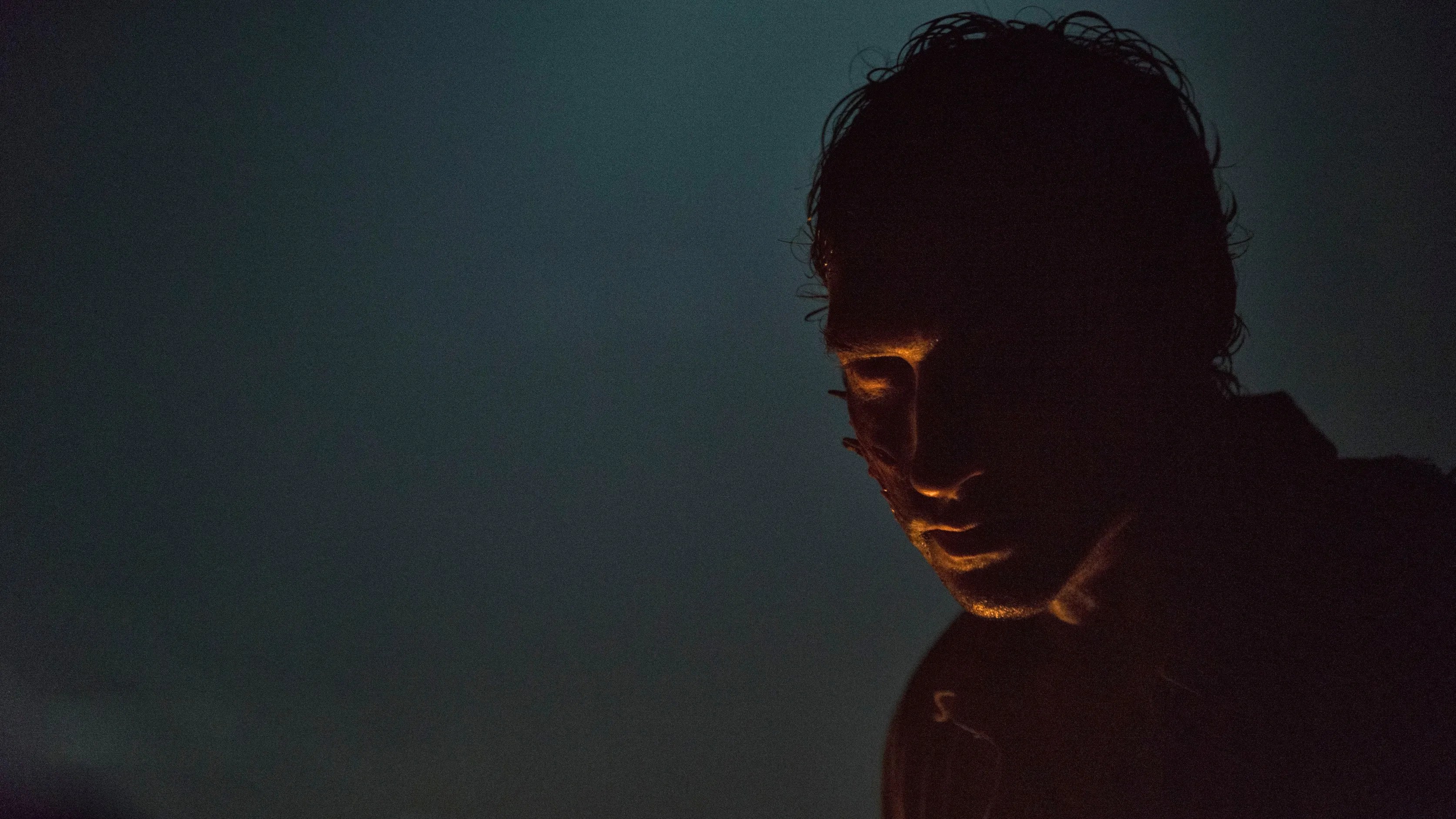
Father of the family Adam (Joseph Mawle) is a conservationist, having moved from London to inspect the trees. On his first expedition with his baby boy on his back he stumbles upon a deer, mutilated in an abandoned shelter and dripping with a suspicious black substance. As warned by a local policeman played by Michael Smiley, local legend tells of mythical beings in the woods, banshees and baby-stealers, “This isn’t London. Things go bump in the night”.

As much as The Hallow is about people from that London moving where they don’t belong and interfering with nature, it becomes a platform for all different kinds of genre tropes. It feels like an amalgam of horror films of different styles. It splices them together but spreads itself thin in doing so. The seclusion of the town and it’s inhabitants feels a little like An American Werewolf in London, their twisted spiritual beliefs like an inversion of the pagan cult in The Wicker Man. The Irish folklore, as detailed in the Evil Dead-like Book of the Dead, gives way to fantastical creatures that have a touch of Pan’s Labyrinth.

For all of its high reference points it doesn’t land as hard of a punch as it should. The preference of practical effects for the monsters is admirable, but as the story progresses and they come to the fore, their scariness fast diminishes. It is the atmosphere that remains unsettling in The Hallow, the creatures, whilst impressive, are not on the Guillermo Del Toro scale of production value and so are best when glimpsed in darkness. This is after all the directorial debut of Corin Hardy, and an impressive one at that.

Whilst some of these ideas can be seen elsewhere it is this certain combination that fits so well, but in trying to fulfil the style of each type of horror (from house invasion, to creature feature, to body horror and psychological thriller) it doesn’t feel as effective as it might have done if it narrowed it’s focus. The disintegration of trust between Adam and his wife Clare (Bojana Novakovic) leads to a harrowing idea late in the film as they fight over the baby, but with all these plates spinning it’s hard to appreciate how scary this really is.

Undercover Brother (2002)

DVD Review – Written for RAF News Nov 2015

Undercover Brother (Eddie Griffin) is a secret agent with soul, a superfly Austin Powers… Macy Gray with pork-chop sideburns.

Hired by an underground collective known as The Brotherhood, his mission is to find out why black military general and promising presidential candidate Warren Boutwell (Billy Dee Williams) has decided to drop out of the running and set up a chain of fried chicken restaurants.


Sharing a writer with Austin Powers you can see the similarity in the way that it plucks it’s sexually confident hero from a different time and uses him to parody a film genre, though change swinging 60s espionage for straight up 70s Blaxploitation – using music cues and editing to push home the point, much like the more recent Black Dynamite.

The film is full of one-liners, visual gags and slapstick – not leaving much room for anything else. It feels pieced together around a few sketches, but what it lacks elsewhere it makes up for in the sheer number of jokes so it doesn’t matter that they’re not all that funny.

The supporting cast all serve their purpose – Chris Katan as the villainous underling of The Man, Denise Richards as double agent White She Devil and fellow stand-up comedian Dave Chapelle as the stoner conspiracy theorist who finds racial arguments in a one word greeting. Everyone chips in with jokes but Griffin is the soul of the film and the funniest thing about it.

Undercover Brother is self-aware to the point of almost looking at the audience after each punchline (guilty of using a needle scratch multiple times). For the most part though it shows that the film is aware of it’s tackiness and embraces it as part of it’s tongue in cheek style. Overall it’s not great, a little dated but has style for sure.


The Exorcist (1973)

Halloween DVD Review – Written for Film and TV Now Oct 2015 (Available here)

It could be easy to dismiss The Exorcist as of its day. To think of it as a boundary pushing film at the time of release back in 1973, that generated hype and hysteria, and became more of a legend off-screen. You might think that it would have lost its edge, with more convincing special effects now and with audience sensibilities more jaded and depraved since the Saw franchise ushered in the torture porn genre. How could this film still hold weight considering that its iconic status means that people know the scariest moments before they even see it?

The Exorcist is much more than the few scenes it is remembered by. It is a true horror film that deals with something much bigger than a monster in the dark, or the devil in a young girl. It wrestles with deeper ideas which make it so much harder to dismiss as trashy or cheap. It is both scary and compelling, intensely dramatic but often very real.

The story centres around Chris MacNeil (Ellen Burstyn) and her 12 year old daughter Reagan (Linda Blair) who falls ill and starts behaving out of character. When the doctors struggle to identify what exactly is wrong, pushed to the limits of what science will allow, they offer an alternative solution – that Reagan has been ‘invaded by an alien intelligence – a spirit’. Out of sheer desperation, atheist Chris enlists the help of two priests to perform an exorcism to try and bring her daughter back – but they will all be tested to the extreme and witness the most ungodly acts as a once angelic girl becomes a demon.

The film actually begins in Northern Iraq, where we glimpse the foreboding mythology of the demon Pazuzu. Father Merrin, the eponymous exorcist, takes part in an archaeological dig where he discovers the beastly icon in stone. This role is significantly played by Max von Sydow, a man who struggled to find faith in God and challenged Death to a game of chess in Ingmar Bergman’s classic The Seventh Seal.

Already The Exorcist is bigger than one film – it taps into a wider network of meaning that makes its themes more potent, it’s monster more powerful. Adapted from the novel by William Peter Blatty, who was struggling with his own faith, and directed by agnostic William Friedkin, the film is really about faith, and the struggle of one priest, Father Karras (Jason Miller) whose belief in God is waning. It is a film about good versus evil as young Reagan is possessed and tortured by demonic forces in order to test him.

The first half of the film focusses on the relationship between Reagan and her mother, and also psychiatric counsellor-turned-reverend Karras and his mother, who he visits and cares for. They each show tenderness and loving affection until they are torn apart as Reagan is possessed and Karris’ mother dies, making him doubt his belief in God and whether he should change profession.

The dedication to developing these characters has a huge effect on the viewer, you find yourself caring more, invested in their situation. Friedkin draws on his documentary experience to make the characters more real and empathetic – actually favouring real priests over actors – this is before the second half of the film crashes into chaos, before the beloved little girl becomes Pazuzu.

The Exorcist

This is where the iconic moments bloom: from head spinning and puking green slime to Reagan’s spider walk down the stairs – which has been put back into the director’s cut. Every effort is taken to turn this girl into abject horror, utilising practical effects and detailed sound design which have a unique ability to unsettle. Linda Blair is extraordinary in portraying both the little girl and the demon within. Auditioning over 1000 girls for the part, they had to be careful that this very young girl could handle such extreme material, which she does with a flourish despite stating she didn’t understand everything she was doing.

Shot on location in Georgetown the grand architecture adds a gothic, religious tone which feeds into the themes of the film and actually play an important part in the story. The use of stairways become an underlying motif that reinforces ideas of ascension. In a dream Father Karras sees his mother descend down subway steps before he can get to her, this is before possessed Reagan taunts him with notions of his mother in hell. This demon is all knowing, all powerful and aims to challenge Karras’ faith.

The Exorcist immerses you in the world of its characters before plunging you into the depth of its darkness – it is beautifully composed and definitely worthy of its status as a classic.

Maya the Bee (2015)

Written for RAF News Oct 2015

The lives of bees are full of rules and restrictions – not allowed to dream or sing or have fun. It’s a slippery slope as the shifty and stringent Buzzlina details: singing leads to playing and playing to laziness. However Maya is anything but lazy. An adventurous young bee who wants to explore the world outside of the hive and isn’t afraid to speak her mind – voiced by Coco Jack Gillies with a skittish energy.

After discovering that Buzzlina has stolen the royal jelly, the Queen’s elixir of life, Maya finds herself expelled from the hive, forced out into the world of other insects warned against in school. It is only once Maya and dorky friend Willy (Kodi Smit-McPhee) are out in the poppy fields that they realise other species aren’t that scary at all.

There is a nice message here that explains the fears of the hive to be imagined or misunderstood, underlining the importance of unity and camaraderie. The true villain of the film is Buzzlina, the betraying advisor to the Queen and oppressive force from within the hive.

Most of the film is spent with Maya journeying to the poppy field, meeting a whole host of insects and animals along the way. Although some creatures add a fleeting moment of comedy, the constant meetings grow tired. Fortunately enough there is a song to liven things up before Maya and her group of newfound friends set out to confront Buzzlina.

Maya The Bee has come along way since its initial publication over a century ago – from children’s book to live action silent film with real insects(…), and now computer generated with a new tv series in tow, which is surprising considering how lifeless and bland the film can be at the best of times.

Although a little dull, the saving grace is the casting of Gillies as Maya whose energy carries the film.

Just think of what it could have been – one bee stranded in a world of other possible threats, not unlike The Warriors, returning home whilst being chased for the big confrontation, just like Mad Max: Fury Road… so much potential, such a shame.

He Named Me Malala (2015)

Written for RAF News Oct 2015

Malala Yousafzai has lead an extraordinary life and she is only 18 years old. As this documentary makes adamantly clear – her story is the stuff of legend.

Already an activist and covert contributor to the BBC at 12, Malala was targeted by the Taliban on her school bus years later and shot in the head. Surviving this ordeal she had the world’s attention, which she used to advocate human rights around the world and become the youngest ever Nobel Peace Prize winner.

There is definitely a mythical quality to Malala’s life. An idea seized upon by director Davis Guggenheim – animating anecdotes of her childhood in the same pastel-coloured haze as the Afghani folktale that opens the film, drawing a parallel between Malala and Malalai of Maiwind after whom she was named.

A large part of the film is devoted to this origin story of a hero, turning her into an icon, a legend. The other side attempts to show the young girl behind it all, blushing over pictures of Roger Federa and Brad Pitt, and fighting with her brothers. This human side to the documentary is far more revealing in the way that it grounds Malala.

The whole family have a great sense of humour and an openness that invites you into their lives and Malala’s father Ziauddin epitomises this. His fierce belief in education and predilection to deliver passionate political speeches have clearly carried through to his daughter, neither of them deterred by physical impairment – Ziauddin suffering from a stutter and Malala having partial face paralysis resulting from the shooting.

The sceptics see Malala as a character of her father’s creation that the media, and no doubt this documentary, have latched onto, but she is adamant that her father simply gave her the name. Forever cheerful, it is hard to think of the dark reality from which she has emerged, or the continued death threats that she receives, but this is skimmed over throughout the film – perhaps in an effort to keep it light.

Regardless, Malala is a remarkable figure with an amazing story that is told here with passionate conviction but never without humour.

Blog at WordPress.com.

Up ↑