A Perfect Enemy (2021)

Written for RAF News July 2021

Two perfect strangers find a dark psychological connection when forced together in this puzzle-box thriller.

After speaking at a conference in Paris, renowned architect Jeremiasz rushes to catch his flight home to Warsaw but is waylaid when he allows another passenger to join his cab-ride. Having to turn back for her luggage, they arrive too late and are stuck waiting until the next available flight. Here he is forced to endure this young woman’s stories, until she reveals a secret that piques his interest.

A Perfect Enemy takes place for the most part in an airport, except for the stories described to Jeremiasz by this insistent presence. The unlikely named Texel Textor is the driving force of their interactions, brash and repellent, but there is no escape from her – he would know: as one of the architects behind this airports design.

There is a small model that credits Jeremiasz in the lounge, plotting the layout of the terminal but impossibly including miniatures of our two conversationalists. An enigmatic diorama that reminds of the hedge maze in The Shining, but the bigger mystery here is why Jeremiasz entertains her at all in the first place.

Texel is established as a nuisance, rattling off childhood anecdotes much to the annoyance of her poor victim, when she confesses to murder however, he leans in. The flip-flop of their dynamic is hard to believe and stay invested in, but there are many unlikely details that become forgivable as the film plays out.

When the momentum of the revelations picks up, there is less time to get hung up on plausibility, and so it becomes more thrilling until the pay off. Or maybe just like Jeremiasz forced to listen until interested, it’s a matter of Stockholm syndrome.
Apples (2021)

Written for RAF News March 2021

Aris (Aris Servetalis) rides the bus to its final destination having forgotten his stop, along with his name, and so is carted off to hospital with the many others being diagnosed with sudden amnesia.

Apples review – splendidly poignant and creepy pandemic drama | Film | The  Guardian

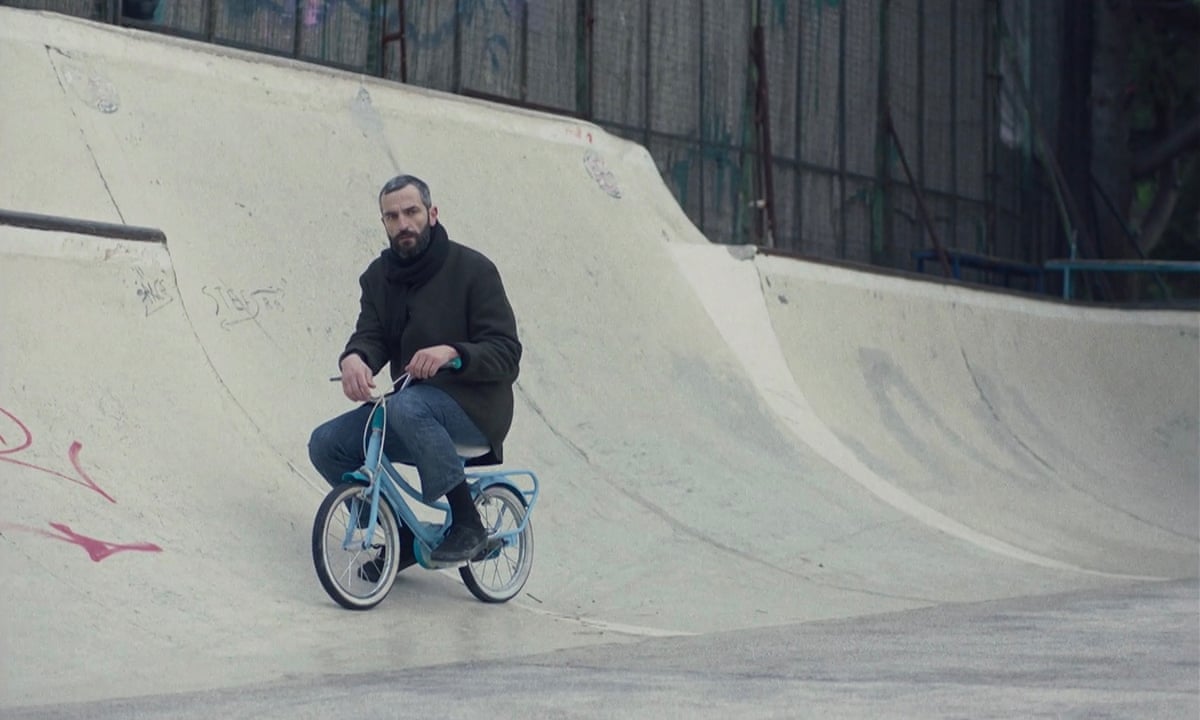
Set in a skewered version of Athens, this world has a playfully surrealist touch, and so when no-one comes to collect Aris, he begins an odd process that will somehow make him a productive member of society. The ‘New Identity Program’ provides patients with a place to live, where they will regularly be set objectives that need to be completed and documented with Polaroid pictures. These recreational tasks are bizarre in their specificity, from riding a bike and catching a perch to getting a lap-dance or having a one-night stand. Drifting further away from reality, Apples is able to humorously deconstruct everyday life and relationships through its circus-mirror reflection.

The vacant determination of Aris as he completes increasingly peculiar tasks is strangely funny, and though it becomes more familiar over the course of the film, it is never predictable and so there is always an uneasy tension behind the laugh. It takes an M Night Shamalan concept and plants it in the Yorgos Lanthimos universe (somewhere between The Happening and The Lobster), creating a high concept black comedy, mired in tragedy and trauma. It feels like it was written by AI imagining what it means to be human, to experience lust, empathy or even grief.

Made prior to 2020, Apples has a prophetic resonance: a pandemic forcing many people to live the same lives – proving their existence by taking photos of their activities. The absurdity of the situations draw attention away from the seriousness, though it can be called into play in an instant. In fact, the final act creates real pathos in having Aris interact with terminally ill patients of a hospital, having his humanity remain intact as though it were a universal condition that cannot be forgotten.

If you can adjust to its tone, Apples manages to be both poignant, and gleefully ridiculous.

Dragon Rider (2021)

Written for RAF News Feb 2021

Owing an obvious debt to the How to Train Your Dragon series, Dragon Rider follows young Firedrake’s courageous attempt to find a utopian paradise safe from humans.

Image result for dragon rider

The surface difference is that Dragon Rider allows its fire-breathing beasts to talk for themselves, and introduces a larger world of mythical creatures including dwarves, elves and pixies. It also has a contemporary setting, bringing with it jokes about the internet, Skype and online dating. There seems to be plenty of opportunity then to explore new ideas, but unfortunately it ends up a poor imitation.

In a meta-textual stroke of sheer audacity, the ‘dragon rider’ takes the form of orphan Ben (Freddie Highmore) who throws on a costume and impersonates the lead character of a film-within-the-film titled ‘How to Tame Your Dragon’. This would be a funny joke if the film were able to separate itself, avoid comparison or at the very least come out from under its looming shadow – this it fails to do, despite looking the part. The accomplished level of animation with beautifully naturalistic lighting is surprisingly upheld, but it is the storytelling and characterisation that suffers.

Ben is introduced as a thief on the run, and though a backstory is planted that will explain away his faults, it shapes his character for a large part of the film as deceptive, untrustworthy and simply unlikeable. This would be fine if the slack were taken up by Firedrake (Thomas Brodie-Sangster) or Forrest Brownie sidekick Sorrel (Felicity Jones) but sadly, as the title implies, Ben steals the spotlight.

The simple mission to find the so-called Rim of Heaven is complicated by hurdles and side-quests taking place in various exotic locations, introducing more and more characters. Added to this there is an arch-villain, a metal dragon-eating creature named Nettlebrand (an excellently cast Patrick Stewart), who has eyed Firedrake as a meal.

There is too much happening in Dragon Rider for it to be coherent. Individual scenes look well put together, but zoom out and it just becomes messy. Though lacking in substance, there is enough momentum and Patrick Stewart to keep it entertaining.

The Wacky Hen (2019)

Written for Raf News Jan 2021

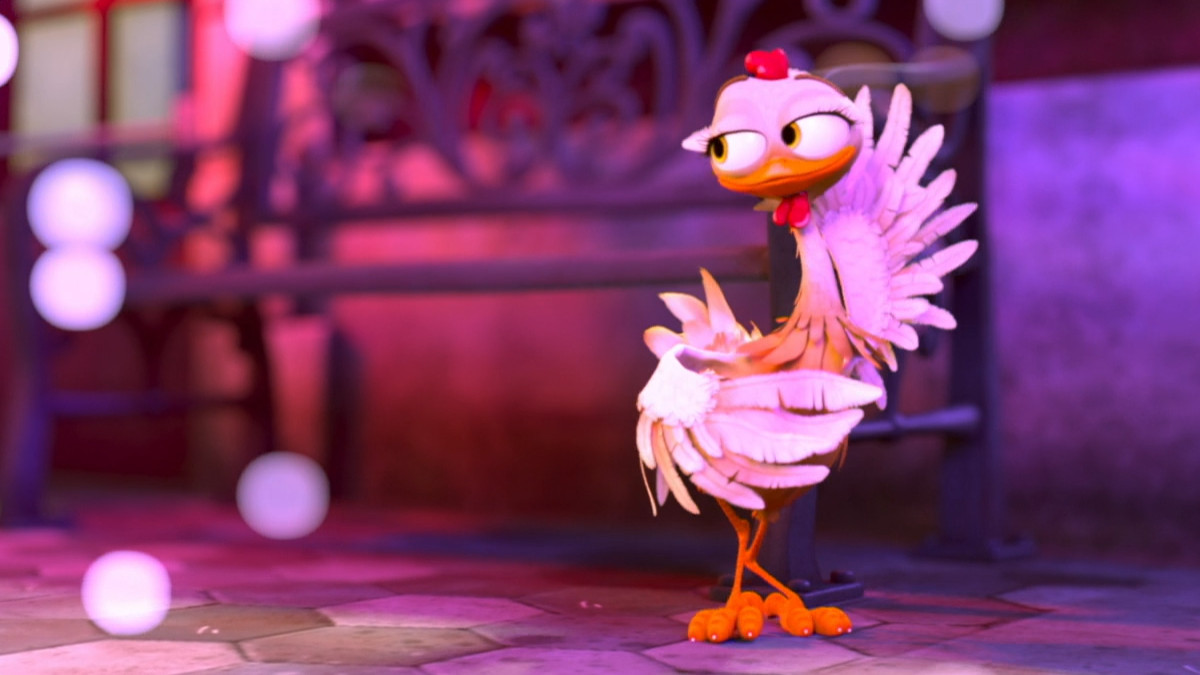
An eye-sore compared to the other hens, it is by some strange stroke of luck that Turu, the titular oddity, is bought for an elderly woman’s farm. Stranger still, that in lieu of laying eggs, she has taken to speaking the language and is prone to bang out the odd tune.

Watch La Gallina Turuleca (Turu, The Wacky Hen) ESP | Prime Video

Stranger things have happened in children’s animated films, and you can see elements of them propping up this simply plotted romp. When elderly saviour and vocal coach Isabel falls from her roof and is carted off to hospital (a Disney film would have surely seen her offed), Turu chases her to the big city by way of a travelling circus.

Dubbed from the original Spanish, The Wacky Hen incorporates contemporary pop songs to keep the energy high, with montages and car chases to the keep the little one’s attentive. The sense of mild peril is constant, what with the circus being threatened with foreclosure if they can’t get a decent audience, and Isabel seeming to suffer a bout of concussion induced amnesia. But it never feels too serious and it’s clear how it will play out: Turu packing the tent to the rafters with a thankfully reworked version of The Macarena (the translation of the original school disco number I had only discovered in later life).

Though the message and moral is that it doesn’t matter what you look like on the outside, the implication is that so long as you’re talented. For Turu it’s a matter of having one-eye in the land of the blind as no other animal can talk; fortunate for our feathered hero as she wouldn’t have survived the first round elimination of Sing.

Away (2020)

Written for RAF News Jan 2021

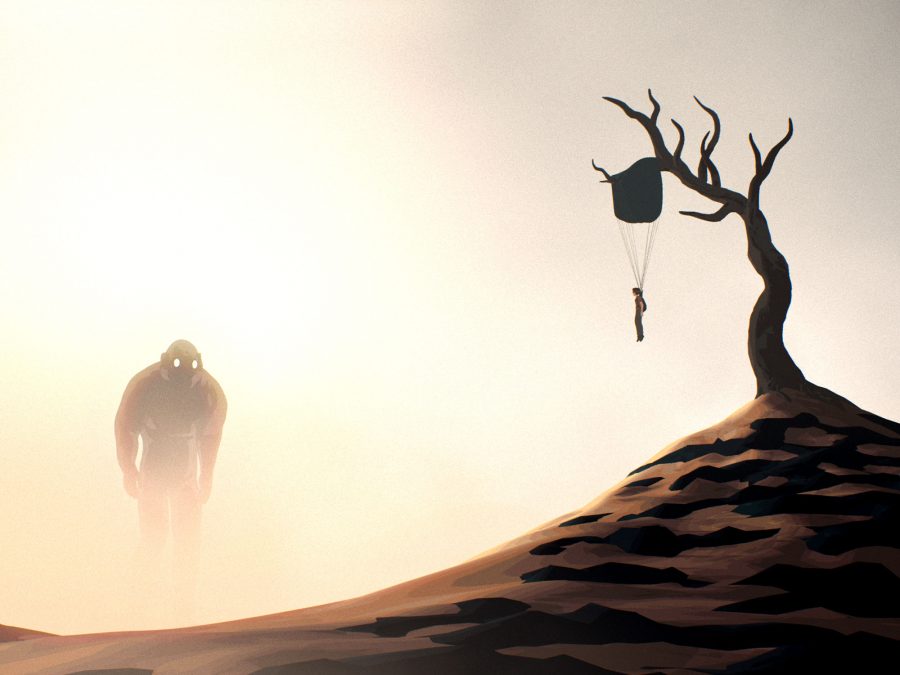
Created in its entirety by one person, Away is an animated feature that follows a young boy as he crash lands on an exotic island, chased through a dreamlike oasis by a giant creature.

Away review – Latvian animation reaches Ghibli heights

Gints Zilbalodis has the sole credit on the film, a 26 year old Latvian prodigy with no formal training in animation, working with little to no budget. Writing and directing as well as providing the score, which is pivotal in imparting the tone and sense of unfolding wonder, he put together this minimal but dazzling film over the course of three years.

The story is simple, and unfolds more as a series of obstacles, as the young boy finds ways to evade this ominous dark spirit and push onward. The pace is gentle, working with the score to put you in a sort of trance, allowing you to experience the scale and spectacle despite the style of animation. Made without dialogue, it is the combination of music and sound design that plunges you into the world, finding moments of reflection in the boys’ interactions with different animals.

The visuals can be quite crude, like a video game from decades past, notable particularly in rigid, unnatural movement. In some places though, the ripple of a waterfall, or licking flames from a fire, there is an elegance to be found in its abstract simplicity. For the most part though it’s hard to look past the style, even whilst appreciating it, I felt unable to forget about its presentation.

It is some feat then, that with this reminder at the forefront of the experience, you are still able to be transported and care about the boy or the the small bird that he befriends along the way. Considering its humble beginnings, this is a remarkable achievement.

Blog at WordPress.com.

Up ↑