Under the Skin (2013)

Written for RAF News Jan 2013

Scarlett Johansson assumes the role of an alien in human form that observes the surrounding life in Glasgow; stalking and seducing understandably eager young lads and trying to understand what it is to be human. Director Jonathan Glazer, who debuted with Sexy Beast, returns to cinema with his first film since 2004: a conceptual science fiction that can at times become hard to watch.
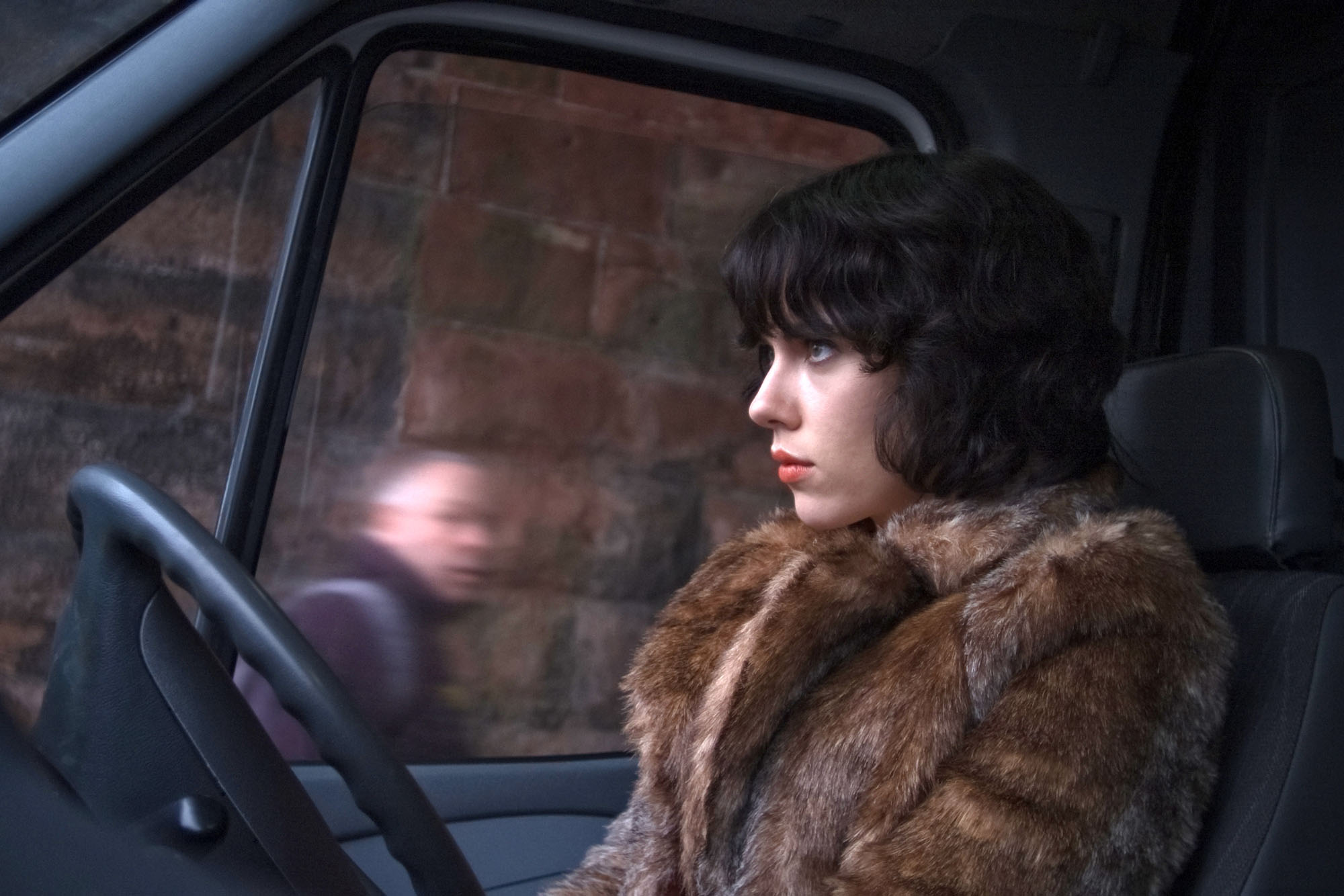
Film Review Under the Skin

Under the Skin is shot primarily through a series of hidden cameras that capture Johansson observing and interacting with the real townsfolk of Glasgow. We are thrown deep into the overwhelming sensory experience of shopping centres and crowds leaving a football stadium. Having adopted the voyeuristic alien’s perspective, these familiar experiences, accompanied by amplified sound, can be just as unsettling as the more experimental style that will endow the more sinister elements of the film. Implementing a style that intends to immerse and unsettle, Glazer effectively blurs the line between film and reality.

This siren like alien drives around in her van, a score of screeching drones foreboding the fate of the horny Glaswegians who enter. Forward and alluring, paired with the fact that she looks just like Scarlett Johansson, this succubus gives the young men very little chance to escape: seductively undressing  and coaxing them to a rather surreal demise.

The jumps from documentary style footage to the constructed scenes that feature more abstract visual effects, align you with Johansson as you become alienated and long for something to hold onto. There is not much dialogue and, with a central performance that is intentionally rigid and non-responsive, the film can drag along at times, particularly in the second half.

Under the Skin is a little more experimental in style, but it is truly an original film with moments of utter brilliance.

We Are What We Are (2010)

Written for a blog known as MovieBoozer. That’s Movie and Boozer. Reviews alongside drinking games. Yes. It’s real and somehow this review of a mexican film I like was on there.

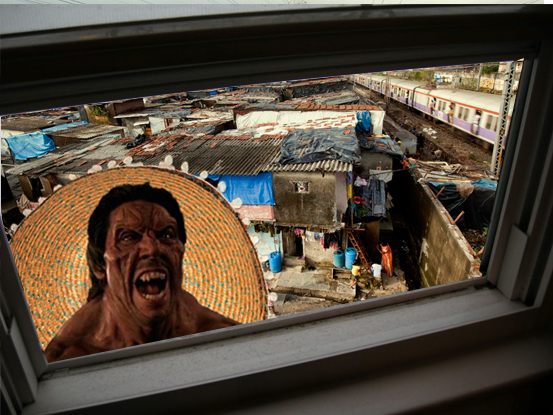
 We Are What We Are takes a similar form to Dogtooth in presenting a darkly twisted tale, from within a warped family unit. Just trade out the incest for some good old people-eating fun. 

we_are_what_we_are

An impoverished man, aged and worn, collapses in a shopping mall of Mexico City after perusing the dummies of shop windows. Spewing blood and bile on to the floor beneath him – he dies, only to be cleared away by paramedics and cleaning staff. An autopsy reveals a human finger inside his stomach, though this doesn’t surprise the coroner who exercises a casual familiarity with partially consumed corpses. This was the father of a now leaderless family: his wife and her three children Alfredo, Julian and Sabina, must now fulfil the role of their former patriarch. This entails the execution of a furtive ‘ritual’ that accounts for the state of their deceased father.

Hailed as the ‘Mexican Let The Right One In’, WAWA deals with social issues within an extreme context. Where the former had focussed on a young boy’s torment at the hands of school-yard bullies, this film deals with a family dynamic in the face of poverty and political disregard. With the fantastical element removed from the story, we are presented with a more feasible horror. The setting transforms from a snow-blanketed residential area, to a more slum-like location that brings with it an inescapable darkness, interlaced with bouts of uncompromising gore.

ltrJi
Let the Right Juan In. Forgive me

The central theme of cannibalism is shown to be a product of circumstance for the family: delivered as psychologically understandable alongside the realistic relationships of the central characters. The explanation of the ritual is touched upon but not fully explained: fitting with the visual motif of doors closing on the camera – keeping the audience out. This exclusion from the story is assisted by a volatile sound design that becomes faint and inaudible for extensive periods of time.

The film’s master stroke comes from treating the horrific elements as casual and not cowering to spectacle. The title of the film prescribes a certain shamelessness to the characters – their actions born out of necessity. In this sense, the horror becomes grounded and is almost pushed into the background by the social trials of the family.

Refusing to pander to the audience, We Are What We Are creates an intrigue that is ordinarily too contrived to be effective – utilising a lack of exposition to make the minimal that much more powerful.

Between Heros and Villains: Some British Filmmakers of 2011

In 2011 we saw a new generation of filmmakers with a series of debut features that emanate originality;  subverting the form and challenging the typical narrative of cinema as well as the characters it produces. The hero pulled down from his pedestal with flaws displayed unashamedly – imperfect, vulnerable  and sometimes far from moral. The fables clouded by removing the binary opposition of good and bad, a blurring of the lines between hero and villain as the allure is maintained but the passivity is quashed. A realism that requires the viewer to find their own moral teachings amidst the challenged stereotypes.

Continue reading “Between Heros and Villains: Some British Filmmakers of 2011”

Tyrannosaur (2011)

Tyrannosaur is Paddy Considine’s feature debut as writer/director, following Joseph (Peter Mullan): an ageing and conflicted man, plagued by his own actions. Prone to acts of instinctive violence he is shown to suffer repercussions in both trials of remorse as well as the revenge of his victims. After a bout of this circulative aggression, Joseph takes refuge in a charity shop where Christian-minded Hannah (Olivia Colman) offers her prayers. Accused of leading a life ignorant to the hardship endured by the working class, a new dimension of suffering unfurls.

tyrannosaur

An extension of Considine’s 16 minute short ‘Dog Altogether’ – a phrase which appears in the feature as a comment on an unforgiving society from a troubled friend of Joseph – the same characters are explored by the same nuanced performers but within the broadened context of the society that harbours them. The respective stories of Joseph and Hannah are given a scope which allows the characters, and the audience, to reflect; attaching a contemplative pace to the film that is aided by a melancholic, acoustic score.

The cast of Tyrannosaur bring a frightening reality to abusive and abused personalities. Known for her comedic roles, such as those in Peep Show or even alongside Considine himself in Hot Fuzz (2007), Colman flourishes in executing moments that evoke laughter and a light-hearted relief amongst her outstanding dramatic performance. It is as though her comic exposure amplifies the tragedy of Hannah – in seeing a capability that has been ever absent from her most familiar appearances on screen. An impact similar to comedienne Mo’Nique’s Academy Award winning role in Precious (2009).

Peter Mullan’s Joseph is hauntingly believable: cultivating an air of unpredictability, similar to James (a harrowing Eddie Marsan), the tension becomes almost palpable. However, Joseph is conflicted by his late-blooming maturity which conveys a certain depth that makes him all the more recognisable.Since the death of his wife, his companionship has been fulfilled by a dog, a symbol of loyalty that reoccurs throughout the film. His catatonic, almost bipolar, dips into aggression and reflective sorrow are one example of an acknowledged hypocrisy and tainted moral code: fittingly he states “I’m no Samaritan” and calls out the notion of ‘naïve faith’ resonating not only with Hannah but his own canine companion. Tyrannosaur provides a host of characters that are not plainly good or evil, although a few definitely belong to the latter category. In spite of their flaws, redeeming qualities are offered which complicates the process of empathy. Tommy, the appropriator of the term ‘dog altogether’, is introduced as a clan-rallying racist who turns out to be a gentleman for a damsel in distress.

While the film is far from ‘feel-good’ and sometimes hard to watch, it is delivered with an honesty and realism that begs attention. Dark in subject matter Tyrannosaur is a hauntingly powerful depiction of abuse and retribution. You should see this film. No excuses.

True Grit (2010)

The Dude abides. And so too does True Grit‘s Cogburn – taking a back-seat to the charismatic girl at the centre of its story.

Equipped with only her silver tongue, precocious 14 year-old Mattie Ross (Hailee Steinfeld) poetically talks her way past male authority, securing a deal with drunken U.S marshal Reuben ‘Rooster’ Cogburn (Jeff Bridges), to track down the man who killed her father. Tom Chaney (Josh Brolin) is not only chased by this unlikely duo, as Texan LeBeouf (Matt Damon) hunts him on a separate charge through the vast landscapes of late 19th-century Oklahoma.

The role of ‘Rooster’ Cogburn had produced John Wayne’s only Academy Award in a previous adaptation of the book, from which this film is based. So knowingly Bridges does all he can to parody this known anti-hero and provide a performance free of comparison. The first glimpse of this character materialises from distant mumbles that echo from a courtroom: the camera working its way through the corridor and closer to him, though no clarity is gained as his voice remains a grumbled slur. Aged, fat and intoxicated, Cogburn is a comedic outlet for the film, though his indecipherable mutterings become somewhat irritating after ten minutes.

The majority of male characters in True Grit have a vocal impediment: from Cogburn’s anecdotal wheezes to a cowboy who communicates solely through animal noises. These impairments serve to amplify Mattie’s confident articulation. Through her incessant, rambling charm the Cohen brothers have attached a recognisable flair to dialogue that is supposedly taken straight from the novel.

With continuous witticisms delivered throughout, True Grit is more of a comedy than it lets on. There are the occasional Cohen-esque moments of violence that offer the grittiness promised in the title, but they seem to be trying too hard to recapture the tone of No Country For Old Men, only to discard it again in favour of some fast paced, half-funny dialogue. A feat which is only pulled-off due to the attention-grabbing performances of Bridges and Steinfeld.

Jeff Bridges’ contemptuous approach to Cogburn is both aggravating yet captivating – he harbours a surprising charm beneath his obnoxious demeanour. Nonetheless, his scenes are stolen from beneath him by Hailee Steinfeld, flaunting a confidence that resonates with her character. This feature debut warrants, if not demands, recognition.

True Grit provides an amazing starting platform for this prodigious talent but without her, one can’t help but feel that the film would lack an appeal. The numerous quips and moments of gore unable to fill the Steinfeld shaped hole.

Blog at WordPress.com.

Up ↑