The Odyssey (2017)

Written for RAF News August 2017

Two hours isn’t a great deal of time for anyone’s life to be condensed down to, especially not that of Jacques Cousteau, and yet The Odyssey gives a good go anyway.

A deep-sea diver who became a pioneer of underwater exploration and documentary filmmaking, Cousteau was first a showman. In the opening of the film Cousteau, played by Lambert Wilson, attends a screening of one of his early expeditions and takes to the stage to answer the audiences’ questions – he seems to find as much comfort under the spotlight as he does underwater, speaking with great ease and incredible charm.

If you hadn’t seen any of Cousteau’s own groundbreaking films, they may be familiar from Wes Anderson’s A Life Aquatic with Steve Zissou, which took on the stilted style of Cousteau’s semi-staged documentaries. It also included a lot of biographical information about Cousteau that bobs up here in The Odyssey with much more dramatic heft.

The key component and through-line to this story is Jacques’ relationship to his son Philippe (Pierre Niney). Whilst his loyal wife Simone (Audrey Tautou) and crew remain supportive of his over-ambitious attempt to produce films for studios, it is his prodigal son who provides a realisation and rebirth for the legend as he is known today.

Although it only focusses on a few decades in Cousteau’s life it still feels packed with information. With so much to include, it impinges on the atmosphere and characters, with events following each other in such rapid succession that it can be difficult to take them in or take them seriously.

Needless to say Cousteau was an extraordinary man, though not without flaws, and there is a lot to discover about him and the forging of his legacy in The Odyssey.

A History of Violence (2005)

It goes without saying that Jesus Christ is everywhere: He is in you and me and many films of Hollywood cinema – in the journey of the hero. Now I never tire of looking for Jesus, lurking in the subtext, and am prone to point out the parallels given the opportunity, and so I was delighted when talking about A History of Violence with my other half, she proposed a Jesus parable. Oh yes. He is always welcome here.
Story

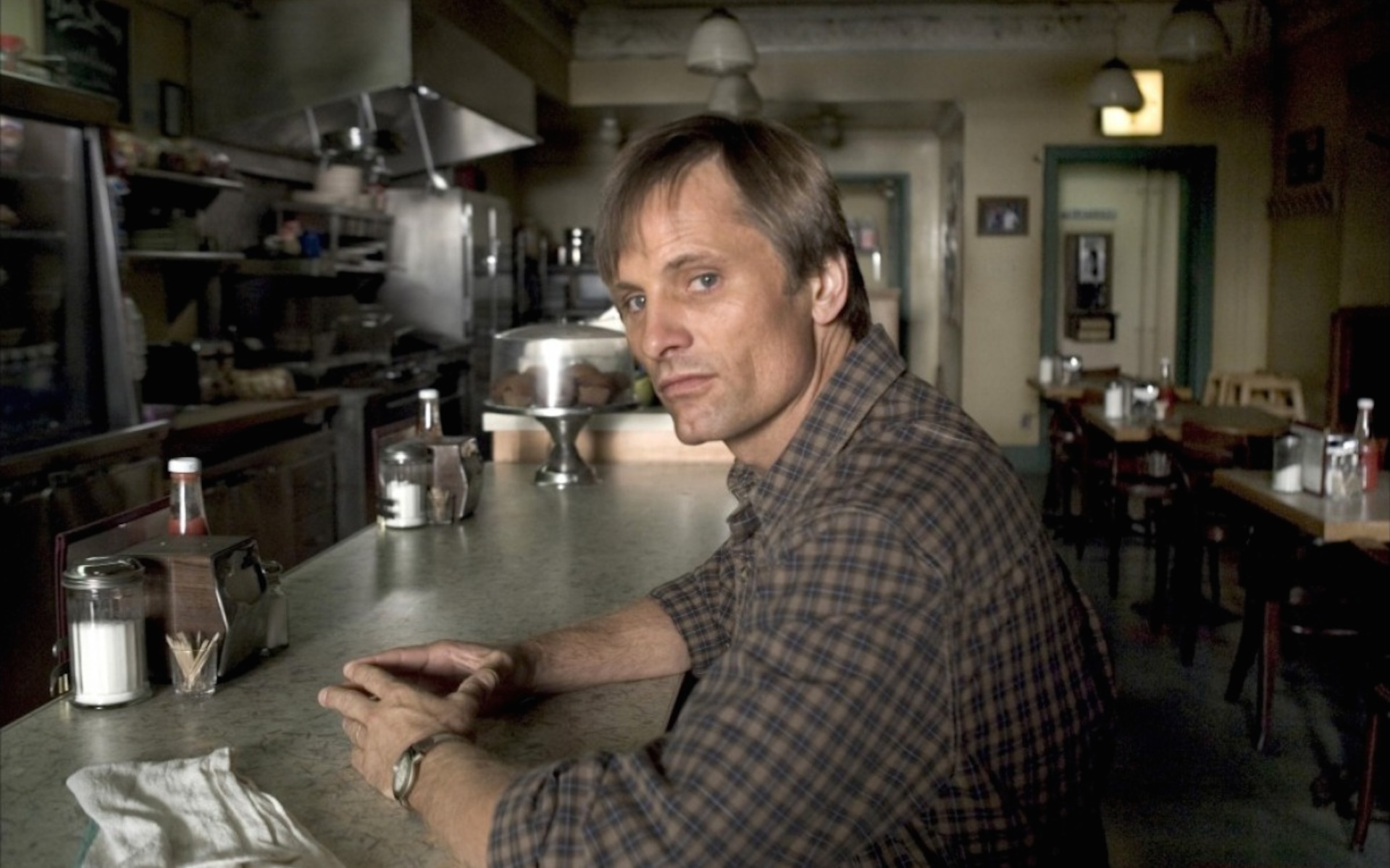
It goes like this: Tom Stall, an all-American family man, runs a diner where there is an attempted robbery. In an act of self-defence he kills the two assailants, with panache mind. Heralded by local news as a hero this humble man is then visited by a mysterious out-of-towner who claims that Tom is really a gangster. It transpires that Tom is a personality invented, and that he does in fact have a history of violence.

What is so great about this and many of David Cronenberg’s films is the complicated characters, their motivations and internal struggles – all of which are portrayed beautifully in this film, key moments happen wordlessly as you watch an expression take form, as emotions are experienced in sequence, leaving you to figure what is being communicated.

Sex

In keeping with Cronenberg’s fascination with sex, he had written additional scenes into the adaptation to allow this complex exchange of vulnerability. The first features Tom’s wife Edie dressing up as a cheerleader, trying to inject some excitement by enacting the teenage years that they never had together. A few themes are established in this scene (as well as the first ever 69 in mainstream cinema): the idea of a past that does not exist or is somehow lost, role-playing and the exhilaration attached to being with a stranger.

Later, as Tom’s true identity comes to light, there is a mirrored sex scene that begins as a fight, and continues being a fight afterwards. It is so strange and captivating. Cleary Edie feels betrayed and confused, and yet this is a dose of sexual excitement that she couldn’t even fabricate. Before she was pretending, through the cliche filter through which she understood deviance, but now she is experiencing the real thing, complete with its dark and violent underpinning, on the stairs no less, leaving bruises on her back as a symbolic memento. (Turns out that the amount of real bruises on actress Maria Bello had to be covered up in order to not detract from the one they show in the film.)

Violence

Cronenberg’s decisions always seem to enhance the story he wants to tell, they are motivated by intention. His portrayal of violence always has a purpose, he does not shy way from showing gore and brutality, and in fact makes a point of it, making you take in the consequences of violence.

I think it was director Michael Winterbottom who proposed that film certificates are the wrong way around: that the eradication of blood or physical pain requires an intellectual mind to know that this is fantasy, that you should have to deal with the fallout of violence. Or words to that affect. Either way I think it’s something that Cronenberg does expertly in all of his films, along with Gaspar Noe, with a great style too.

In History of Violence he punctuates any moment of badass combat, with a few seconds dedicated to looking at the wounds, the mangled flesh. In fact Cronenberg edited out some gunshots in the diner as he thought it was glorifying the violence in the scene.

Jesus

Cross necklace wearing Tom Stall is hurt on separate occasions, notable injuries are the semi-stigmata that he receives through a gunshot to the arm and stabbed through the foot. He tries to avoid violence initially though he is really fucking good at it. And his real name is Joey Cusak – ol’ JC.

Now why would there be a Jesus parable in this story? Maybe it’s dealing with the idea of forgiveness and rebirth. Are we able to be forgiven of our past sins and move on or will they always be present under the surface, awaiting some catalyst to draw them out.

As with Bill Pullman’s Fred in Lost Highway, he is freed of his sins by becoming someone else, but unlike Tom Stall, he physically transforms and has no real memory. This was an imagining of OJ Simpson and the idea that he disassociated from the murder he had committed as a defence mechanism, convincing himself in the process.

But Tom cannot escape his past. His violent tendencies will come back as he protects himself and his family, and also we see his son begin this cycle as he kills a man himself. Another great wordless exchanges as Tom looks at him with anger, forgiveness, and reassurance as he realises what he will have to live with.

Maudie (2017)

Written for RAF News August 2017

Maud is a passionate artist with arthritis and a bad leg, eager to get out into the world and free from her aunt’s care to make a life for herself.

Idly looking over paint cans in the store she hears the grunts of an inarticulate local wanting to put up an ad for a housekeeper. This is Everett Lewis, a stubborn and neanderthal-like man who has trouble communicating at all, much less show compassion.

The film looks at how these two opposing personalities come together, as Maud gently forces her way into his life initially as his live-in maid, bringing with her warmth and colour, painting the walls and windows of his humble shack as a perfect metaphor.

Maud has a romantic outlook on the world best encapsulated in her paintings that take the best from all seasons. Sally Hawkins is utterly transformed bringing this real folk artist to the screen: posture shrunken down with her shoulders brought in though her smile remains permanent. Hawkins is artful at magnifying small personal victories through her infectious smile, a trait reminiscent of her break-out role in Mike Leigh’s Happy-Go-Lucky but Maud is a little more meek, on the surface at least.

Ethan Hawke plays against type as Everett, so often the sensitive one it’s hard to believe his masculine posturing. Everett is shown as gruff and aggressive, hard on Maud from the outset and reluctant to hire her in the first place. It’s clear that that his hostility comes from feelings of inadequacy and yet Maud never really has her moment. We see him grow passive to her, a comedic way of relaying that things have changed in the household. She cooks and cleans as required but continues to paint simply because he never tells her to stop. Whilst it is interesting to avoid the obvious moments, having Everett’s tenderness or understanding occur off-screen makes it hard to sympathise with.

In all Maudie is a little slow and perhaps deservedly heavy on sentiment, with a relationship that is quite hard to engage with, but Hawkins performance is a triumph.

Scribe (2017)

Written for RAF News July 2017

The opening of Scribe might seem like a joke, an office-worker is told by his superior that he needs a file ready for morning – cue a montage of paperwork and filing but cut together as though it were an espionage thriller. The strangest thing about this is: it works.

François Cluzet (The Intouchables) is stressed-out filer Mr Duval, knocking back whiskey between staples in this introduction. Two years later he is on the wagon and off the payroll, looking for work to distract him from his addiction.

Interviewed by the mysterious Clément (Denis Podalydès) for a private security firm, he is asked about the gap in his employment and his political standing. The work, it turns out, is to transcribe conversations from tapped phones, requiring the utmost discretion. Clément apparently has a visual memory and distrusts digital technology and so requires someone to type out every word on a typewriter and without mistakes.

Offered a decent salary Duval accepts the job but the confidential nature is stressed to the point of suspicion. Each day he must enter an apartment, listen to tapes and type up what he hears, leaving the pages to be collected without ever having contact with anyone. With no friends or family apart from his AA group, Duval is a loner, so when he eventually hears a phone-call that is disturbing, he has no-one to turn to.

In fact a lot of the scenes take place in large locations with only Duval or one other, from his apartment to a conference room or even a stadium. This could be a thematic motif of a small fish in a big pond, isolated from the world around, or maybe just a way to save on extras. Either way it is clear from the off that things are not going to turn out well. The original score sounds a lot like a muted Phillip Glass with a circus kind of mania about it – this is a slippery slope into a dark political underworld.

There are obvious touches of Francis Ford Coppola’s The Conversation but the analogue tapes and reels have been smoothed out and the film has its own clear and clean style. What is so impressive is how the shots of Duval typing alone are made to be engaging, exciting almost. It is when the plot inevitably thickens that it also becomes forgettable, as the story itself is unconvincing and of little interest in the end.

Dunkirk (2017)

Written for RAF News July 2017

Dunkirk is not what you might expect if you somehow you hadn’t heard about it already. Don’t expect a typical story, this is white-knuckle experience of the desperate fight for survival.

It shows the infamous Dunkirk evacuation from three different perspectives: Tommy (Fionn Whitehead) one of the many troops stranded on the beach, Mr Dawson (Mark Rylance) captaining his own personal boat out to bring them home, then there’s Farrier (Tom Hardy) and Collins (Jack Lowden) two spitfire pilots protecting those on the ground. Surrounded on all sides with Messerschmitt’s raining fire from above, the squaddies are forced to wait up to a week with their backs to the sea, those on the water are left exposed for a day, and the airforce have only an hour of fuel.

These different experiences are wrapped together with the same frantic and frenetic intensity, cutting through time and leaving you without a moment to unclench. You can see why its Christopher Nolan’s shortest film since his debut – there’s no way you could keep this pace up. It’s exhilarating to the point of exhaustion.

Using a young and largely unknown cast for the soldiers on the beach, except of course the debuting Harry Styles who isn’t half bad, you are forced to consider how young and inexperienced these soldiers were. Their fear and desperation is magnified when shown huge stretches of shoreline, hundreds of thousands of British and French soldiers with nowhere to go. Shot completely in large format, and mostly on IMAX cameras, the beautifully vast coast of Dunkirk becomes a symbol of vulnerability and hopelessness.

Amidst the chaos though we have the calming presence of Mark Rylance, a compassionate civilian intent on getting over the Channel with two young boys to do his bit. When warbirds roar overhead he reassures the boys, and the audience, that this sound should be reassuring – the Rolls Royce Merlin engine of the greatest plane ever engineered. But no sooner are we told to relax than we are thrust into the cockpit to experience a dogfight first hand.

Nolan’s fondness for practical effects mean that a lot of stunts are happening for real, dozens of real ships in the water, shot with cameras mounted on real spitfires – and you feel the weight of it. The dislocation of chasing a target through the clouds and the deafening rattles of gunfire. Masked and muffled (and with a similar coat) you can make out just a little more of Hardy than his turn as Bane, but this isn’t about coherence, in fact it’s just the opposite.

Dunkirk is a joyful assault on the senses that fills you with a welcome dose of suspense and adrenaline. A cleverly made epic that is deceptively complex.


Personal Opinion Sidebar: I was lucky enough to see a preview of Dunkirk at the IMAX in Waterloo – the largest screen in Europe. I understand the song and dance being made about seeing it in this format because it is shot precisely for this format, for the experience. I saw Interstellar here for this reason.

The difference is I could watch Interstellar on a phone* and still take something from the story, whereas I feel Dunkirk, being an experiential film is made for this set-up. It clearly did what it set out to do, to an extreme, but I’m not sure what else is to be found here. Maybe I’m wrong but I have no intention of watching the film again. Fun though ay.

*Just to be clear, I would never. I swear to Lynch.

Blog at WordPress.com.

Up ↑