Grace Jones: Bloodlight and Bami (2017)

Written for RAF News October 2017

In Bloodlight and Bami, director Sophie Fiennes explores the formidable Grace Jones, cutting together live shows and intimate footage recorded over 5 years: following her across the world to perform, record and visit friends and family.

Still performing at 69 with stunningly designed costumes, sometimes whilst hula-hooping for the duration, Jones is undeniably a force to be reckoned with. She is towering in stature and intimidating by reputation. Known to have a fiery personality both on and off stage, what comes through in this documentary is her humour and in fact her vulnerability. Back home in Jamaica Jones talks with her family about father Mas P, a cruel and looming figure. This is intercut with her performance of William’s Blood, the lyrics explaining the punishing ordeal she went through as a child, and the resilience that she expresses now.

Whilst trying to pin down bassist Robbie on the phone for a recording on 2008 album Hurricane, her producer pleads with her to not piss him off, but expectantly she can’t be contained. After an angry tirade though, it seems she has just left a voicemail – a comic moment that is actually quite sad.

This happens too with a television performance in Paris that is staged in such a way that she feels like the Madame of a brothel. She is not the butt of the joke but it’s her status that is undercut in these moments. Trying to uphold an image that is fearful but seeming in these moments to be alone.

Throughout the documentary Jones will often take on the dialect of those she is talking to, fluidly dropping into Jamaican patois with her mother, Valley girl with her niece, or French with her ex. What is clear from this documentary is that Jones has many sides to her.

Bloodlight and Bami is well paced and put together, giving insight to a cultural icon who has a great depth behind her public persona.

It (2017)

An 80s style coming of age story set in Derry, Maine, a town where the kids go missing at a rate over 6 times higher than anywhere else. Stranger things have happened, and Stranger Things continues to happen as a bunch of dweeby kids become hero investigators, including one of the boys from STRANGER THINGS.

If Stand By Me (also adapted from a story by Stephen King) were Alien, this is Jim Cameron’s sequel, as a group of boys find a fuckload of dead bodies in the sewers.

For a film about a demon clown, the scariest moments are the most grounded – the malicious parents and school bullies. Perhaps this is because their actions and reactions are grounded in reality, whereas Pennywise’s strengths, weaknesses and triggers seem arbitrary. It gears up as though it’s related to fear but it matters not in the end, they say that it does but show that it doesn’t.

A shape-shifter that represents fear and preys on children much like Freddy Krueger, there are some huge references to A Nightmare on Elm Street, as in the bathroom scene, but it relies more on computer generated effects.

IT is a fun nostalgia film intercut with neutered horror scenes that somehow make it less scary.

The Party (2017)

Written for RAF News October 2017

A few friends have been invited to Janet’s soiree in her London home: a disaster barely waiting to happen. A host of clashing personalities all celebrating her ascension to Shadow Health Minister, on course to potentially leading the party, but for now she has a very different party to run.

In case it wasn’t clear that things are going to end badly, the film opens with Janet (Kristin Scott Thomas) pointing Chekov’s gun right at us, then cutting backwards in time to the exchange of crocodile smiles and inane niceties before things inevitably turn sour.

With these opinionated ideologues now in an enclosed space, there is the catalyst of announcements: of promotion, pregnancy and the prognosis of death. Each now has a purpose to shout their worldview from their respective soapboxes.

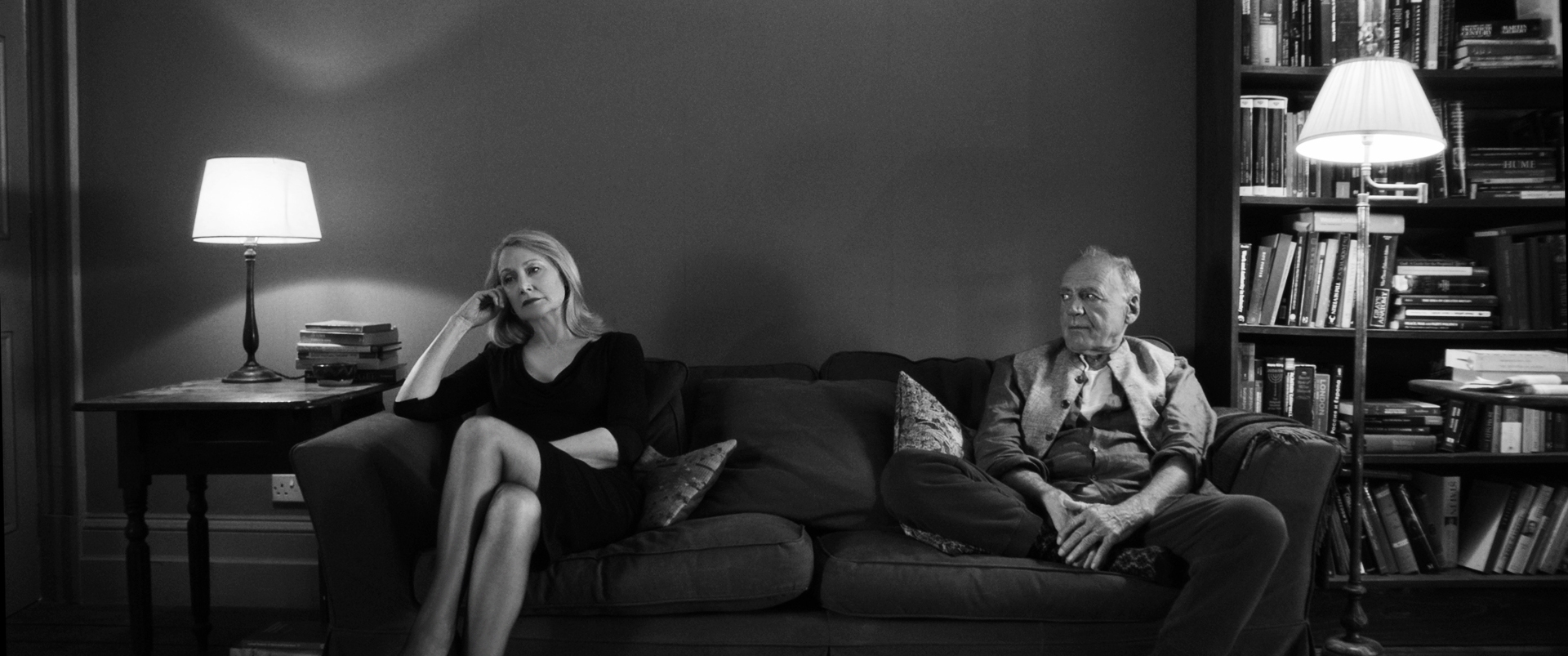
Spiritualist life coach Godfrey (Bruno Ganz) sits cross-legged on the floor offering esoteric musings to each flawed dinner guest, though it only takes a gentle prod from his sarcastic wife (Patrica Clarkson) to expose the hypocrisy. Cillian Murphy’s suited banker is shaky and sweaty upon arrival, making frequent trips to the bathroom to find a clean corner of the bathtub to help keep his nerves unstable. All the while Janet’s husband Bill (Timothy Spall), a renowned Atheist Author, sits in a drunken stupor controlling the music in the most perfectly inappropriate manner.

The soundtrack is just one element of style that is added to this theatrical farce, presented in black and white and with camera angles that get right in the faces of it’s cast. Each addition of drama ratchets up the tension and brings out the comedy. We follow different pairings of characters to learn about the baggage that each of them has brought along.

The Party is quick and comical with a political subtext that makes it more relevant than ever. So swiftly are you thrown into the chaos that you can’t help but be engaged.

Wind River (2017)

Written for RAF News September 2017

When the body of a young girl is found barefoot in the thick snow of the Wind River Indian Reservation, the F.B.I. get involved. Agent Jane Banner (Elizabeth Olsen) heads over to Wyoming from the Las Vegas department to investigate – as best she can in her unsuited clothes and car. Headstrong but inexperienced, she is really out of her element here.

With few police of their own in this large stretch of unforgiving terrain, Banner looks to Corey Lambert (Jeremy Renner), the hunter who discovered the body, to help find her way around. He knows the place, the people and the predators that lurk within. It seems the community are battling a world that doesn’t care about them, torn apart by drugs and delinquents.

What begins as a moody procedural however will quickly become an all-out action thriller in a whiplash-inducing change of pace. Details that are initially obscured will be explained fully and any attempts at making a serious dramatic point will be lost to Taken-style shootouts. This is a bizarre film that doesn’t know how seriously to treat its subject. Most serious of all is Corey, a man with a troubled past who has apparently learned much about the culture of Native Americans, taking every opportunity to high road others and pass on his wise words.

Wind River is written and directed by Taylor Sheridan, writer of Sicario and Hell or High Water, the latter of which really comes through here just without the balance of comedy. Other than the chief of local police, who is included for comedic relief but sidelined immediately, there are fleeting glimpses of humour that are practically apologised for.

Wind River is confusing in tone but still interesting to watch. You can’t help but feel that if it weren’t so serious it’d be fun; or if it weren’t so silly it’d be brilliant.

Final Portrait (2017)

Written for RAF News August 2017

At the point that we meet Alberto Giacometti in Final Portrait he is at his most self-critical. This is 1964 mind, so he has already achieved great acclaim as an artist and wads of cash can be found thrown about his studio between works-in-progress, but apparently success is the breeding ground for doubt.

At least this is what he tells James Lord, an influential critic and admirer who has agreed to model for one of his paintings. Assured that it would take no more than a few hours, Giacometti soon confesses that a portrait is never finished, that they are meaningless and impossible. Despite this Lord decides to stay it out, observing the artist observing him.

Battling doubt and distractions – his penchant for cigarettes and red wine or his obsession with wildfire prostitute Clementine (Clémence Poésy) – it becomes apparent that he is afraid of finality, so closely twinned with fatality. Clearly neurotic he romanticises suicide but begrudges that “you only get to do it once!”

Geoffrey Rush, who does share a likeness with the Swiss sculptor and painter, is superb casting, cantankerous with the flair and affectation of genius. His wry humour works perfectly with Armie Hammer’s clean-cut straight man in Lord. When he first begins painting he makes cutting observations of Lord, goading him with such a dry tone that you can’t be sure he’s joking. Sitting with the subject for the duration of these sessions, and with a great deal of silence, you share Lord’s frustration when no progress is made, or worse when it all starts again.

Taking place in this one location for the most part, it may seem more suited for stage but Stanley Tucci knows when to introduce music and change the pace, or where to put the camera, including one of the most stunning scene transitions involving a swimming pool and Chagall’s ceiling.

Final Portrait hinges though on the dynamic of the two central characters, the back and forth between artist and subject, and in this respect it is always funny and actually offers a profound insight on the creative process.

Create a free website or blog at WordPress.com.

Up ↑