Edge of Tomorrow (2014)

Spoilers ahoy.

Edge of Tomorrow is a futuristic action/science-fiction film that takes place during a war with an invading alien race who seem to have some control over time. A high-concept film that cleverly works in a conceit that excuses the film for being very Hollywood.edge-of-tomorrow

Tom Cruise begins as William Cage: an inexperienced, queasy-at-the-sight-of-blood, coward officer. This obviously must change – he is Tom Cruise. Confessing to be more involved in the campaigning side of things and attempting to blackmail his way out of participation, Cage finds himself volunteered to fight on the frontline against these alien invaders.

Very soon he will find himself dropped into combat wearing a future-tech soldier-suit, the type to have plasma guns appear from hidden crevices, unfortunately he hasn’t been trained on how to use it. Instead the action hero in the film takes the shape of Emily Blunt as Rita: ‘the full metal bitch’ as they are sure to remind us. Picking up from her previous sci-fi action film Looper, Blunt holds her own against another 50-year-old action star with the same stony faced stoicism. She dances around the battlefield whilst dear old Cage only manages to pick off one of the so-called Mimics before dying.

And then the day starts again… turns out the creature the Cage killed has locked him into his own private Groundhog Day. Now he must use this infinite repetition to his advantage and use his superseding knowledge of the day to find help and get trained up. He must escape the strict watch of his General for instance, and so whilst on exercise he tries to roll under a moving car in order to break away. Every time he mistimes the move and is chewed up by the tires of the oncoming vehicle, his day is reset. Once this is established with the audience, the film doesn’t need to explain how many times Cage has attempted an act of daring, we can safely assume he has tried it over and again until it has worked – we are merely catching his successful attempt.

In Mission Impossible we have no such excuse for the luck that is granted Ethan Hunt. Action films often preface their death-defying stunts by endowing the hero with a history in the special forces, with a very specific set of skills as it were, but it cannot excuse these moments of sheer luck that are threaded throughout Hollywood films – those purely cinematic moments that defy realism. Edge can do precisely that, thereby explaining away why Cruise can roll under a moving car. A beautiful flourish.

We later find out that Blunt too had this power but lost it.. that’s why she is such a bad-ass. She decides to train Cage so that they can work as a team to find the headhoncho alien and win the war. The reset device is used to create a unique kind of montage in which comedy is derived from the execution of the protagonist: if he slips up, she shoots him. LIVE. DIE. REPEAT (get it?) With fast-paced editing and reused shots, this technique provides well-earned comedic relief. If not simply relieving from the cold, austere seriousness of Blunt. She is training him. An unlikely turn for a Cruise action film – though this is corrected when he overtakes her and reprises his role as action hero, saving her in return (call it even) then saving the day like she never could (not quite even) then she is demoted to a fleeting love interest.

Garth
Rick: He saved my life once. I saved his twice, so I was one up

Problem is that the stakes have been wiped as there is no longer the threat of death. And so comes a flimsy explanation for how this power is lost, turning the film into ordinary Hollywood fair, especially when in the final moments of the film it seems to employ its own rules and revive the hero for a happy ending.

Edge of Tomorrow utilises it’s concept to justify the Hollywoodness that it shines with, and though it can’t sustain this subversion until the very end, it’s impressive while it lasts.
The Grandmaster (2014)

Written for RAF News Dec 2014

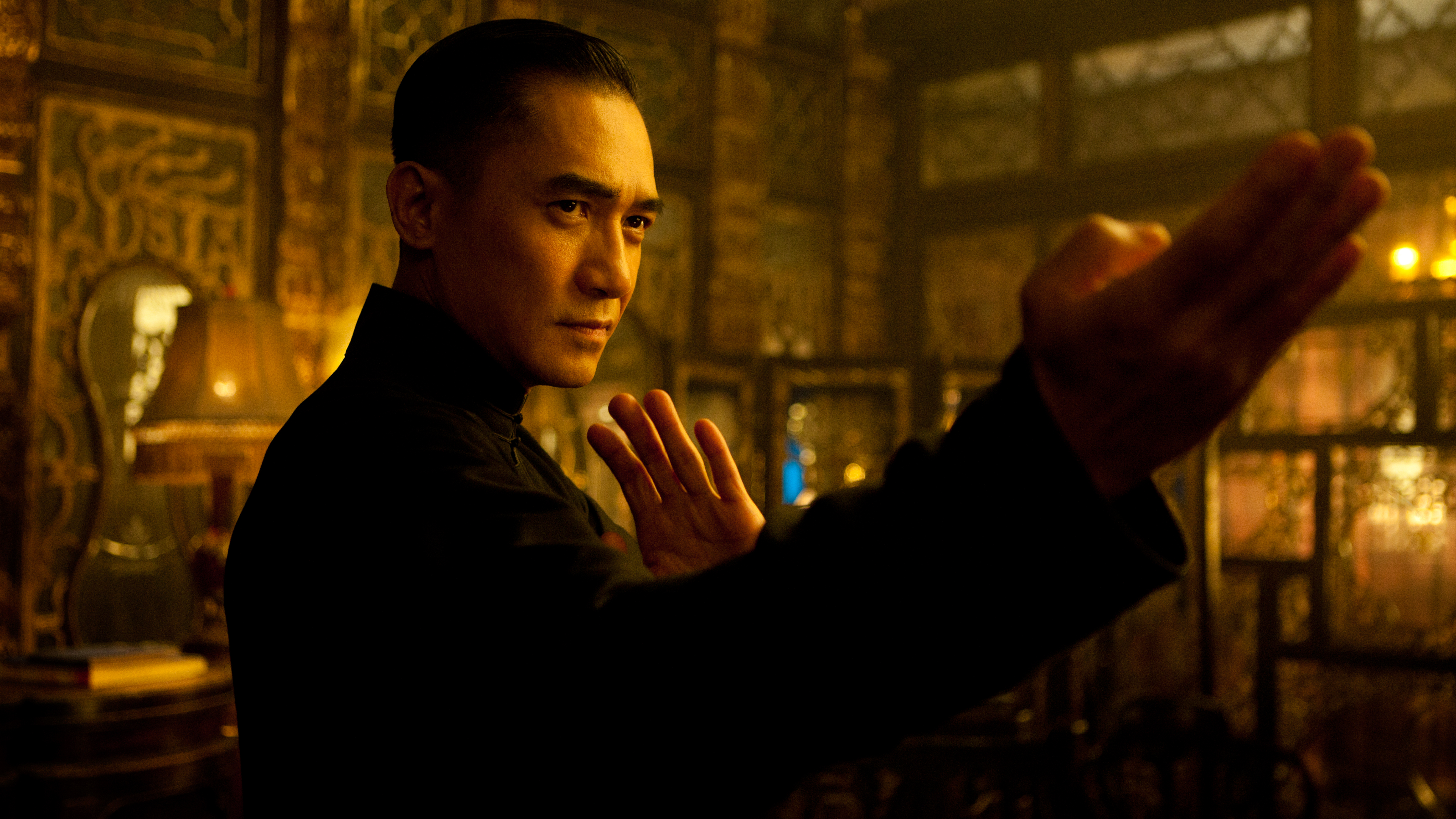
The Grandmaster follows revered martial artist Ip Man (Tony Leung) as he sets out to the different provinces of a China divided by Japanese invasion, seeking Grandmasters of different fighting styles so that they can exchange knowledge through hand-to-hand combat.

grandmaster

Ip Man was a Chinese Grandmaster whose legacy can be seen in the widespread practice of Wing Chun – a martial art that he popularised – and in his best known student Bruce Lee, though now his legacy has been transposed to cinema: The Grandmaster being the fifth film to centre on him in the last decade.

The fight scenes are met with director Wong Kar Wai’s distinctive aesthetic style. From the inward twisting of ankles of the Wing Chun stance, there is a dance like elegance that accompanies the fight scenes. Though this is not a particularly new idea it dovetails perfectly with the romantic stylisation of Wong Kar Wai, showing the fluidity of martial arts in slow-motion, punctuated with the sound of cold hard thuds as fists connect and bodies are thrown.

Giving very little away, the taciturn Ip Man lets his craft speak for him, possessing a coolness that borders on smug through his permanent half-smile. Those interested in seeing a regular martial arts genre film may be caught off-guard by the philosophical turns in-between fights, and may very well feel cheated when there is no big fight finale, instead presented a montage of a young Bruce Lee.

While the films beauty is undeniable it can feel disjointed when changing pace to the deliberately slow and thoughtful exchanges between characters – perhaps due to the cuts forced on the film to bring down its running time. It may be that the visual style isn’t enough to hold together a film that attempts to cover an entire era in Chinese history.

Kajaki: The True Story (2014)

Written for RAF News Nov 2014

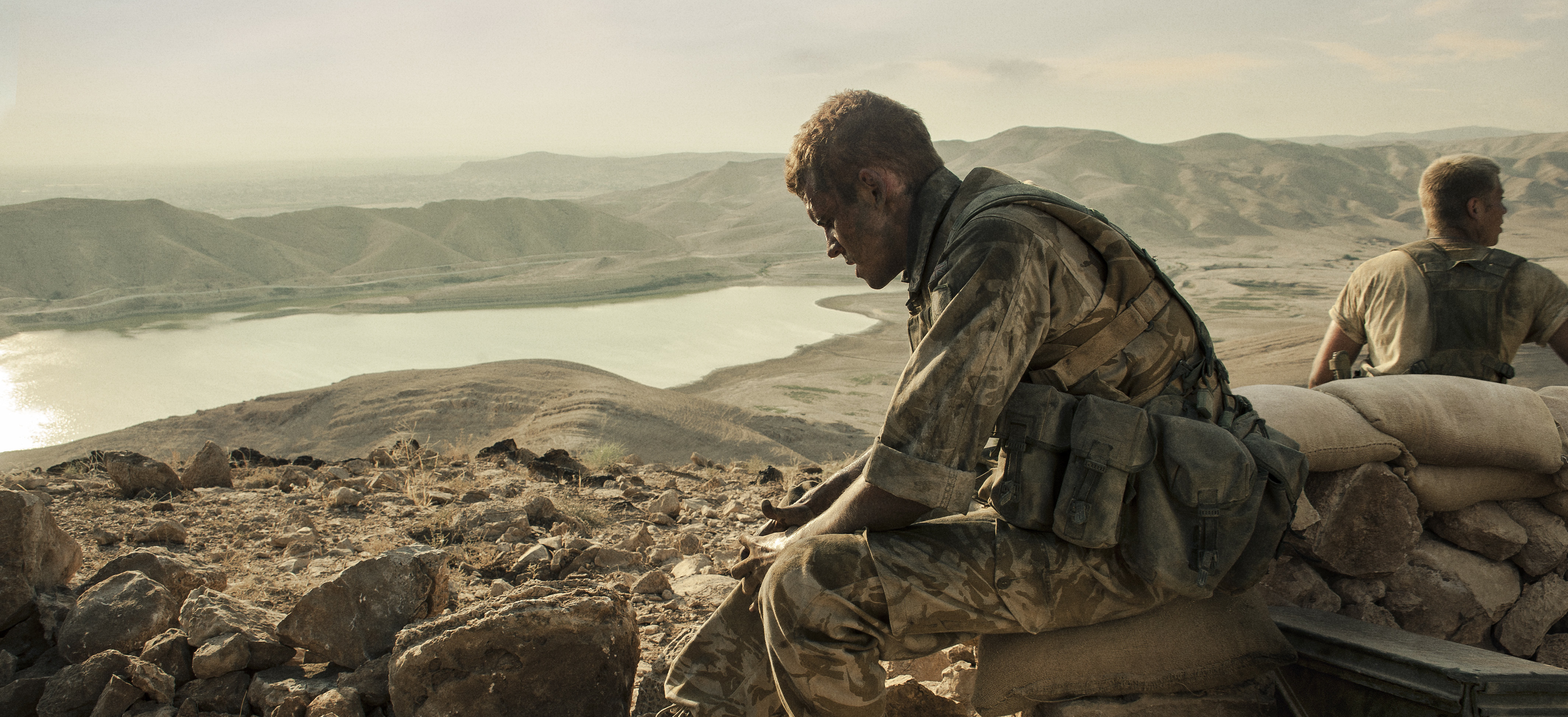
Kajaki: The True Story captures the harrowing events of September 2006 when a group of British paratroopers in Afghanistan found themselves in the middle of an unmarked minefield. Beginning in the mountainous desert of the Helmand province, we are introduced to 3rd Battalion, the Parachute Regiment, stationed on a ridge that overlooks the Kajaki Dam. From here we see the vast stretches of sand to the horizon where there has been little activity. That is until a three-man patrol sets out to investigate a Taliban roadblock and a landmine is set off, blowing off one of the patrols legs. Immediately the film is confined to mere millimetres as a rescue mission is put into action, with any movement on the ground possessing the potential to trigger another deathly explosion.

Kajaki

The mines are a relic of the Soviet invasion of the 80s, left behind by Russian forces, ‘God knows what we’re gonna leave behind’ says one of the fresh-faced ensemble cast. This is perhaps the only reference to British occupation in Afghanistan, which is coming to an end this year, but Kajaki has not been made as political commentary, it is a film that shows a single situation – a true story based on the testimony of the soldiers involved – from which we can glimpse the extremes of the frontline, outside of combat even. We see the sheer bravery that is required in circumstances such as these. It shows the comradery and heroism of the British forces without firefights and action scenes, giving them a cinematic presence that has been largely absent for decades.

Though it will undoubtedly collect comparisons to The Hurt Locker, it’s Britishness is evident in the relentless banter and dark humour, especially in times of horror and devastation – you’d be hard pressed to find an American GI writing ‘Gay’ on the face of Private Ryan after having his leg blown off.  The filming style also breaks from the dominant style in Hollywood as largely still, wide angle shots evoke palpable tension without having to jiggle the camera about. Long stretches of silence and focus on the careful movements of those in the foreground invites the inevitable and you can’t help but tense up in anticipation. The blistering heat of the Afghani desert adds to the tension like a Lumet film (think: 12 Angry Men, Dog Day Afternoon) growing in intensity as the group becomes more and more desperate. This uncomfortable suspense doesn’t let up, making it impossible to not be involved in the film.

Say When (2014)

Written for RAF News November 2014

Say When follows Megan (Keira Knightley) a 28 year-old suffering from a severe lack of motivation who realises that she is floating through life with the same friends from prom, the same high-school sweetheart (Mark Webber) and an unused college degree. All growing up around her and settling down, Megan has to find what she wants from life and where she belongs – landing strangely enough in a group of 16 year-old kids.

13882-1

At her friend’s wedding, shortly following their first dance (a cringe-worthy piece of choreography set to some soft Daniel Bedingfield) Megan is proposed to herself. Feeling the pressure she makes her excuses and leaves the party, bumping into a group of teenagers who need someone to buy them alcohol, fronted by the strangely confident and level-headed Annika (Chloe Grace Moretz).

As strange as it would seem to have an adult female bonding with kids over skateboards and some illegally bought beers, the chemistry of these two actors make the interaction seem almost believable, or at least they make the believability irrelevant. Still fearing the decisions she has to make back home, Megan tells her now fiancé that she wants to take a week at a self-development centre before they elope, when in actual fact she crashes at Annika’s house. This would be simpler if it weren’t for Annika’s probing father, played by Sam Rockwell with a charm that dovetails perfectly with the strong female cast. While supporting cast Ellie Kemper and Kaitlyn Dever carry the majority of laughs through the film with their respective touches of prudishness and self-assurance.

Director Lynn Shelton has stressed the importance of believability in her films, and though Say When features some highly unlikely turns, which lead to a string of unlikely events, the central performances keep it grounded and charming.

The Calling (2014)

Written for RAF News October 2014

The humble town of Port Dundas, Ontario sees its first murder in four years, which Detective Hazel Micallef (Susan Sarandon) supposes is the work of a serial killer. This is no mystery for the audience as we are soon introduced to the murderer (Christopher Heyerdahl): an intense yet softly spoken preacher of sorts. Now it is up to Hazel and her new partner (Topher Grace) to track him down before the spree continues.

the_calling

With a strong headed female detective on the trail of a murderer in this snow-covered humdrum town, the film begins as Fargo, drained of its humour and left frighteningly austere. As the police start to work a religious angle that ties in local murders it becomes something more akin to Seven – just without the tension.

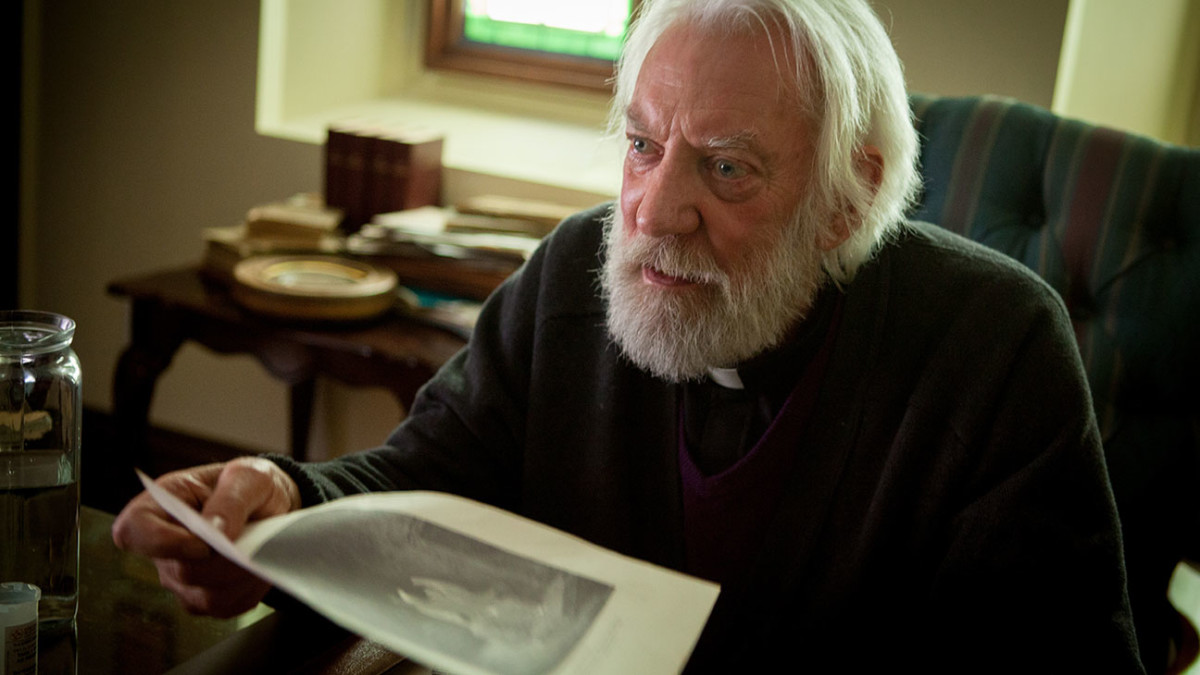
Hazel is painted a cold, pill-popping alcoholic toughened to the point of being allergic to flowers. Sarandon doesn’t seem the right fit, neither do the other big names of the cast, rather it is Gil Bellows whose performance stands out as Hazel’s combative partner. All other characters seem to fall flat or go to waste, including Donald Sutherland’s answer-providing priest who appears to explain the motive of the killer – the why – and considering we know the who from early on the slow pace seems unnecessary.

In the opening of the film when Sarandon stumbles upon the first victim, a family friend who is found with her throat cut to the point of near decapitation, it seems that that what is going to follow is a dark cat and mouse thriller – but we soon learn that this is an anomalous bit of action in a larger melodramatic film.

Shaken from their stupor it is hard to imagine how boring the town must have been before this advent, as even the pursuit of a murderer is somehow made dull and uninteresting.

Blog at WordPress.com.

Up ↑