chaos reigns

I killed a fox a few nights ago. A little cub.

Thought I’d get it off my conscience and write down some reflections that it has forced on me.

I have only recently started driving, happily being ferried about my nearest and dearest and using public transport until moving out into the country, onto farmland without pavements or streetlights to connect me to anything. As I headed away from the city and moved into converted stables, finding a job outside of London, I felt like I was closer to nature – waking up to birdsong and finding my way home in the bright moonlight of the unpolluted sky. But it came to be impractical and I would need to learn to drive. This was the reality of my situation.

The novelty wore off pretty quickly having to drive an hour to and from work daily. I was talking to friend recently, a Kerouac-idolising romantic, about how he gave up his car in favour of cycling and he made some points that struck me. About how driving separates you from your community by making you so able to work further away from home instead of supporting local businesses. In one sense it would seem you have opened up access to the rest of the world, but in another you shield yourself from experiencing it, on the journey anyway. Constrained to your bubble you are transported place to place with only glances out of the window stolen from the road.artwork_duncan_trussell_family_hour

I’m reminded of The Duncan Trussell Family Hour Podcast, a few episodes from a few years back, in which he had just started cycling and had some personal revelation more powerful than the cumulative affect of all the acid he has taken. In these few episodes he would open the podcast with a lengthy monologue about how cycling was connecting him to the world, how he was experiencing hills. For Trussell, hills serve as a symbol – you work harder to ride up and you earn the pleasure and ease of riding back down. In a car you mow through them and experience nothing.

Okay I’m not a cycling enthusiast, and  am irked by the self-righteousness that usually accompanies the eco-warrior, even if I am sympathetic to the cause and have never done anything about it. It’s more that these ponderings were the very same that were plaguing me this past week when I travelling down one of these country roads and from nowhere a small fox ran out under my car.

I didn’t even feel any impact, it was just the timing. I had to turn the car around and patrol the road to see if I had in fact caught it. Sure enough there in the middle of the road was an adorable little cub, paws twitching an all. Fucksake. Hazards on I pulled up, angry and upset I had to work out how I was going to deal with this, how I was going to fix or finish what I had started. I knelt down in the road to pick him up, careful to hold him properly. In that moment, when I was worrying about what gore I might be uncovering, if I was doing any damage, he became extremely light and lifeless. In my hands no less. So there’s weak and weary ol’ me wandering down a country road holding a tiny cub that I’d just slain with my car. I walk in as far as I can and lay him down before going back to my car.

https://vimeo.com/72584491

Since that night I’ve been stuck thinking about the entitlement of road using, of how there is a pecking order that has vehicles prioritised, bikes even. It’s strange that the onus is on the people around the roads to take care, rather than the other way around. There’s a short article well worth reading about the invention of Jaywalking that shows how this entitlement has been manufactured and the blame has shifted hands, how cars were seen as the intruders of roads meant for people up until the 1930s, but now vehicles are protected and there are laws that blame the people that aren’t in metal cage for not crossing roads properly.

I guess I’ll blame my actions on the fox not being alert enough, for not using crossings properly.
Grow your own Jesus with Johnny Depp

A look at the character of Dr Will Caster in Transcendence. I ruin the film outright so don’t watch it if you haven’t seen it.

Check out the original article for my argument on why Transcendence is actually a very interesting and subversive film that has been unfairly overlooked and disregarded. Or don’t. Whatever.

The Ones Below

Written for Film and TV Now Nov 2015 (Available here)

From the haunting lullaby that accompanies the opening image of a sonogram, there is an immediate sense of foreboding horror in The Ones Below, of something about to go wrong.

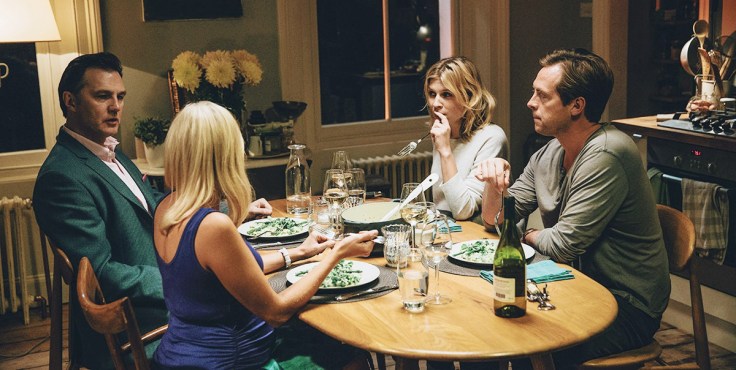
tumblr_ntm2uhvwht1qav8uzo1_1280

The expecting couple are young professionals Kate (Clémence Poésy) and Justin (Stephen Campbell Moore), who up until now lived comfortably in the upper half of their London flat. Downstairs a new couple have moved in, a bubbly Finnish woman (Laura Birn) and her older, much less congenial husband Jon (David Morrissey). As luck would have it they have a child on the way too.

The soon-to-be mothers are drawn together initially but their differences soon come to light. Kate has doubts about motherhood that are not even comprehended by her desperately maternal neighbour. Theresa (her name even reminds of the renowned ‘Mother’) and Jon have always wanted to have children but it hasn’t been so easy for them. This is in stark contrast to Kate who wasn’t sure that she even wanted to have children, perhaps seeded in the frigid and distant relationship she has with her own mother. The ease with which she has fallen pregnant becomes a matter of discord as a sudden and dramatic turn of events sends the couples’ relationship spiralling into paranoid contempt.

When Kate eventually gives birth, her reluctance is challenged by the relentless demands of her young baby. She soon finds herself sleep-deprived and strung out, suspicious that the couple downstairs are interfering, but how much of this is in her head? While the more villainous qualities of certain characters is shown as schlocky and over-the-top, even for this style of film, it is the more subtle performance of Posey that grounds the horror and creates something interesting.

The Ones Below cleverly uses the divisive attitudes towards pregnancy as a means of finding tension and dividing lines. This is brought out in the way each character dresses, and the ways in which they decorate their apartments even. Where the more laid back and career focussed  young couple wear mostly monochrome, smart-casual attire, the ones below are splattered with bright garish colours, a quality which is unsettling, almost laughably so in the case of Jon, whose tall and imposing demeanour is undercut by his pink socks.

The on-the-nose title of David Farr’s directorial debut sounds like A Twilight Zone episode, which is rather fitting for this film which owes a debt to the twisty revenge thrillers of decades past, and not to mention Roman Polanski. Not simply Rosemary’s Baby, which is an undoubted influence, but the others in the Polish director’s Apartment trilogy, and his more recent adaptation Carnage, which examines the volatile dynamic of two middle-class couples as they fight over their children.

Although there are glimpses of these other films, The Ones Below lacks the potency to rival them and instead offers a cheap thriller that descends into pure absurdity. The final act is actually quite fun in the end but it comes at the expense of all seriousness up until this point.

Kids trying to act…

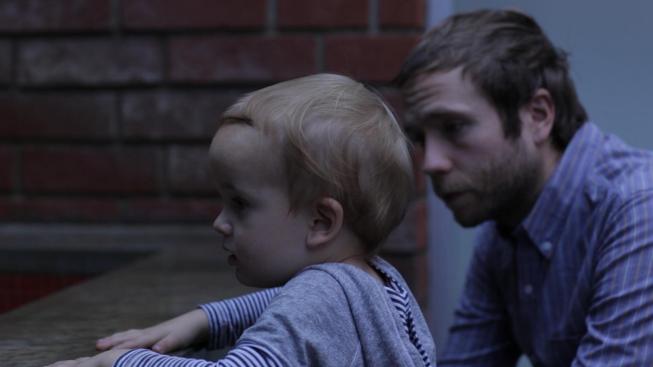
So I recently watched Mark Webber’s The End Of Love, a thoughtful independent film in which Mark Webber plays Mark, a struggling actor with a two year old son who is played by Isaac Love, his own two year old son. Nepotism at it’s purest.

still-of-mark-webber-and-issac-love-in-the-end-of-love-2012-large-picture

Owning a one year old person myself (or 17 month old in parentspeak) I found this film relatable: familiar whilst also providing a peak around the corner of what to expect from my boy as he grows more vocal and less chimplike (fingers crossed). I was engaged by this element of the film due to my own perspective and personal experience but also, crucially, because I usually have a hard time watching children act in films.

This has long been a problem of mine and apparently a bone of contention, for instance when I sat dry-eyed amidst a crowd of weeping girls as we watched The Boy in Striped Pajamas, I collected teary accusational glances as though I was a Nazi empathiser. Pushed to explain myself I can only say that children are lesser formed human beings. They are less practiced at living and breathing, let alone the nuances of acting. You can’t expect them to be brilliant as there is a lot to learn and unlearn, life experience plays a huge part and an understanding of cinema and the craft will effect a performance.

Okay so there are good child actors, and there have been great performances by children, but they are the exceptions and understandably so. This is what I had come to believe anyhow.

I recently reviewed Bugsy Malone, released on DVD only this year, and what struck me was how this bizarre concept, in which kids play adult gangsters of the 20s, is commenting on how the nature of acting is childish, it is just playing pretend.

Every child is an artist. The problem is how to remain an artist once we grow up

– Pablo Picasso

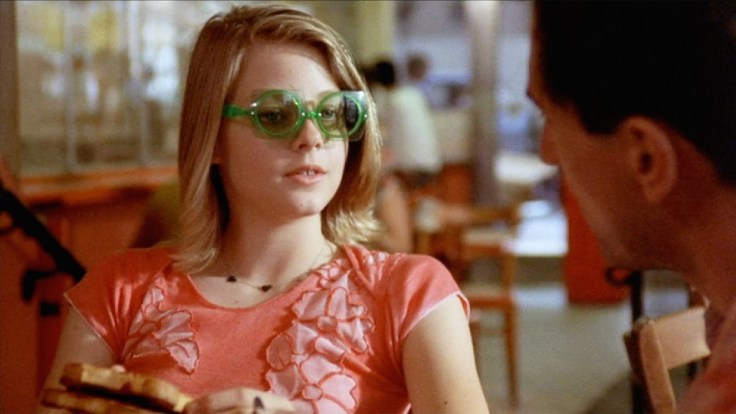
But what is easy to discern when watching this unsettling and cringeworthy piece of cinema, is the difference between the majority of children playing pretend and a prodigy such as Jodie Foster truly acting. She is unnaturally mature, having just shot Taxi Driver with Martin Scorsese this is hardly surprising.

taxi-driver-jodie-foster

(Side note: I remember speaking to someone who worked for a talent agency which had under its employ the foremost, sought after child actor for domestic abuse adverts in the UK, supposedly, they said he was quite the precocious little prick. I love the idea that this conjures. The child more effective at evoking sympathy is valued higher and therefore becomes arrogant and unlikeable in sheer juxtaposition to his character.)

Mark Cousins, the brilliantly astute and passionate film essayist, focussed one of his features A Story of Children and Film on the power that children can command in film and the universalities of behaviour that they seem to depict in cinema around the world. A fascinating collection of beautiful and obscure films peppered with performances that in some way capture the essence of childhood. I do not deny any point made in this film. I daren’t. But once again I feel these are exceptions.

There is a certain level of self-deception when watching a film – you know the events aren’t real, that the people are just characters, and yet we allow ourselves to believe in the story. The problem with bad acting is that it calls attention to the very device that you are subconsciously trying to ignore. It brings you out of the film and makes you aware of what you are watching. It force a divide between you and the story and stops you from being able to connect. Well for me anyway.

the-end-of-love-movie-image-02

What I found so striking about The End of Love was how the young boy was, for the most part, being himself -it gave a whole different form of naturalism to the film. It was something I hadn’t seen before. It seems that only a film like this could base itself around something so uncontrolled and become so serendipitous because of it. A perfect moment comes from a stage moment of drama in which Mark’s car is towed, he explains this downheartedly to Isaac as he sneezes, interrupting his sorrow as he offers a ‘bless you’. This is all assuming that the young boy wasn’t acting, he very well could be (it is in his blood after all), or if he was CGI, or if they were putting peanut butter on the roof of his mouth like the PG Tips monkeys.

Create a free website or blog at WordPress.com.

Up ↑